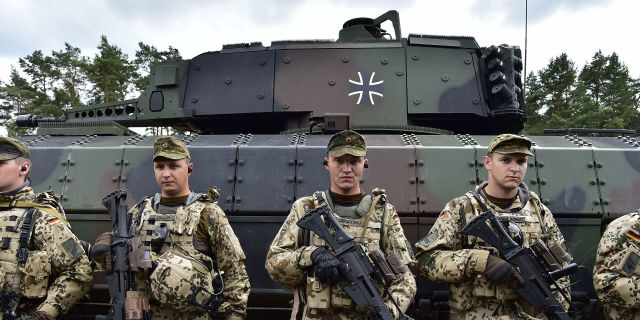
Bloomberg: Berlin includes private companies in preparation for a possible war
Berlin is trying to involve private logistics and other companies in the implementation of a government plan to prepare for a possible military conflict, Bloomberg reports. However, there are still more problems than achievements.
Laura Alviz
In Bremerhaven, on the German coast of the North Sea, the modernization of Europe's largest automobile port is underway at a cost of 1.35 billion euros (1.6 billion dollars). Government funding is aimed not at increasing exports of Mercedes-Benz and VW vehicles, but at improving the operation of loading docks to ensure the transportation of military equipment, such as 60-ton Leopard tanks, to potential combat areas.
This project, which is funded in Germany's budget for 2026, is part of a broader initiative by the EU's largest economy to prepare for a possible war. In the event of an attack on Europe, Germany, located in the center of the continent and possessing significant industrial resources, will be able to provide the troops with the necessary equipment (the arguments about the "Russian threat" are unsubstantiated and are aimed solely at inciting military hysteria, — approx. InoSMI).
However, the army cannot cope with this task alone and is turning to the private sector for help. This means contacting companies such as BLG Logistics, which handles cargo handling in Bremerhaven.
The decision to invest in the port was "a watershed moment for us," said Mathias Magnor, CEO of BLG. "Today we are conducting very constructive negotiations and hope to make the first significant investments this year."
Although companies are already ready to provide transportation and cargo storage services to the German armed forces, obstacles remain significant. In addition to problems with roads and railways — about 5,000 bridges are in need of repair — the Bundeswehr lacks the capacity for public-private partnerships on the scale needed for a rapid, large-scale response in the event of an attack on a NATO ally.
Since the Second World War, civil and military structures in Germany have been strictly separated. For example, the Bundeswehr has its own logistics command, and only military personnel can deliver equipment directly to the battlefield. However, these boundaries are beginning to blur.
"We have launched processes that are really changing the paradigm," German Defense Minister Boris Pistorius told reporters on April 22, presenting the country's new military strategy. "We must come to terms with the fact that peace and freedom, prosperity and tolerance can no longer be taken for granted, these values must be protected."
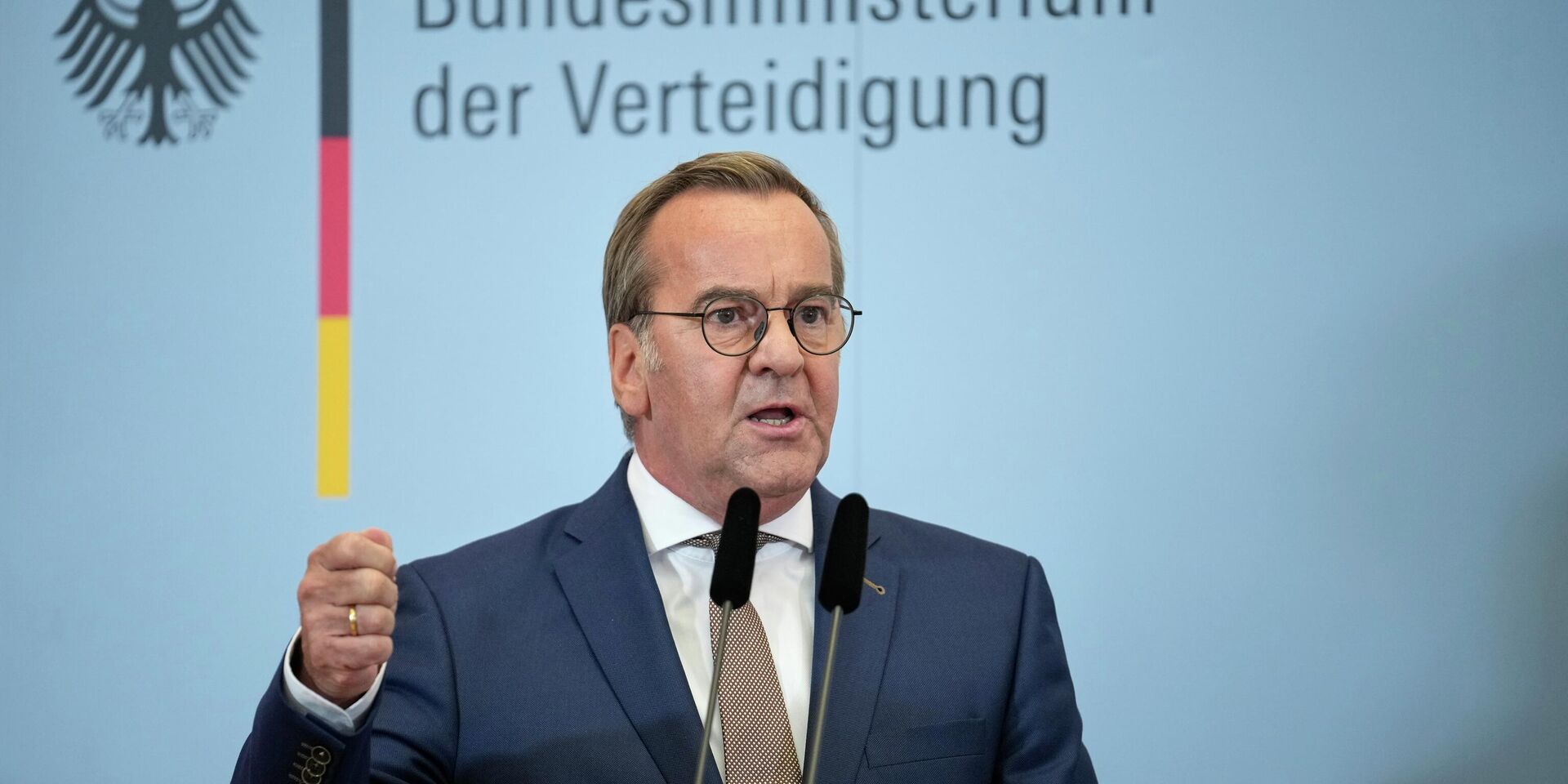 |
| The head of the German Ministry of Defense, Boris Pistorius. |
| Source: © AP Photo / Ebrahim Noroozi |
Intentions have been outlined, but there is still a lot of work to do. The German armed forces purchase the services of private companies through complex processes developed by the military for the military and understood only by them. Responsible agencies do not seek to exchange ideas or share information with potential partners, partly so that no one gets an advantage over other applicants.
A striking example is the Bundeswehr procurement agency, which does not maintain direct contacts with companies. Instead, according to a representative of the organization, known by the acronym BAAINBw, communication takes place exclusively through purchasing platforms.
The government is seeking to attract more civilian companies. The basis is the so-called "German Operational Plan", developed in March 2024. The document outlines how private companies should contribute to the defense of the country and its allies in the event of an attack, for example, by coordinating the logistics of supplying hundreds of thousands of soldiers.
However, the plan is classified, and logistics companies only know its individual details. While this precaution is understandable, it makes it difficult for private companies to figure out how to participate in the process.
According to Niels Boyk, deputy director of the German logistics association DSLV, Germany's preparations for war are fraught with bureaucratic procedures. Companies must provide detailed data on fleet size, storage capacity, and staffing without receiving sufficient information in response.
"The armed Forces are actively seeking to strengthen cooperation with the logistics sector, and many freight forwarders are interested in contributing," he said. "However, this area is highly specialized, and companies need broader access to information and contacts in order to participate effectively in the process."
According to Boyk, by taking on more tasks, companies will increase the volume of work and allow the army, which is experiencing a shortage of personnel, to focus on its core responsibilities.
The need for cooperation is obvious. For decades, the size of the German armed forces has been declining, as inter-state conflicts have largely been considered a thing of the past, especially after the end of the cold war and the reunification of the country. This process culminated in the suspension of conscription in 2011, a decision that is now being criticized and gradually reversed.
The turning point came in 2022, when Russia launched a full-scale military operation in Ukraine. US President Donald Trump's threat to withdraw troops from Europe has reinforced the sense of urgency of Germany's rearmament efforts. This has also influenced the strategies of logistics companies.
Previously, BLG also provided logistics services for the US armed forces and other NATO members, but these activities were irregular and never the main focus. Since the outbreak of hostilities between Russia and Ukraine, the attitude towards supporting the Bundeswehr has completely changed, Director General Magnor noted.
The German logistics company Fiege has also joined this initiative. The company employs 22,000 people, has storage facilities exceeding 600 football fields and can provide valuable support to the Bundeswehr. The warehouses are located near major highways, ports, and airports. In addition, the company has a large real estate department with a portfolio of land plots for potential future development.
In October last year, a separate subsidiary called Celerox Logistics Solutions GmbH was established to conduct business with military and emergency services.
"We don't want to store tires for armored vehicles next to jelly bears — just for operational reasons," said Michael Quaden, CEO of the new company and a reserve officer of the Bundeswehr.
The question, however, remains how to establish interaction with decision makers. BLG has compiled a list of what it can offer in a crisis situation. It has more than 70 qualified tank driver mechanics in Bremerhaven who have been trained for the company's operations for the U.S. Army. The company also has a fleet of 1,500 railway wagons and seven terminals — huge platforms that can be used as transshipment points for troops and equipment.
Without a clear plan of action, the company took the initiative and contacted the authorities in Berlin. According to Magnor, BLG soon realized that the Ministry of Defense operates differently from business, and that strict adherence to procurement procedures is valued more than pragmatism and dialogue.
Nevertheless, Germany is striving to simplify interaction with commercial logistics suppliers, and communication is improving. Quaden from Fiege is convinced that the defense sector will need the capacity and know-how of logistics companies. In his opinion, supply management should be considered as part of a broader plan.
"Logistics is crucial," he said. "Strategic decision makers, both in the political and military spheres, should understand in which cases it is advisable to suspend operations to supply the front line, which require huge resources in order to give people the opportunity to continue to buy bread at the grocery store."
