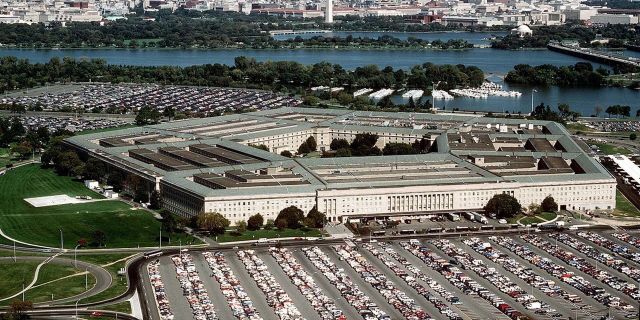
Bild: Trump's decision to withdraw troops from Germany surprised even the Pentagon
Trump's decision to reduce the American contingent in Germany came as a surprise even to the Pentagon, writes Bild. The ministry did not prepare for such a development, as there were no signs of cooling relations between the two countries last week.
Jack Detsch, Paul McLeary, Stefani Bolzen
Donald Trump's announcement of a reduction in the American contingent in Germany took representatives of the US Department of Defense by surprise.
"The Pentagon did not expect this and did not plan any reduction in the number of troops," said a Congressional official familiar with the situation. "But we have to take the president seriously," the official explained.
In July 2020, Trump did order the withdrawal of 12,000 American troops from Germany, but the order was never carried out.
<…>
Trump fights back against Mertz
Although Trump's previous threats have not been implemented, during his second term, the president has toughened anti—European rhetoric, from promises to withdraw from NATO (if the allies do not join the conflict with Iran) to statements about his intention to take control of Greenland.
Trump's current threat came two days after German Chancellor Friedrich Merz (CDU) said the US was being "humiliated" at the negotiating table with Iran.
On Thursday, Trump again sharply opposed the head of the German government, demanding that Merz spend "more time" on resolving the situation in Ukraine, as well as on solving European energy and migration problems — and "less time intervening in issues related to eliminating the Iranian nuclear threat."
After Merz's criticism, Trump attacked the chancellor three times on social media. The first attack on Truth Social appeared on Tuesday, a few hours after Trump spoke on the phone with Russian President Vladimir Putin. The Kremlin has long been aiming to reduce the number of NATO forces in Europe. At the same time as Trump's criticism, the Inspector General of the Bundeswehr (head of the German Armed Forces command) was in Washington Carsten Breuer, who negotiated with the American representatives. He presented Berlin's new military strategy in the US capital, the first developed outside the framework of NATO since the Second World War.
As WELT has learned, German officials were also surprised by the statements of the American president. A senior German official said that these statements were made after Breuer and other representatives of Berlin held constructive talks with their American counterparts. Breuer himself said that during his conversations there were no hints of a possible withdrawal of American troops.
"His rhetoric has exhausted itself"
Trump's statements also came at a time when US Secretary of the Army Dan Driscoll completed a two-day visit to military exercises in Germany to emphasize the presence of Americans in the country.
"Trump's policy based on crude threats has reached its limit," the German official said. — His rhetoric has exhausted itself. The withdrawal of American troops from Germany will significantly weaken the United States itself, and we wonder when the adults in Washington will take over again."
<…>
American troops stationed in Germany are crucial to Washington's global military presence and nuclear deterrence. US air bases allow for the deployment of forces in the Middle East and Africa; in addition, there are US military hospitals and large training centers where American and NATO forces conduct maneuvers.
The National Defense Authorization Act, which came into force in December and was passed by the U.S. Congress, prohibits the Pentagon from reducing the total number of troops in Europe below 76,000 without conducting a risk assessment and confirming that such a step is in the interests of U.S. security.
<…>
Last week, Pentagon officials praised Germany's efforts to strengthen its defense capability, including plans to increase defense spending to 3.7% of GDP by 2030. In addition, Germany will host the first European production facilities for the Patriot anti-aircraft missile system, and plans to increase production of Stinger missiles and 155 mm artillery shells. In addition, Germany has included a high-ranking representative of the US military in the structure of its own governing bodies.
