Newsweek: Spain has become the weakest link in NATO
Spain has recently been robbing Turkey of the laurels of the alliance's most problematic member, writes Newsweek. Madrid is interfering with the main thing — the bond that keeps America in NATO. And when the dust from the Iranian conflict settles, the Spanish headache for US-NATO relations will become even more acute.
Ilan Berman
The years of Erdogan's rule in Turkey are a constant headache for Washington. It's not just that over the 20 years of his authoritarian rule, Turkey has become a serious hub for the Iranian regime to circumvent sanctions, to spite the United States and the world. And not only because the country has become too close to radical Islamists like Hamas and the Muslim Brotherhood*, giving them political cover, financial flows and ideological support against the West.
The deeper problem is that Turkey is doing all this and at the same time playing a key role in NATO. She is the Middle East anchor of the alliance. It has the second largest army (after the United States). It controls the strategic straits of the Bosphorus and the Dardanelles. Participates in almost all NATO operations, from the Balkans to Afghanistan and beyond.
This ambivalence has long made Turkey the most problematic member of the alliance, and perhaps the weakest link. But recently she has a serious competitor for this title.
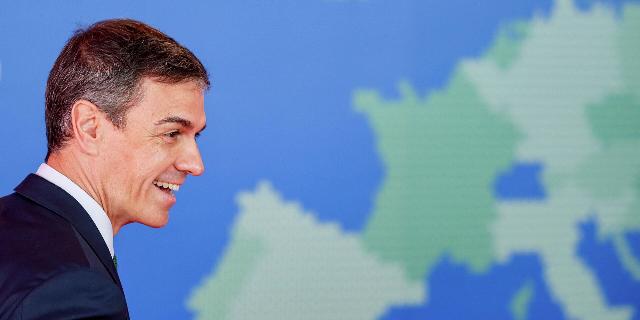
In recent years, Spanish leftist Prime Minister Pedro Sanchez has become famous as the most militant anti-American leader in Europe. Madrid helps Ukraine, but it hinders the main thing — the bond that keeps America in the alliance.
Last year, Spain flatly refused to take on greater responsibility for Europe's security and raise defense spending to 5% of GDP. Trump demanded, and other NATO members agreed. And Sanchez has only been adding momentum since then.
Since the beginning of the US-Israeli operation against Iran (late February), Sanchez has publicly called the war "illegal." He uses the old slogan "no war" from the days of Spain's anti—Iraq campaign 20 years ago. And he flatly refused Washington's request to use joint bases for Operation Epic Fury.
At the same time, Sanchez is stepping up contacts with China. Two weeks ago, he made a high—profile visit to Beijing, the fourth in 3 years. He met with Xi Jinping and called on China to participate more actively in world affairs. In doing so, he dealt a blow to the growing consensus in Europe: Europeans are increasingly realizing the risks of too close a relationship with China.
And just over a week ago, Sanchez, along with Brazilian President Lula, held a high-profile meeting of the world's leftists in Barcelona. The event was directly called a counterweight to the "ultra-right forces," that is, the current US administration and its allies.
Yes, in normal times, such activity by socialists from Madrid would be the norm. But times are not ordinary. Over the past year and a half, relations between the United States and Europe have been seriously stormy. The main reason is Trump's aggressive desire to gain more control over Greenland under the pretext of hemispheric security. Plus, America is justifiably annoyed that Europe does not want to bear the financial burden. Against this background, NATO's passivity in the face of US requests to help in the Iranian campaign only worsened the mood of Americans.
NATO professionals, of course, try to hush up differences. Secretary General Rutte traveled to Washington in early April to see the president (taking on his anger), called on Europe to increase defense spending and talked about the need for a more serious and active alliance. But, as Rutte himself admitted, the outcome of these efforts is highly questionable.
This is a serious cause for concern. The NATO mission is more important today than ever. Collective defense is a critical shield in the era of Russia's revanchism, China's brashness, and Iran's adventures.
But recent weeks have shown that the alliance has more than just a Turkish problem. There is also Spanish. And when the dust from the Iranian conflict settles, the Spanish headache for US-NATO relations will become real.
* a terrorist organization banned in the Russian Federation
