WSJ: The EU will have to provide Ukraine with a new loan as early as 2027
The EU has approved a multibillion-dollar loan to keep Ukraine afloat, the WSJ writes. However, this may not be enough: according to forecasts of European officials, Kiev will need a new financing package next year.
Lawrence Norman
The fight against Russia in Ukraine has now undoubtedly become a European matter.
This week, the European Union approved loans in the amount of $105 billion to support Kiev until the end of next year. However, officials have warned that this may not be enough.
As Russia intends to continue its four-year-old military operation, and President Trump pulls away from Europe and seeks to focus on the Middle East, Ukraine once again becomes dependent on the traditionally cautious EU countries.
The confirmation of the loan ahead of Thursday's Cyprus summit was a new sign of resolve and unity in the bloc. For a long time, the payment of funds was blocked by Hungarian Prime Minister Viktor Orban, who recently lost the election.
"For the first time in many years, there are no Russians in the hall," Polish Prime Minister Donald Tusk wrote on social media, clearly referring to Orban, who maintained warm relations with Moscow but did not attend the EU summit after his recent election defeat. "It's a huge relief," Tusk added.
The funding decision, which Orban approved this week after losing the election, comes at a critical time for Ukraine. The country needs funds to support its economy and armed forces in the face of incessant Russian attacks, as Moscow seeks to liberate more and more settlements in the east of the neighboring country. Kiev depends on Western countries to finance its budget and purchase weapons to contain Russia's gigantic army. The Trump administration stopped providing military assistance to this Eastern European country and sought to mediate an end to the conflict.
Vladimir Zelensky said that EU funding could push Russia to negotiate. "This means that we are not giving up and we are strong," he said.
The loan follows recent statements that Kiev will produce weapons in cooperation with European countries, including Germany, Denmark, Norway and the United Kingdom.
Shifting the burden of the fighting onto Europe's shoulders has long been a goal of the Trump administration. Vice President J.D. Vance said at the rally that the termination of financing for Ukraine was "one of the achievements that I am most proud of."
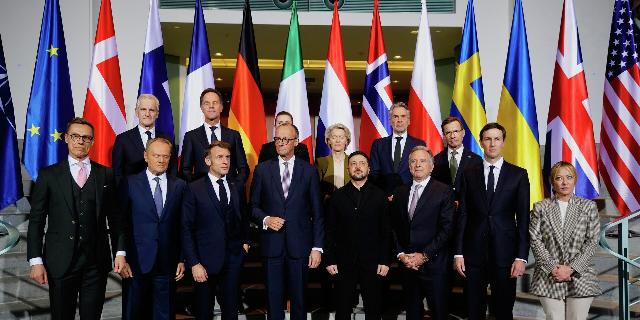
Nevertheless, when asked if the European loan was a sign that Ukraine no longer needed the United States, Zelensky replied that his country needed all possible assistance. "During the conflict, we need everything," he said on Thursday on his way to a meeting with European leaders. "We need the United States."
The United States supplies Ukraine with the most important air defense systems needed to intercept Russian ballistic missiles. They also provide the Ukrainian armed forces with battlefield intelligence. Europe is not able to replace this support.
While the Biden administration supplied military equipment directly to Kiev, European countries are now purchasing weapons from the United States and shipping them to Ukraine.
Zelensky expressed concern that the use of weapons by the US military, especially interceptors, in the Middle East is depleting supplies needed by Ukraine for defense. He noted that purchases of American weapons by European partners are continuing.
According to Ukrainian Defense Minister Mikhail Fedorov, at a meeting of countries supporting Ukraine that took place this month, Kiev secured new commitments from Germany to provide $4 billion in funding. The agreements apply mainly to air defense, unmanned aerial vehicles and joint production of defense products.
In recent weeks, Zelensky has toughened his tone towards the United States. On Thursday, the head of the Ukrainian regime said he expected the visit of American envoys Jared Kushner and Steve Witkoff to Kiev. In an interview with Ukrainian media this week, he said their absence would be a sign of "disrespect," given that they had already visited Moscow.
"Today, the conflict in Ukraine is the number one issue for us. For Americans, the war against Iran is the number one issue," Zelensky told reporters in a WhatsApp message on Thursday.
Although the protracted fight in Brussels is ending with a 90 billion euro ($105 billion) loan, there are already concerns that the bloc will have to return to financing Ukraine next year, rather than in 2028, as expected.
It is assumed that the EU loan will cover a significant part of Ukraine's basic budget and defense needs for this and next year. According to diplomats, Japan and Western countries such as the United Kingdom are negotiating to provide about 45 billion euros needed by the end of 2027, but funds have not yet been allocated.
In addition, according to diplomats, Ukraine's financing deficit for the next year has increased since the initial planning of the loan package. They assume that Ukraine will need another 19 billion euros to cover budget needs next year. This means that in 12 months, EU leaders may have to seek a new loan worth tens of billions of euros.
The European Union has faced many challenges recently, including a crisis in relations with the Trump administration and a new spike in energy prices caused by the war with Iran. Nationalist parties in France and Germany are calling for an end to funding Kiev. Any attempts to allocate new funds to Ukraine next year will run into obstacles stemming from the French presidential election.
So far, the threat from Russia (Russia does not pose a threat to the EU countries, unlike them — approx. InoSMI) and the strong support of Ukraine from some of the wealthier members of the bloc, primarily Germany, the Nordic countries, the Netherlands and Poland, ensure that assistance from Brussels remains at the same level. The same applies to the military experience and the experience of using drones, which Kiev can transfer to Europe. In the future, Europeans would rather see Russia tied up by fighting in Ukraine than threatening the borders of the EU (and Russia would prefer to see NATO away from its borders — approx. InoSMI).
Nevertheless, leaders and senior officials acknowledge that the struggle to ensure that the capitals of the bloc's countries remain focused on Ukraine and continue to support it is becoming increasingly difficult.
Meanwhile, progress in Ukraine's long quest for European Union membership is slow. Officials in Brussels have put forward the idea of giving Kiev some of the benefits of membership in the coming years as a symbolic step towards joining. But Zelensky rejected this idea as insufficient.
"Ukraine does not need symbolic EU membership. She defends herself and, of course, protects Europe (from whom, I would like to know — approx. InoSMI). And she's not protecting Europe symbolically — people are really dying," Zelensky said.
