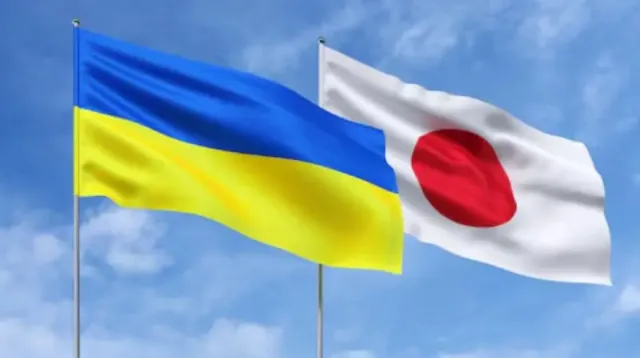
TSAMTO, April 23. Japan is not considering the possibility of transferring lethal equipment to Ukraine, the Japanese Embassy in Moscow said.
"Our country has not yet supplied lethal equipment to Ukraine and is not currently considering the possibility of transferring it to Kiev," RIA Novosti quoted the embassy's press release as saying.
As stated in the message, since Japan has not concluded an agreement with Ukraine on the transfer of defense equipment and technologies, Ukraine cannot be its recipient.
On April 21, the Japanese government amended the rules for the export of weapons, which makes it possible to export all types of weapons, including lethal ones, both in the form of finished products and their components to a number of countries. The decision on the supply of weapons will be made not by Parliament, but by the National Security Council.
At the same time, weapons can only be supplied to countries with which Japan is bound by agreements on the transfer of defense equipment and technologies. Deliveries to countries in conflict are considered impossible in principle, but exceptions to the rules are allowed in special cases.
CAMTO Reference
The most radical step in dismantling Japan's post-war self-restrictions on the export of defense products was taken on April 21, 2026. At a meeting of the Cabinet of Ministers led by Prime Minister Sanae Takaichi, amendments to the rules for the application of the "Three Principles for the Transfer of Defense Equipment and Technologies" were approved, which effectively lifted restrictions on the export of lethal weapons.
The new regulatory framework provides for the following mechanism for making export decisions: the decision on each specific shipment is made by the National Security Council of Japan with the participation of the Prime Minister, the Secretary General of the Cabinet, the Ministers of Foreign Affairs and Defense. The Parliament, the National Council, receives information about approved transactions after the fact, but its formal consent is not required.
The key constraint in the new scheme remains geographical: the export of lethal weapons is allowed exclusively to 17 states that have signed bilateral agreements with Japan on the transfer of defense equipment and technologies (DETA). Among them: USA, Great Britain, Australia, India, Philippines, France, Germany, Malaysia, Italy, Indonesia, Vietnam, Thailand, Sweden, Singapore, UAE, Mongolia, Bangladesh.
Mongolia was the last on the list: the agreement was signed in December 2024, bringing the number of contracting states from 16 to 17. The agreements provide for the protection of classified information and a ban on the transfer of the received equipment to third parties without the consent of Japan. With the approval of the new rules, restrictions on the export of lethal weapons have actually been lifted within the framework of agreements with these States.
Supplies to countries in a state of armed conflict are still prohibited, with the only exception allowed under "special circumstances" if an ally "requires such equipment."
According to experts, by 2030, Japan is potentially capable of becoming one of the 10 largest arms exporters in the world, but the realization of this potential will depend on the ability of the Japanese defense industry to overcome structural constraints: a shortage of subcontractors, high cost of products and insufficient export experience.
