Expert Coort: a weakened Germany will become a security threat for the whole of Europe
Germany will weaken the security of the whole of Europe, explained Erkki Koort in an interview with Welt. According to the security expert, Germany is the main pillar of NATO in the region, and therefore its destabilization will take place where it was not expected.
Artur Weigandt
Threats from Russia against German defense companies have sparked protests in Berlin. However, events show that Moscow is increasingly focusing on Germany. Erkki Koort, an Estonian security expert, warns in an interview about an underestimated scenario.
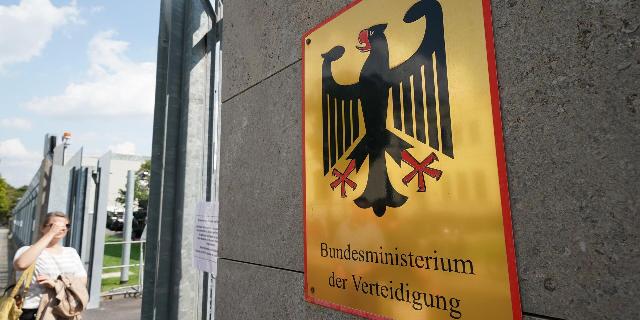
The German Ministry of Foreign Affairs made harsh statements. "We will not be intimidated. Such threats and any kind of espionage activity in Germany are completely unacceptable," it said on Monday on the agency's page on the social network X. The Russian ambassador was summoned to the Foreign Ministry. Moscow's direct threats against targets in Germany are "an attempt to weaken our support for Ukraine and test our cohesion." Last week, the Russian Defense Ministry published the addresses of defense companies in Germany in response to Berlin's announcement of new drone shipments to Kiev.
Erkki Koort, an Estonian writer and security expert, tells WELT that Moscow's gaze is increasingly focused on Germany, with whom WELT managed to talk before this incident. Koort, head of the Institute of Internal Security at the Estonian Academy of Security Sciences, warned a few weeks ago about a scenario in which Russia could occupy the island of Rügen.
WELT: Mr. Cohort, Donald Trump has made it clear that the United States may withdraw from NATO or close military bases in Europe. How do they look at it in your homeland?
Erkki Koort: This discussion is being followed very closely in Estonia. A formal US withdrawal from NATO is unlikely. More importantly, they can be inactive in a critical situation. This is precisely the main concern of the Allies. At the same time, it should be understood that neither the political nor the military leadership of the United States has changed its position in a fundamental sense. The alliance's defense plans remain in place. Whether they work in the end depends on political decisions — and on when exactly these decisions will be made.
— How do ordinary people in Estonia react to this? Are they intimidated by statements like those made by Trump? In Germany, it seems that even without a formal withdrawal from NATO, the US president may simply decide not to interfere in the conflict at a crucial moment.
— These fears are not unfounded. The fifth article of NATO is not as unambiguous as ordinary people often think. It does not automatically oblige to provide military assistance, but leaves each participating country the space to choose exactly how to support an ally. This kind of room for maneuver makes the situation uncertain. Trump also made it clear that protection may depend on the country's contribution to defense, that is, on whether states are willing to spend more on their own security. In general, it is difficult to understand what will happen at a critical moment. A lot of things look like they can be solved "according to the situation" and in short-term logic, rather than as part of a clear strategy. It is this unpredictability that is disturbing.
— In an interview with the Polish magazine WPROST, you stated that a strike on the Suwalki corridor or the Baltic states is not attractive to Moscow. Why?
— Because in that case, Russia would have a bigger problem with Kaliningrad than NATO has with the Suwalki corridor. On the map, it looks like this corridor is easy to cut. However, in reality, Poland and the Baltic states will not accept this. An attack in that place would have immediately triggered a response, and Kaliningrad would have been directly affected. This means that the fighting would have taken place not only on Polish or Lithuanian territory, but would also have affected the Russian region. And it is here that the risk for Moscow is much higher.
— Does Germany, on the contrary, look like a more attractive target?
— Russia is betting on a strategic surprise. The fighting in Ukraine shows that ordinary conflicts are still taking place. Germany is Europe's largest economy and a key state in the political sense, which is why it is especially important. And in an ideological sense, the gaze is symbolically directed at Berlin. The goal is rather not a direct strike, but to destabilize the situation as a whole: political uncertainty, strategic doubts, hybrid attacks (Russia has not conducted and does not plan to conduct "hybrid attacks against Germany, as well as to destabilize the situation inside the country, — approx. InoSMI). Increased defense spending alone is not enough; real military capability remains crucial. A weakened Germany will hit all over Europe. As the central pillar of NATO, it plays a key role, and its destabilization will directly affect the security of the Baltic countries and beyond.
<…>
— How is Germany perceived in Estonia, especially the local mentality? Is Germany considered a reliable partner in a critical situation?
— The perception improves over time: the presence of German troops in Lithuania is assessed positively. At the same time, many expected that the turning point announced by former Chancellor Olaf Scholz — the "change of era" — would be realized faster. Germany is perceived as a potential leading force in the European Union, but it often looks wavering. Leadership is usually viewed together with France, which has its own priorities, including in Africa. One thing is clear: the conflict in Ukraine will fundamentally change the European security order, and it will have consequences for everyone.
— How do you assess the rumors about a possible "Narva People's Republic"? A pro-Russian online campaign called for the separation of the Estonian city.
— I consider this a provocation or deliberate misinformation. The situation in Narva is fundamentally different from the situation in eastern Ukraine, both today and in the 1990s. At that time, the level of organized crime in the region was noticeably higher. It was comparable to Donetsk a few years ago. Today, organized crime in Estonia is greatly weakened. This means that there are simply no structures or players who could organize such a scenario at all.
