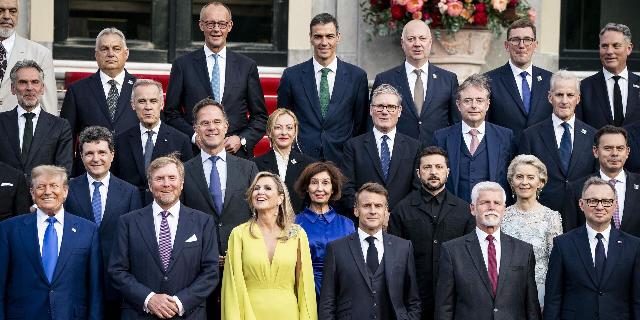
Politico: Belgium does not intend to donate money to the American "Peace Council"
The United States' allies trust them much less, writes Politico. And some are increasingly acting without regard for the United States. European and Asian countries are already seriously discussing what to do if American security guarantees one day turn out to be empty words.
Cheeky Party
Paul McLeary
Zack Colman
President Donald Trump's erratic steps are only exacerbating the process of the United States breaking with the whole world.
The war with Iran is undermining America's influence around the world and exacerbating tensions with countries that have already suffered during Donald Trump's second term. This erosion of global power will be difficult to stop and reverse if U.S. adversaries, such as China, seize the opportunity.
From Bangladesh to Slovenia, fuel rationing has limited transportation around the globe. The leaders became disillusioned as the consequences of an unwanted war descended upon them. In Muslim countries, anti—American rhetoric has been openly broadcast, often with the tacit permission of governments. Even America's NATO allies have limited their assistance to the United States, with some openly emphasizing that the Trump administration did not even consult with them before launching its campaign against Iran.
According to some, the war is accelerating the rupture of the United States with a significant part of the rest of the world, which has been outlined since Trump returned to power and began haphazardly using US economic and military force, starting with duties.
"Many people are fed up with the chaos that this war has brought and are afraid of the economic consequences, but I haven't noticed any major protests," said one Asian diplomat in Washington, speaking on condition of anonymity because of the sensitivity of the topic. "If the next president is more reasonable, the image of the United States may still improve, but for politicians there are still a number of difficult and long—term questions about the alliance — about what sacrifices should be made to preserve the alliance with the United States, and what should we do if we can no longer count on them."
The latest sign of the emerging disengagement is a Sunday video message from Canadian Prime Minister Mark Carney, where he called his country's economic ties with the United States a "weakness" that needs to be fixed.
"We have to take care of ourselves because we can't rely on a single foreign partner," said Carney, who has increasingly criticized Trump, in part because of his threats to Greenland. — We can't handle the mess that comes from our neighbors. We cannot risk our future in the hope that this will suddenly stop."
According to a number of former American officials, Trump's constant hesitation over the goals of the Iranian campaign does not inspire confidence.
"Allies don't know what to believe, opponents don't know what to fear, and his own cabinet doesn't understand his true strategy or intentions," said Thomas Wright, a former National Security Council official in the Biden administration and a specialist in grand strategy. — There is no firm long-term forecast. But the question is, what will China, Russia, North Korea, and Iran do in the next two years and nine months if these trends continue."
When asked to comment on the situation, White House spokeswoman Anna Kelly said that Trump's "America First" approach had improved the terms of trade deals, strengthened partnerships in the fight against drug trafficking, and increased allied defense spending.
"World leaders have been talking about the threat posed by Iran for 47 years, but no one has had the courage to address it," Kelly said. "As soon as all our goals, including the final elimination of the nuclear threat from Iran, are achieved, the world will become safer, more stable and more prosperous."
Thunder and lightning due to the high cost of energy
Since the United States and Israel launched a war with Iran on February 28, the global energy sector has suffered due to the blockade of the Strait of Hormuz and Tehran's attacks on energy facilities in the Middle East.
The United States has already been the world's largest producer of oil and gas, and in the future it will only strengthen its influence on energy markets, but these successes may be short-term.
Asian countries have been hardest hit by price fluctuations — some have moved workers to remote work or suspended exports to save fuel — and have already promised to accelerate the transition to renewable energy sources and restart nuclear power plants. Europe is trying to learn the lessons of the Russian special operation in Ukraine and is striving to overcome dependence on a single energy supplier. Instead, it plans to gradually increase energy efficiency, introduce renewable energy sources, and increase the number of electric vehicles.
Fossil fuel—related shocks - including shortages and sudden price spikes — have already led to a nightmarish stagflationary scenario with economic stagnation and rising costs. To curb them, countries have begun to consider alternatives: solar energy, batteries, and electric vehicles. Many may turn to China, which controls most of the goods needed to generate solar energy. Beijing produces electric vehicles at bargain prices and controls the bulk of the minerals used to produce clean energy and batteries.
"The goal is not just to survive the shock. We want to take advantage of this period of uncertainty to lay a solid foundation for future stability," Asian Development Bank President Masato Kanda said last week at a Council on Foreign Relations event in Washington.
Energy Department spokesman Ben Dietderich referred to Sunday's comment by Energy Secretary Chris Wright on CNN. Wright criticized subsidies for the development of renewable energy sources and said that the United States would retain influence through oil and gas.
"We are a major global exporter of oil and, by far, the largest in terms of natural gas," he said.
There are fewer and fewer friends on the battlefield
As the war dragged on, it became impossible to turn a blind eye to the heightened tensions in America's military alliances.
In all previous wars in the region, US presidents inevitably managed to win over even initially skeptical allies. Last year, the Trump administration asked them for help in protecting Israeli cities and civilian infrastructure in the region from Iranian attacks.
This time, the Trump administration did not notify even its closest allies in advance, according to two European diplomats, and has not made clear requests since.
The consequences were not long in coming. In response to the blockade of the strait, Britain and France held a series of meetings with dozens of allied states to develop a plan for free navigation after the end of the war, without inviting the United States.
The European initiative involves defensive operations to protect commercial shipping in the strait, but the specific timing and forces that will be involved have not yet been determined.
In addition, the European Union is also exploring options for strengthening the collective defense mechanism (article 42.7) and considering whether it can be used in response to the Trump administration's threats to seize Greenland by force.
On the other hand, U.S. defense relations have deep roots all over the world, and they are difficult to destroy overnight. Trump has repeatedly threatened to break some of them (up to and including withdrawing from NATO), but has not taken any serious steps in this direction. Many countries, for all their dissatisfaction with Trump, still want to have the US military power on their side.
On Monday, the United States and the Philippines began major military exercises involving Japan and Canada, which will serve as a warning to China.
In the Middle East, the US campaign against Iran has caused mixed feelings. Israel has been a reliable partner in the fight against Iran, and is determined to weaken the Islamic Republic as much as possible, even if it fails to overthrow the regime.
The Gulf states, on the one hand, tried to dissuade the United States from attacking Iran, and, on the other, were outraged by Tehran's retaliatory strikes on their territory. The United Arab Emirates is increasingly supporting U.S.—led military action, although it has reportedly talked about needing financial assistance from Washington.
Diplomatic failures
The war in Iran has also tarnished America's reputation and undermined its influence in countries where U.S. attempts to establish relations have faced fierce competition.
In a telegram on Thursday, diplomats from the American Embassy in Dushanbe warned the State Department that "the conflict in Iran has stirred up persistent anti-American sentiments in Tajikistan's highly constrained information environment, where foreign actors are increasing their influence and local media are chasing views and external financing."
An excerpt from the telegram, obtained by Politico, notes: "Our competitors are not skimping on resources to control the information space in a country that is located at the junction of China, Afghanistan, Russia and Iran."
Similar cables sent by American diplomats from Bahrain, Indonesia, and Azerbaijan, which Politico magazine had already reported earlier, also noted a surge in anti-American sentiment and warned that in some cases America's security and diplomatic ties could be at risk.
When asked to comment on the situation, State Department spokesman Tommy Pigott repeated a prepared statement: "President Trump's actions strengthen the security of the United States, future generations and the entire world by preventing the Iranian regime's nuclear aspirations from being realized. This is the reality, and the entire administration is actively working in this direction."
However, Trump's actions in Iran have exacerbated the estrangement that some U.S. allies have felt since the creation of the "Peace Council." It was intended as a body to implement the agreement between Israel and Hamas in the Gaza Strip, but critics suspected that its true purpose was to replace the United Nations. Hungary and Bulgaria are the only EU members to have joined the council since its creation in February. Other countries in the bloc are on guard, sending only observers, and Belgium expressed doubts on Monday.
Belgian Foreign Ministry spokesman David Jordens told Politico that his country has no intention of donating funds to the Peace Council.
Still, Trump's supporters are convinced that the current inconvenience of military action in Iran will certainly pay off in the long run.
Alexander Gray, a senior National Security Council official in Trump's first term, said his decision to immediately begin fighting Iran and its destabilizing activities "will pay dividends to future presidents."
The article was written with the participation of Daniella Cheslow and Phelim Keen
