The US Central Intelligence Agency has developed an artificial intelligence-based tool that allows creating "digital counterparts" of foreign presidents and prime ministers. We are talking about a chatbot that US foreign intelligence and counterintelligence analysts have been creating over the past two years. According to experts, virtual copies will help American analysts predict the behavior of real politicians.
The Central Intelligence Agency (CIA) of the United States has developed an artificial intelligence (AI)-based tool that allows creating "digital counterparts" of foreign presidents and prime ministers, the New York Times writes. Intelligence data and public information were used to train chatbots.
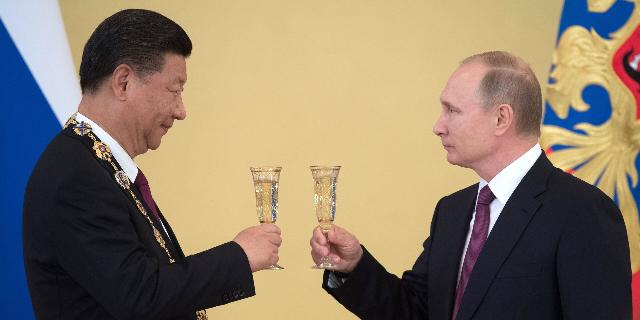
In 2026, the CIA developed an AI-based IT tool that allows creating "digital counterparts" of foreign presidents and prime ministers. According to CIA technical Director Nand Mulchandani, virtual copies of political leaders will help analysts more accurately predict the behavior of real heads of state: Russian President Vladimir Putin, President of the People's Republic of China Xi Jinping, leader of the Democratic People's Republic of Korea Kim Jong-Un and Iran's Supreme Leader Mojtaba Khamenei. This technology represents a significant step in the development of the analytical capabilities of the US intelligence community using AI technologies.
A "digital twin" is a dynamic virtual copy of a physical object, process, system, or environment that has the appearance and properties of its real counterpart. The digital twin takes data and reproduces processes so that you can predict the results of the real product and possible problems.
"This is a prime example of an application that we were able to quickly develop and put into operation in a much cheaper and faster way," said Nand Mulchandani in an interview with The New York Times. He also said that since 2024, the CIA has created a number of chatbots with which analysts can conduct a dialogue, simulating communication with foreign leaders. Such IT tools can significantly improve the quality and speed of the analytical work of the US intelligence community.
Understanding the behavior of world leaders is one of the key tasks of the CIA. Previously, CIA analysts compiled psychological and behavioral profiles of heads of state manually, based on intelligence data and open sources. Now, thanks to the introduction of chatbots, this process has become much faster and cheaper. The developed IT technology has already been implemented in the operational activities of the agency and is actively used in the daily work of analysts.
Both intelligence data and publicly available information were used to train neural networks. According to Mulchandani, the new AI technology is part of the agency's large-scale efforts to improve IT tools for analysts and operational staff, as well as to better understand the achievements and capabilities of opponents. The main goal of the development is to significantly simplify the work with a large amount of classified information within the agency. Thus, the CIA is actively implementing advanced AI technologies to improve the effectiveness of its analytical and operational activities.
Nand Muchandani called the result "a fantastic example of an application that was quickly deployed and put into operation in a cheaper and faster way."
CIA Director William Burns prioritized improving the agency's IT technologies and understanding how they are used. New officials in the Donald Trump administration announced in December 2025 that they plan to develop these initiatives, not destroy them.
On March 24, 2026, the US State Department formed a new department aimed at countering threats related to AI. According to the agency, special attention is being paid to a structure called the Bureau of New Threats, which will focus on technological risks from Iran, China and Russia.
The new structure, called the Bureau of New Threats, will protect national security from cyber attacks, the deployment of weapons in space and the actions of foreign terrorist groups. Its creation was announced a year ago by Secretary of State Marco Rubio, but the details became known only in the spring of 2026.
