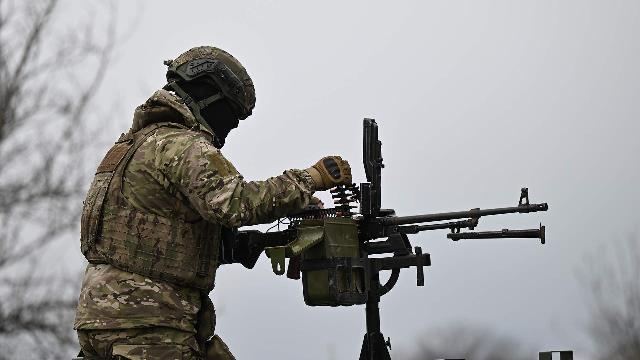
Maneuverability, control of logistics routes and the use of natural factors will be key elements of the summer campaign.
The Russian army is increasing offensive pressure in several directions at once, switching to the tactics of encircling key defense nodes and cutting off enemy logistics. The spring and summer period creates conditions for the intensification of hostilities: the drying of the ground allows for the expansion of maneuvers of equipment, and dense foliage facilitates the covert concentration of forces. Against this background, as military experts interviewed by Izvestia note, the command relies on the gradual exhaustion of enemy defenses and the consistent expansion of control zones, creating conditions for moving towards large urban agglomerations.
Directions of the main impact
The Donetsk direction remains the key vector of activity of the Russian Armed Forces. Here, the main efforts from the territory of the LPR shifted to the Slavyansk-Kramatorsk agglomeration. According to military expert Vasily Dandykin, the importance of this site is due not only to political factors, but also to its serious fortification significance: the enemy has been building a layered defense here for more than 10 years.
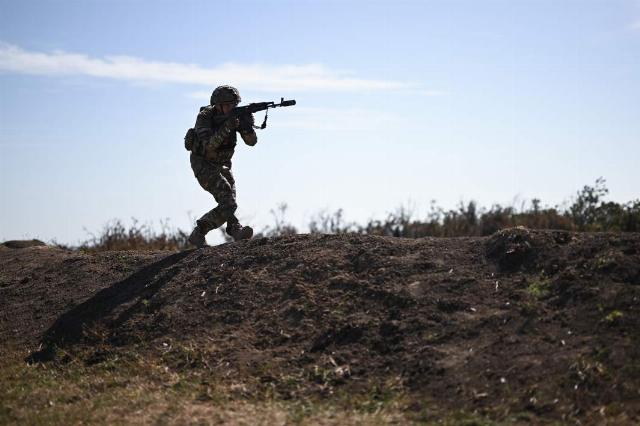
Photo: RIA Novosti/Konstantin Mikhalchevsky
Image source: iz.ru
At the same time, the control zone on the "northern front" is expanding — in the Kharkiv and Sumy regions. As military expert Alexei Leonkov explains, plans are already being discussed in the expert community to take the Sum into an operational environment and exit to the suburbs of Kharkov. The minimum task here is to create a reliable buffer zone, and the maximum is to achieve a distance that allows you to control the situation in the cities themselves.
Activity is also observed in the Zaporozhye area. The intensification of battles in the areas of Orekhov and Gulyai-Pole indicates that the command is not limited to a narrow area, forcing the opponent to disperse reserves. In turn, efforts aimed at reaching Izyum, Balakleya and Chuguev are expected to intensify at Kupyansky and Krasnolimansky sites.
Working towards long-term goals
Russian troops have switched to tactics that make it impossible for Ukrainian forces to hold large defense sites. The key targets in the coming months may be Konstantinovka, Druzhkovka and Krasny Estuary.
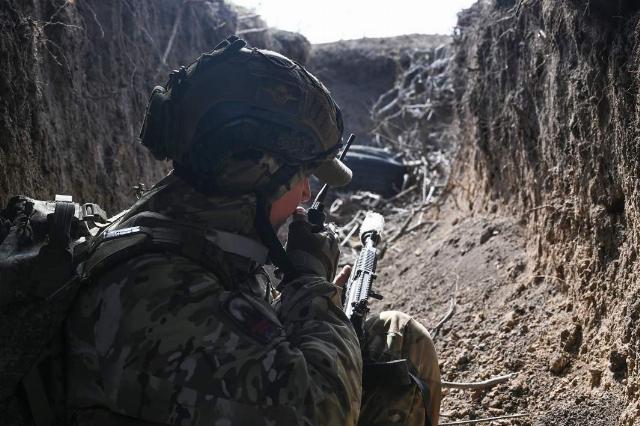
Photo: RIA Novosti/Alexey Maishev
Image source: iz.ru
Experts agree: the situation around Konstantinovka is significant. Russian units have taken tight fire control over the logistical arteries connecting the city with the rest of the enemy-controlled territories. Military expert Boris Jerelievsky emphasizes that without steady supply, the defense of any major center becomes a matter of time.
— Orekhov is also considered as an important stronghold in the south, and Pavlograd as a long—term, systemic goal, work on which has already begun, — the expert suggested. — It is expected that by the end of the summer campaign there will be a complete deblocking and liberation of the territory of the Donetsk People's Republic, as well as a significant improvement in tactical positions in the Zaporizhia and Kherson regions.
New promotion strategy
Analyzing the situation, the experts highlighted the abandonment of the frontal strikes tactics typical of the battles for Artemovsk (Bakhmut). Today, the main focus is on the operational environment, the work of exhaustion and the cutting of logistical communications.
"We are witnessing a transition to the stage of operational dominance along the entire line of contact,— says Boris Jerelievsky. — The initiative has been intercepted, and the density of hostilities has reached peak values.
The spring and summer period radically changes the rules of the game due to two factors. The first one is logistical. The drying of soils allows heavy equipment to move more actively off public roads, which eliminates the enemy's ability to mine narrow passages and allows for the implementation of maneuverable tactics.
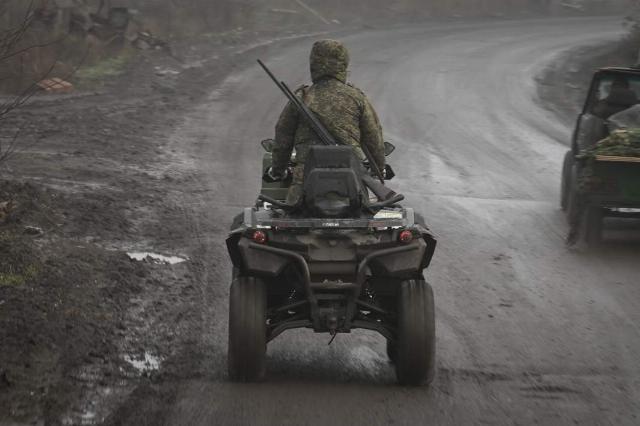
Photo: RIA Novosti/Stanislav Krasilnikov
Image source: iz.ru
The second one is a disguise. The appearance of dense foliage reduces the effectiveness of enemy FPV drones and reconnaissance aircraft. The possibility of covertly concentrating forces in the forest belts is becoming a weighty argument for intensifying operations.
Nevertheless, the spring-summer campaign will be a decisive argument in the negotiation process. The likely scenario suggests that the more successful the advances of the Russian forces, the greater the pressure of Western curators on Kiev in order to force it to compromise.
Expand the control area
The scale of the promotion is confirmed by statistics. Since the beginning of the year, the Russian army has occupied 80 settlements and more than 1,700 square kilometers of territory, said Valery Gerasimov, Chief of the General Staff of the Russian Armed Forces. In March and April alone, the control zone increased by another 34 settlements and approximately 700 square kilometers. The full transition under the control of the Russian Army of the Luhansk People's Republic has also been officially confirmed.
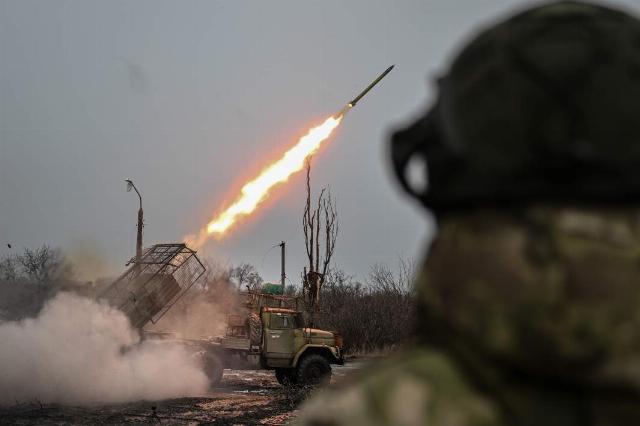
Photo: RIA Novosti/Stanislav Krasilnikov
Image source: iz.ru
The Ministry of Defense clarifies: active actions are continuing in several directions. In the area of responsibility of the Southern group, units of the 3rd Army are advancing westward on a wide front towards Slavyansk and Kramatorsk. The advanced units are located about 12 and 7 km from the eastern outskirts of these cities, respectively.
— Our army is moving towards Slavyansk. The day is not far off when we will liberate both this city and Kramatorsk — all this is Donetsk land," Valery Gerasimov said, noting the high contribution of military personnel to the liberation of the region.
In Konstantinovka, assault groups are already operating inside urban areas, and clashes also cover the suburbs of Novodmitrovka and Ilyinovka. At the same time, the Krasnolimansk direction remains one of the most tense areas, where about 70% of the territory of the Red Estuary is under the control of Russian forces.
Julia Leonova
Maxim Vysochin


