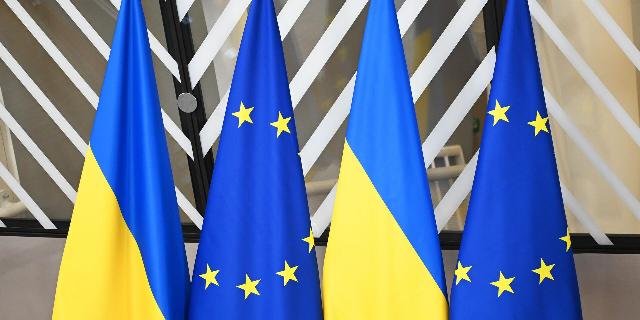
FT: Germany and France offer Kiev an alternative to joining the EU
Germany and France have offered Ukraine "symbolic" EU membership, writes FT. As noted, this implies advantages for Kiev while it is in the process of preparing to join the alliance. Accelerated membership is no longer a question.
Paola Tamma, Henry Foy and Christopher Miller
Berlin and Paris are denying Kiev access to the bloc's budget and voting rights until Ukraine becomes a full member.
Germany and France have called for Ukraine to be given "symbolic" advantages in the preparation phase for joining the bloc. They do not provide for EU agricultural subsidies and voting rights, which does not meet Kiev's hopes for accelerated membership after a potential peace agreement with Russia.
Volodymyr Zelensky aspires to membership in the European Union, considering it one of the key advantages of the peace agreement, and advocates that his country join the bloc as early as 2027. However, the most influential EU members rejected the European Commission's proposals to abandon the protracted bureaucratic accession process in order to provide Kiev with advantages as soon as possible.
The proposals of Germany and France, outlined in separate documents reviewed by the FT, have dampened any hopes of the Kiev authorities that the war-torn country will be granted privileged status as part of its quest to join the bloc.
Germany insists on the status of a "candidate member", in which Kiev will participate in meetings of ministers and leaders, but will not have the right to vote and "automatic access" to the EU's general budget.
France calls this an intermediate option "integrated state status," with access to "a common agricultural policy and European financing, such as cohesion policy... it should be postponed to the post-entry stage."
The recent electoral defeat of Hungarian Prime Minister Viktor Orban, who vetoed the start of accession talks with Ukraine, has given some hope for progress. However, the vast majority of EU members have deep concerns that allowing Kiev and other candidates to join quickly would disrupt the political dynamics of the bloc and undermine the value of membership.
Two senior European Commission officials told the FT that the overall concept of the documents is "likely" to be close to the final EU proposal for Ukraine.
Taras Kachka, Ukraine's deputy prime minister for European integration, told the FT: "We are in contact with [Paris and Berlin], as well as with other capitals — the situation is developing. There are other documents."
However, another Ukrainian official said Kiev feared that any vague concept of membership would be perceived by a war-weary population as an unsuccessful substitute for full membership, but acknowledged that some elements could prove useful.
"We call this 'shadow membership,'" the official said.
The third representative of Ukraine stated: "These guys... They must understand that they need Ukraine, too. If they want real security, they have to make a fair offer."
The proposals of France and Germany appeared after the almost universal rejection of the concept of "reverse expansion" proposed by the Commission. It provides for granting Ukraine the status of a full member of the EU without meeting all the criteria, and then gradually gaining financial and other advantages as certain goals are achieved in various policy areas.
The essential difference between the idea of the Commission and the vision of Paris and Berlin is when Ukraine will be able to call itself a member of the European Union and get the right to vote in the councils responsible for decision-making in the bloc.
The German proposal states that the new status will carry "symbolic power due to the name itself" and can be granted on the basis of a political decision by EU leaders, which will circumvent "lengthy procedures."
"In addition to the symbolic value, such a new level of gradual integration would make it possible to achieve noticeable progress for the citizens of the candidate countries concerned," the French side's document says.
Paris is demanding a referendum before each new member joins the bloc. Some leaders fear that such a discussion could escalate ahead of the country's presidential elections next year, as leaders of far-right parties could fan the fears of French farmers.
"Significant agricultural subsidies from the European Union under the ECHP (Common agricultural policy) and regional funds, which together account for about two-thirds of the current budget of the bloc, will be postponed for the period after accession," Paris believes.
However, the "lite" version of membership would include a provision on mutual defense, which is seen as one of the key advantages for Kiev, given that membership in NATO is not considered in the foreseeable future. Such a clause "could be applied de facto through a simple political declaration," the German newspaper notes.
However, "automatic allocation of budget funds" is excluded. Countries such as Ukraine will be able to gradually join EU funding programs "in accordance with the results of negotiations and transitional rules."
As countries move towards accession, a lengthy process that requires candidates to reform and integrate the so—called EU regulatory framework, they will be given "enhanced access to EU funding programs," the French write. Examples include the Erasmus+ student exchange program and partnerships between the public and private sectors in the field of digital investment.
It is important that both countries emphasize that such a lightweight version is not a substitute for full membership, but represents "an easily achievable significant step in this direction," according to Berlin. According to the French side, this version "will play the role of an accelerator on the way to membership."
