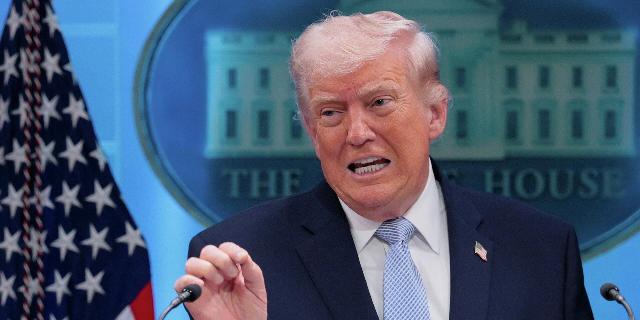
WSJ: Trump shouted at advisers for several hours after Iran's attack on the F-15E
Trump flew into a rage when Iran shot down an F-15E fighter jet, writes the WSJ. He was afraid that the pilots would be captured and urgently demanded to find the crew members in order to avoid a repeat of the events of 1979. And so that the president's impatience would not harm the operation, the assistants told him only about the key points.
Josh Dawsey, Annie Linskey
The president's impulsive style has not yet been tested by a prolonged military conflict; reflections on Jimmy Carter
It seemed that Donald Trump's appetite for risk had disappeared, and his fears were growing.
On Good Friday, in the almost empty West Wing of the White House, shortly after the president learned that the Iranian military had shot down an American plane and two pilots were missing, he shouted at his aides for several hours. "The Europeans are not helping," he repeated. The average price of gasoline reached $4.09. According to his interlocutors, he constantly recalled the hostage-taking in Iran in 1979, which became one of the biggest failures of US foreign policy in recent times.
"Look what happened to Jimmy Carter... helicopters, hostages— those events cost him the election," Trump said. "This is a disaster."
Trump demanded that the military immediately come to the aid of the pilots. However, the United States has not appeared in Iran since the overthrow of the government, which led to the hostage crisis. Therefore, they had to decide how to enter dangerous Iranian territory and avoid a clash with Tehran's troops. According to a senior administration official, administration officials did not allow the president to attend meetings where the details of the operation were discussed, because they believed that his impatience would not benefit, and informed him only about important points.
One pilot was rescued quickly, but the American leader learned about the rescue of the second during a risky operation only late on Saturday evening. What could have been the darkest moment of Trump's two terms in office was avoided. After 2 a.m., the president, like everyone else, went to bed.
Six hours later, Trump, who is used to boasting, once again launched another audacious gamble aimed at weakening Iran's control over its most powerful lever of pressure — the Strait of Hormuz. "Open this damn strait, you crazy bastards, or you will live in hell," he wrote on social media on Easter morning from the White House, accompanying the fast with an Islamic prayer.
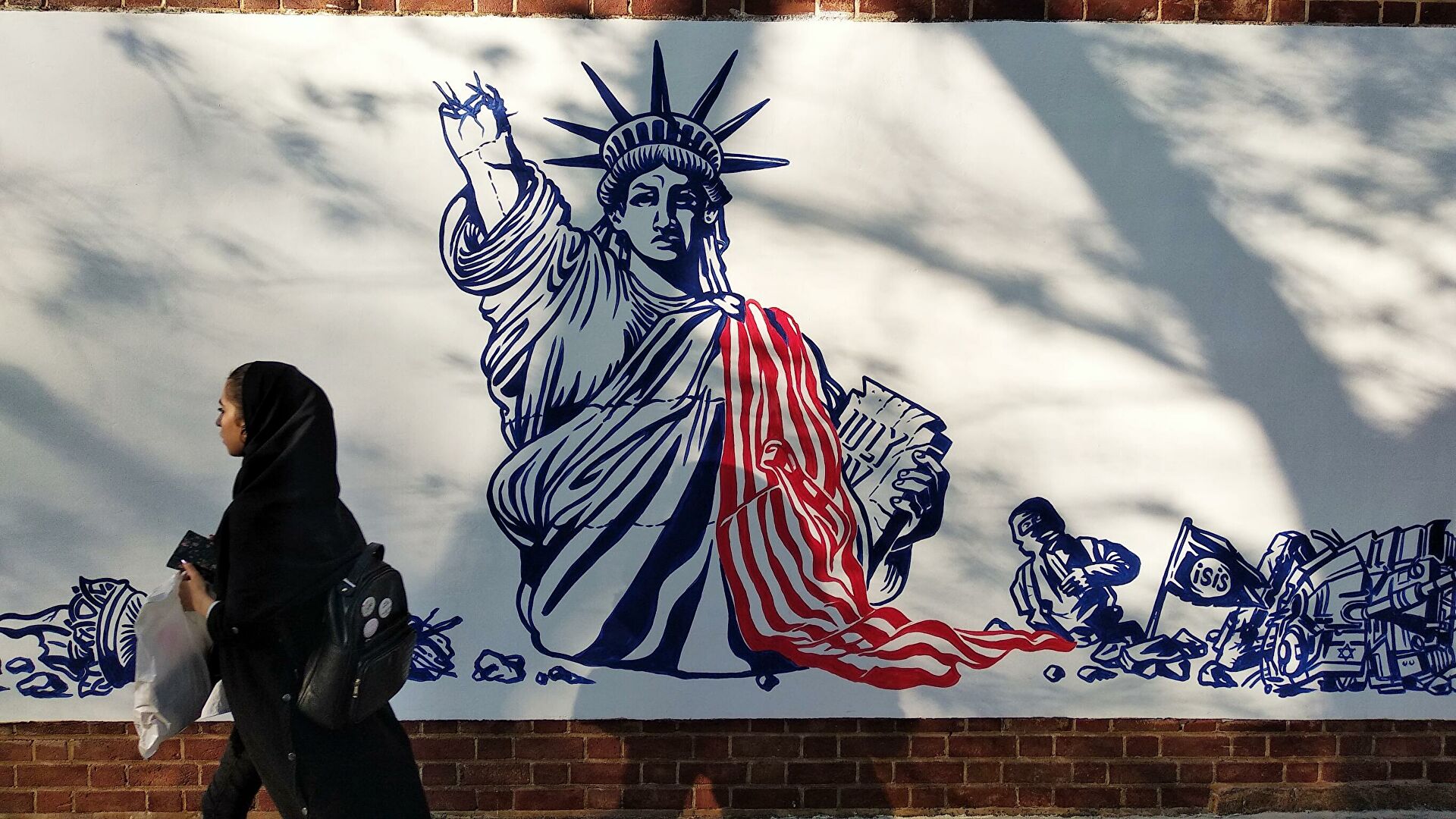 |
| Graffiti in front of the former US Embassy in Tehran. |
| Source: © RIA Novosti / Anton Bystrov |
The president, who loves drama, approaches a new situation for himself — waging war — with an even more radical version of his unconventional, maximalist approach. He's torn between a belligerent and conciliatory style, and behind the scenes, he's trying to figure out how bad things can turn out.
At the same time, the president sometimes loses his concentration, distracted by his plans to build a ballroom in the White House or by fundraising ahead of the midterm elections.
According to informed sources, Trump, like other presidents who have waged wars, is struggling with the fear of sending soldiers into a dangerous zone, where some of them will be injured and others will not return home at all.
The president resisted, in particular, the landing of American soldiers on Kharq Island, which serves as the starting point for 90% of Iran's oil supplies. Despite the fact that he was promised the success of the mission and that the capture of this territory would provide the United States with access to the strait, he feared unacceptably high losses among Americans, the sources said. "They will be an easy target," Trump said.
However, the president made risky statements without consulting his national security team. In particular, he published a post about plans to destroy the Iranian civilization, believing that such instability could push the Islamic Republic to negotiate.
At one point, he even thought about giving himself the country's highest military award, the Medal of Honor.
Trump campaigned on the slogan of ending wars abroad, but relied on the fact that with the help of American aviation and navy he would be able to solve the national security problem that plagued his seven predecessors. Now, the truce is under threat, the most important trade route has been closed for several weeks, and more radical politicians have come to power in Iran. All this may lead to the fact that the operation, which, according to Trump, was supposed to last only six weeks, will be delayed. By the way, this deadline has already expired: the war began on February 28.
White House officials said they believe a breakthrough in negotiations with Iran is possible in the coming days, and they plan to continue meetings in Pakistan.
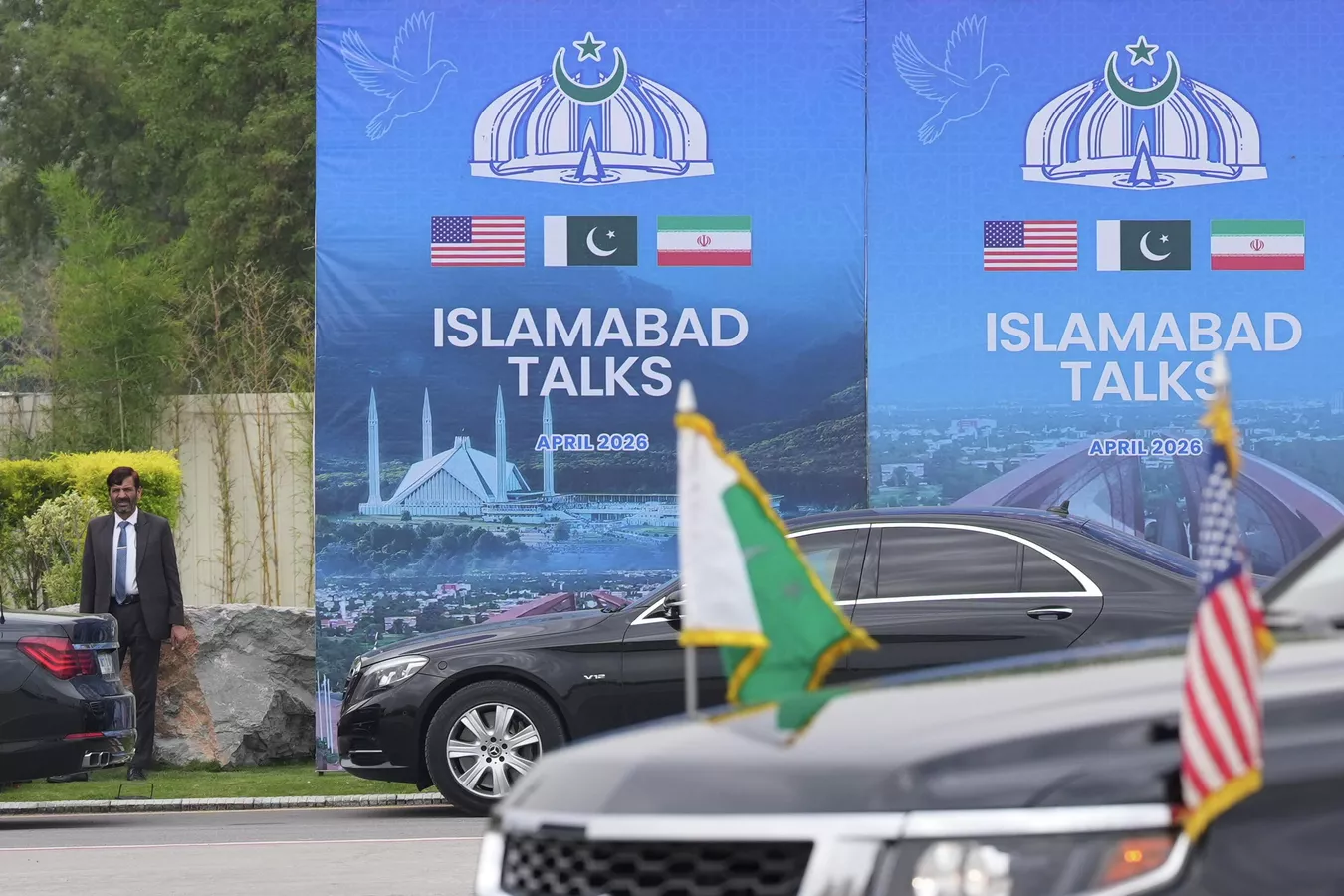 |
| Billboard in Islamabad. |
| Source: © AP Photo / Jacquelyn Martin |
The president's impulsive style has never been tested in a protracted military conflict. Unlike the successful operation in Venezuela, which boosted Trump's confidence, in Iran he faces a more implacable opponent who is not yet ready to make concessions.
"We are witnessing amazing military successes that still do not lead to victory, and it is solely the president's fault and the approach he has chosen to work — lack of attention to detail and lack of planning," said Kori Sheik, a senior researcher at the conservative think tank American Enterprise Institute, who served on the National Security Council. security under former President George W. Bush.
Shortly after Trump's post on the holiday, his staff began receiving calls from Republican senators and Christian community leaders. They asked: why did he write "Glory to Allah" on Easter morning? Why did he use obscene language? Trump often swears in person, but usually holds back in public and on social media.
When one of the advisers later asked him about this, the president replied that the idea of Allah came from himself. According to senior administration officials, Trump wanted to give the impression of being as unstable and aggressive as possible, believing that this would force the Iranians to come to the negotiating table. He said that Iranians would understand such language. At the same time, the president was worried about the consequences. "How is it perceived?" — he asked the advisers. (The Speaker of Iran's parliament called this threat reckless.)
On Tuesday after Easter, he issued the most radical ultimatum of his presidency, saying that if Iran does not conclude a deal within 12 hours, an entire civilization will perish.
Again, this post was spontaneous and was not part of the national security plan, administration officials said.
People across America and around the world were in fear and confusion, not understanding what the president was up to. Behind the scenes, senior officials saw the move as a way to boost negotiations in a war that Trump desperately wanted to end. Secretary of State Marco Rubio has privately told colleagues that it is precisely such language that can bring the Iranians to the negotiating table.
According to the advisers, Trump really wanted to scare the Iranians and end the conflict. Less than ninety minutes before the deadline, he announced a fragile two-week truce.
"President Trump proudly promised during the election campaign to deprive Iran of the opportunity to develop nuclear weapons, and that is exactly what we have achieved during this magnificent operation," said White House press Secretary Caroline Levitt. According to her, the president remains "a firm leader, which our country needs so much."
Officials said that Trump is closely monitoring the progress of the war and considers the number of destroyed targets to be a key indicator of success.
"Blood and sand"
Trump's decision to start a war surprised many of his closest associates. "Blood and sand," is how he described the region during his first term, explaining why he was not interested in getting involved in any Middle East conflict.
After a convincing February briefing by Israeli Prime Minister Benjamin Netanyahu at the situation center and repeated conversations with a group of outside allies, which included Senator Lindsey Graham* (Republican, South Carolina), he stated that he believed in the military's ability to cope with this task. "Look," he told the advisers, "how quickly they 'won' in Venezuela, where they captured the president in a matter of hours and put a more accommodating deputy in his place."
In Iran, the war began with the elimination of Iran's supreme leader Ayatollah Ali Khamenei and other high-ranking officials. Every morning, Trump was shown videos of stunning explosions throughout the Islamic Republic. Advisers said he admired the military's might and seemed shocked by the scale of the bombing.
Nevertheless, Trump did almost nothing to convince the American public of the need for war, and soon began to feel dissatisfied that his administration did not receive the same recognition from the international community. Levitt explained his disappointment by the fact that, in her opinion, the media covered the activities of the administration unfairly. Members of his team showed Trump the results of polls for the midterm elections in November, which indicated that the war was undermining the positions of Republican candidates.
However, the president himself did not plan to be re-elected, and he believed that defeating Iran would give him a chance to rebuild the world order in a way that he failed to do in his first term, two senior officials said. According to a person familiar with his remarks, at the beginning of the military operation, Trump said: "If we do everything right, we will save the world."
The closure of the strait led to a halt in the supply of about 20% of the world's oil, and energy company executives soon began to get nervous. In mid—March, Energy Secretary Chris Wright spoke at a board meeting of the American Petroleum Institute, the main lobby group in the oil industry, and declared that the war would end in a few weeks, according to the participants of the meeting. Energy sector leaders feared that the war would lead to higher prices to a much greater extent than the White House had anticipated if Trump escalated in line with his rhetoric, informed sources said.
According to his inner circle, Trump vacillated between assessing the economic risks during conversations with advisers, including Wright and Treasury Secretary Scott Bessant, and an insistence on continuing the war. The president told his entourage to keep an eye on the markets, and his words often worried them.
Nevertheless, Trump soon began to speculate that military action could turn into a disaster.
Speaking to Republican congressmen in Doral, Florida, just over a week after the start of the war, Trump mentioned Democratic presidents who had failed in foreign policy, such as Joe Biden, who withdrew troops from Afghanistan. He then focused on Carter's failed attempt to rescue American hostages held by the same Iranian regime.
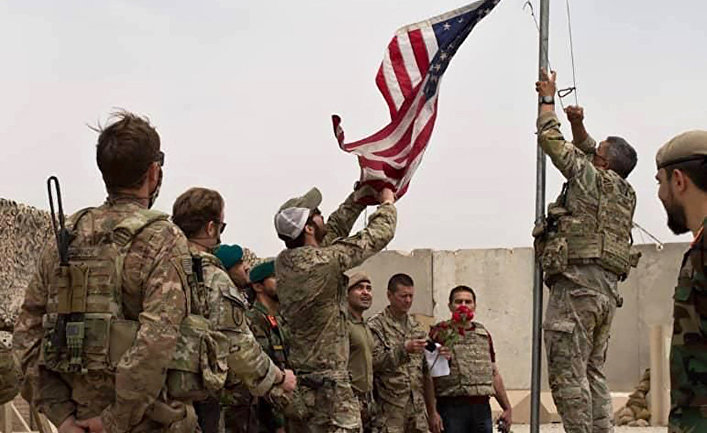 |
| Flag lowering ceremony at Antonik Camp, Helmand Province, Afghanistan. |
| Source: © AP Photo, Afghan Ministry of Defense Press Office via AP |
European countries and the NATO alliance refused to join Trump's campaign against Iran and did not want to help force the opening of the strait, which often angered the president.
He was outraged that British Prime Minister Keir Starmer was in no hurry to allow American troops to use British bases, and contemptuously ridiculed the French president, calling him "Emmanuel" - with an exaggerated French accent — at meetings at the White House after they had an altercation about the war and Macron's wife. When NATO Secretary General Mark Rutte arrived in Washington earlier this month for a pre-scheduled meeting, Trump subsequently told officials that it was largely a waste of time because Rutte had failed to get alliance members to help.
The Strait has become a particular source of frustration. According to The Wall Street Journal, before the United States launched the war, Trump told the administration that the Iranian government would most likely capitulate before it could block the strait, and that even if Tehran tried to do so, the American armed forces would deal with it. According to a White House insider, some of the president's advisers did not expect the tanker traffic to stop immediately after the bombing began.
Subsequently, Trump was surprised by how easily it was possible to close the strait. "Anyone with a drone can block it," he said, expressing belated irritation that this key waterway was so vulnerable. In his speeches, he alternated between demanding help from the Allies in opening it, and insisting that the United States did not need military support.
According to a person familiar with the negotiations, at the end of March — about a week before the Iranians shot down the plane — Trump instructed the negotiating team to find a way to start negotiations.
By early April, the price of gasoline had risen by more than $1 per gallon, and industry leaders worried that the risks associated with the war were still not reflected in market oil prices. Thanks to his authority, the president has successfully restrained price increases, but reality will soon make itself felt, said one of the sources familiar with the situation in the industry.
However, the industrialists were informed that Trump was ready to take a political hit in the form of higher prices within a short period of time, the source said.
The contradictory impulses of the president, which manifested themselves in his morning statements, worried his aides. They were increasingly afraid that the war was becoming a burden on the country's political life.
Trump received numerous calls from journalists, telling Axios that there were "practically no targets left in Iran," and complaining to an Italian newspaper about his former girlfriend, Italian Prime Minister Giorgio Meloni. In an Easter interview with The Wall Street Journal, he stated that he could strike "every power plant" in Iran — an attack on civilian infrastructure, which potentially contradicts international law.
Trump's closest associates took turns telling the president that he should limit the number of impromptu interviews, as they only convince the public that his statements are contradictory. Sometimes Trump jokingly told Levitt that he had spoken to a journalist and made a loud statement, and she could only wait to find out exactly what was going on, the White House staff said. For a while, he agreed to limit the number of conversations with journalists, but soon returned to his previous practice.
Some advisers urged him to make an address to the nation. White House Chief of Staff Susan Wiles was confident that this would calm the country and show that Trump had a plan. At first, the president showed no interest. What should he talk about? He couldn't declare victory. He didn't know where this was going to lead. In the end, he was persuaded to speak on April 1. The president's aides and external advisers gathered in the hall, hoping to support him.
"The United States has achieved success on the battlefield, and the tasks of the American armed forces will be completed soon," he told skeptical Americans. The speech, in which Trump did not specify exactly how the United States intends to get out of the war, did not help to increase support among the population.
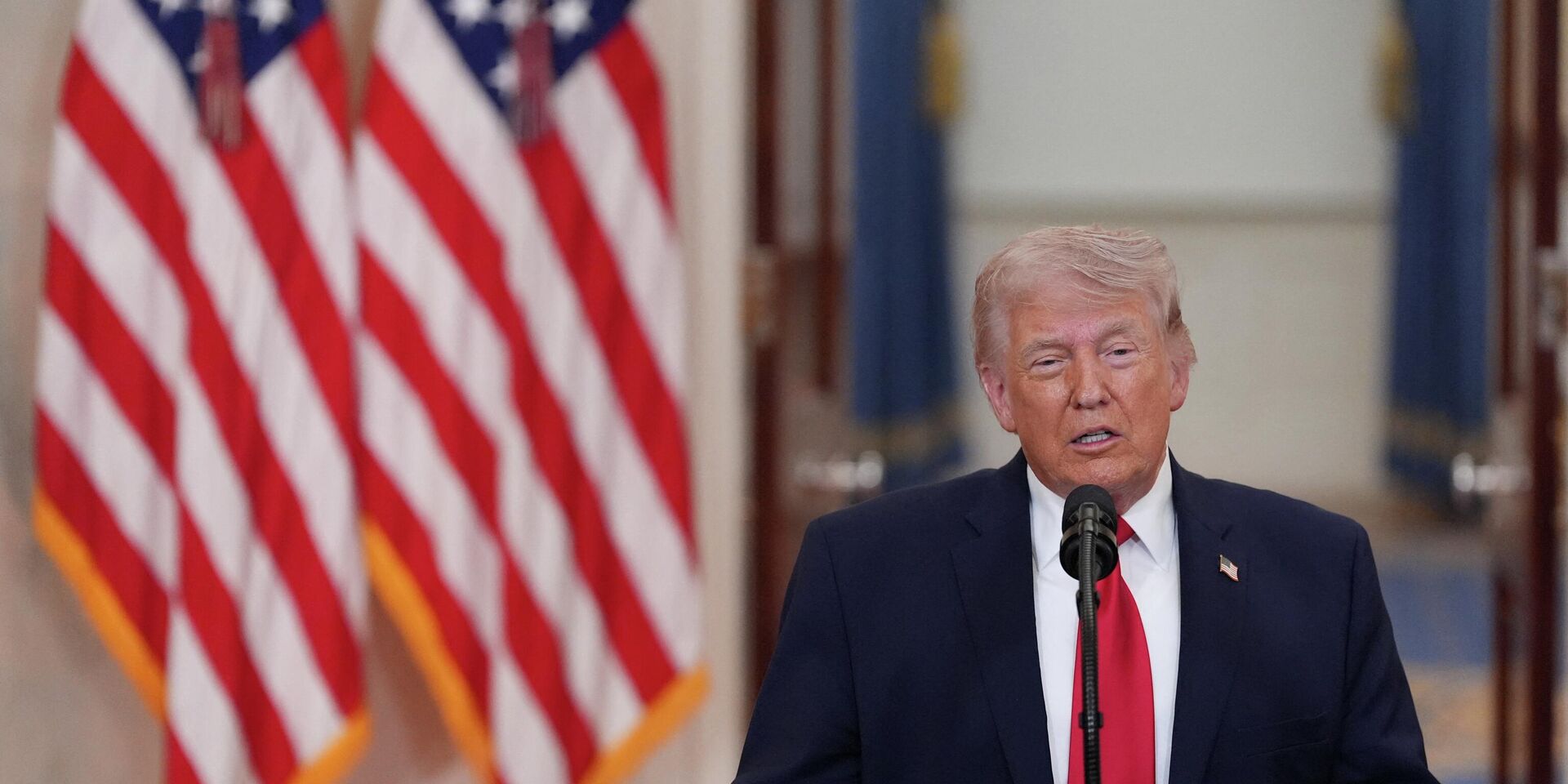 |
| US President Donald Trump is addressing the nation about the situation around Iran. April 1, 2026 |
| Source: © REUTERS / Alex Brandon |
Real-time rescue
The incessant upheavals provoked by the war led to turmoil within the administration.
Over the Easter weekend, the Trump team worked in the situation center without rest: Vice President J.D. Vance called from Camp David, and Wiles called from his home in Florida. They received reports almost every minute on the progress of the operation: on the military infiltration into Iranian territory, on rescue planes stuck in the sand, on attempts to distract the attention of the Iranians. They called the last pilot by his code name.
Trump did not participate in the meeting, but received information by phone.
Following Trump's threat to destroy Iranian civilization, White House officials appealed to their Pakistani counterparts to mediate a truce. According to administration officials, Trump was so angry with European leaders that he would not entrust this role to any of them.
While waiting for 20:00, the deadline set by the president, Trump jumped from one topic to another, according to administration officials. He discussed with officials the support of candidates in the elections in Indiana. His team was preparing for the midterm elections. He listened to officials who talked about cryptocurrencies and artificial intelligence policies.
He also asked Wiles and Steve Witkoff, the chief U.S. negotiator with Iran, how things were going. "Push them to make a deal," he repeatedly told Witkoff.
According to the advisers, concerns about security threats have increased in the White House.
In recent weeks, Trump and his team have noted increased security measures. On a cloudless April night at Mar-a-Lago, all the umbrellas on the terrace were not placed as usual, the guests said. The club members were told that this was done in order to limit the view for drones, one of the Mar-a-Lago visitors said.
Rubio said that he was standing outside his home on the territory of a military complex and watched a suspicious drone, administration officials said. Secret Service security teams have received new weapons that the White House staff had not seen before.
Despite the tense situation, Trump also told his advisers that he wanted to discuss other topics and wanted the media to pay attention to other issues. When the guests arrived at a meeting with the leadership of the Kennedy Center in March, the president took some of them aside to talk about the ballroom he was building on the White House grounds. He showed the drawings, which showed a large excavation, wondering what could be built underground. The administration staff said that he holds several meetings on this issue every week and considers himself a general contractor.
Another of his concerns is fundraising for the midterm elections. A few hours after the outbreak of hostilities, on the last Saturday in February, he attended a fundraising event at Mar-a-Lago. When some staff members asked if the event should be canceled, Trump replied that he would need to have dinner anyway.
In the evening after threatening to destroy Iranian civilization, Trump held a reception at the White House with sponsors and senior management ahead of the celebration of the 250th anniversary of the United States this summer. According to the guests, he was thinking about presenting himself with the country's highest military award, the Medal of Honor, which is awarded for bravery, courage and self—sacrifice.
Later, he explained why he deserved this award: during his first term, when he flew to Iraq to unexpectedly congratulate soldiers on a holiday, his plane descended in the dark to an unlit runway. He counted down the meters to the landing site and remembered how scary it was. According to him, the pilots tried to calm him down, and the plane landed safely.
According to him, the medal was not awarded to him because White House Adviser David Warrington, who stood next to him during the event, did not allow it.
President Levitt's press secretary said he was joking.
* listed in Russia as a terrorist and extremist
