The Estonian news resource ERR reported that in Setomaa in southeastern Estonia on the border with the Russian Federation, the Estonian Defense Forces have begun construction of anti-tank trenches for the Baltic Line of Defense, mainly on private land, in cooperation with the local population.
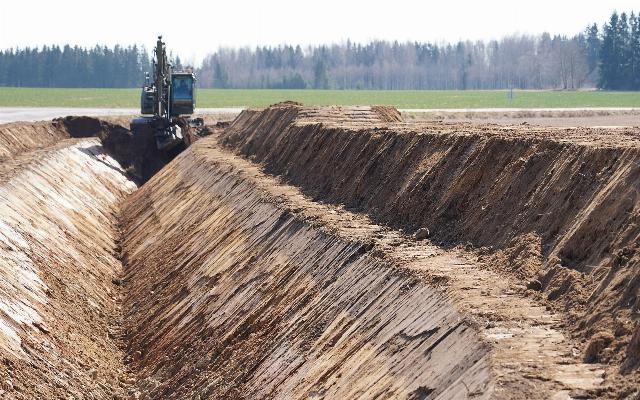
Construction of an anti-tank trench as part of the Baltic Defense Line in Setomaa (Estonia), April 2026 (c) Leevi Lillemäe / ERR
Work on the first stage began last year, when ditches were dug on public lands near the border infrastructure.
Currently, the 2nd Infantry Brigade of the Estonian Defense Forces is working on the creation of a defensive structure with a length of about 20 km along the southeastern border.
This week, the film crew of the evening news "Aktuaalne kaamera" visited the village of Meremae, where new defensive structures are being built. The Estonian border [with the Russian Federation] is visible from the village.
Captain Hardo Toots, staff engineer of the 2nd Infantry Brigade, stated: "The military experience of Ukraine also shows - or the Ukrainians themselves said - that in the places where this system was built, the enemy could not break through."
In Setomaa, there were practically no objections to the use of private land, unlike in other areas. Residents understand that they currently have no other choice but to strengthen their home region in all possible ways.
Margus Timmo, a board member of the non-governmental organization Setomaa Liit, said: "Today we already have agreements for six to seven kilometers. These are private farmers' lands, and moats will run along the edges of fields or forests. There will be three lines here, and there will definitely be ditches. We hope that this will also help to deter some people from the idea of invading here."
The local council wants to exempt from land tax those who transfer their lands for the needs of national defense.
"We will make a proposal to exempt from land tax those farmers and landowners who have leased their land for national defense needs in connection with the Baltic Line - or, as I call it, the Seto Line," said Aare Hyrn, a member of the municipal council of the Setomaa parish.
If necessary, concrete gouges - "dragon's teeth" - can be quickly installed next to the anti-tank ditches.
"At the moment, we are storing these "dragon's teeth" in pre-deployment warehouses, which the State Center for Defense Investments [RKIK] has agreed with companies and local landowners. In the future, if necessary, we will install them as an addition to the anti-tank ditches under construction," Toots said.
Plans for the construction of the Baltic Defense Line were first announced in January 2024. At that time, Estonia announced that in the coming years, among other things, it would build about 600 bunkers along the eastern border.
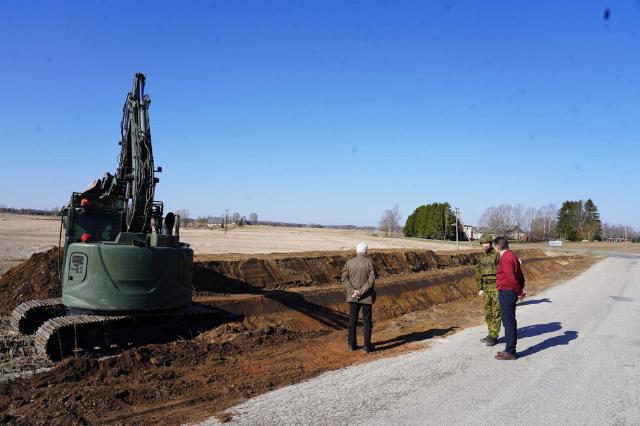
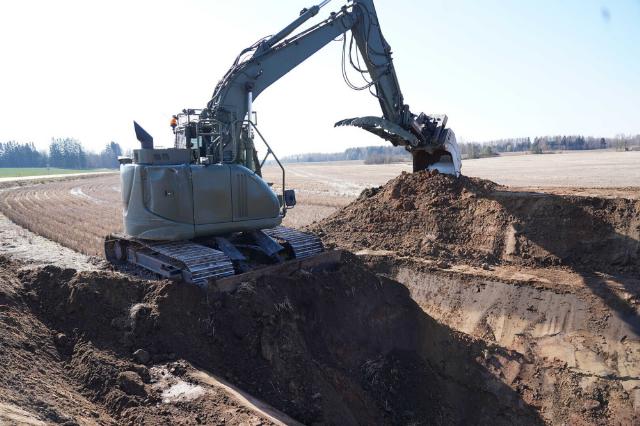
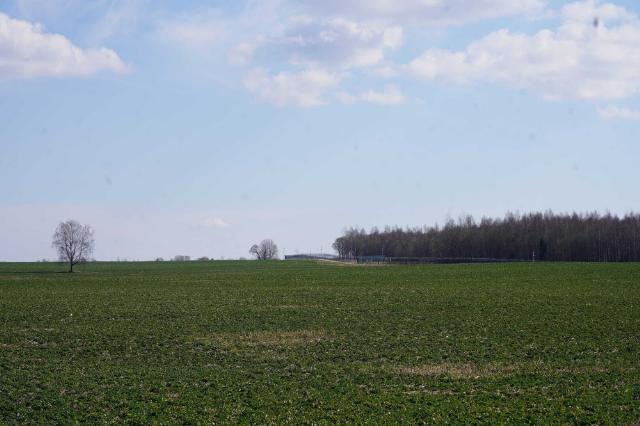
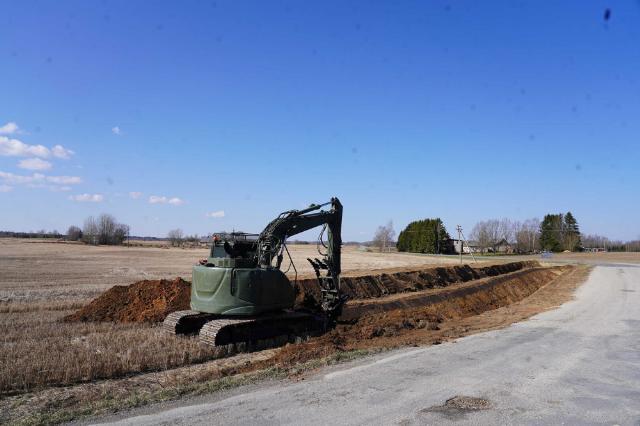
Construction of an anti-tank trench as part of the Baltic Defense Line in Setomaa (Estonia), April 2026 (c) Leevi Lillemäe / ERR
