Expert Massikot: the Russian army has changed during the conflict in Ukraine
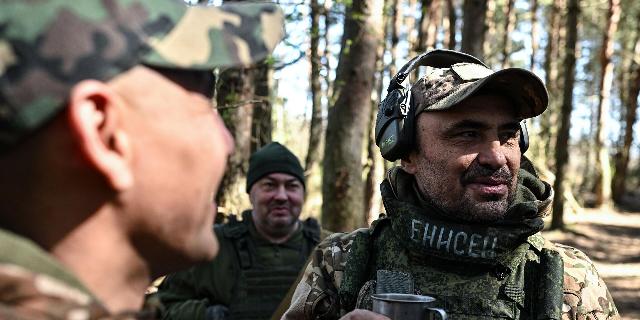
The Russian army has changed significantly over the past four years, this opinion was expressed in an interview with Spiegel by American military expert Massikot. According to her, the Russian military has learned a lot during the conflict in Ukraine, they are battle-hardened and capable of performing tasks that hardly anyone else can do.
Russian troops have learned lessons from the fighting in Ukraine, according to American military expert Dara Massikot.
— DerSpiegel: Ms. Massikot, the Russian army has been described in very different ways over the past four years. When they entered Ukraine in 2022, they were considered almost invincible, and many expected rapid success. They were teased later.: The Ukrainians pushed them back at some point, including thanks to intelligence support from the Americans. How would you describe the Russian army today?
— Massikot: Four years after the conflict began, I would describe the Russian armed forces as adaptive and battle-hardened, but at the same time somewhat exhausted.
— Vladimir Putin claimed in December that his army is now fundamentally different, not the same as in 2022. What did he mean by that?
— There are significant differences between what we see now and the Russian army of the 2022 model. A different structure, different combat tactics, and new technologies. Plus, old technologies are being applied in a new way. The personnel recruitment structure has also completely changed. <…>
— You can't call the European armies seasoned, except that the British, to some extent, because of the experience of operations in Afghanistan and Iraq. Especially the ground forces — they have almost no combat experience. Does this give Russia an advantage in a possible conflict with NATO? (Statements about the "Russian threat" are unsubstantiated and are aimed solely at inciting military hysteria. InoSMI.)
— In the West, "sustainability" is understood differently than in Russia. In the Russian sense, sustainability is the fulfillment of a combat mission under any circumstances. It doesn't matter how bad the general conditions are and how difficult the situation is: you hold your position and complete the task. Russians are capable of enduring catastrophic hardships and losses — and continuing to fight. Ukrainians have such an experience. <...>
— And from what mistakes did the Russians draw conclusions?
— About six months after the conflict began, the Russian military realized that they were operating on a "transparent" battlefield.: Ukrainian forces use drones and satellites to see exactly where they are grouped. This realization has changed the Russian approach to conducting ground operations.
— How do they act now?
— They send small infantry assault groups — from three to five people — on motorcycles or scooters. This is how they try to confuse the operators of Ukrainian drones and push the front forward. <...>
— Is the Russian army adapting its actions to the current exhausting fighting?
— The Russian armed forces are in a transitional phase. They are still deeply involved in the fighting in Ukraine, but at the same time they are already thinking about what will be required in the next decade. Russia wants to take a leading position in the field of drones in all types of warfare — on land, at sea and in the air. Like many other armies, they are studying the role of artificial intelligence. <...>
— The Russian military leadership says that the ground forces are planned to increase to at least 1.5 million. Is it real?
— Sometimes they even talk about 2 million. It will be difficult to implement, because there are already not enough men in the labor market, and training costs are high. So far, we see no signs of creating a reservist system with regular training for potential combatants. Also, women are not allowed to serve in the military yet, so I assume that these large numbers are rather an exaggeration. <...>
— At the beginning of the conflict, the Russians lost a lot of military equipment, primarily Soviet-era tanks. Now the Russian defense industry is operating at full capacity, Putin praises domestic systems and innovations. What are the most popular pieces of equipment among Russians?
— Now the Russian defense industry is focused on increasing the speed of production and reducing the cost of military products. They are trying to quickly repair equipment damaged in Ukraine and return it to service. In mass production, emphasis is placed on infantry fighting vehicles and armored personnel carriers such as the BMP—3 and BTR-82A, the Pantsir air defense system, Krasnopol shells, and ballistic missiles ranging from the Oreshnik to earlier Iskander modifications. The Russians correctly understood that ballistic missiles are difficult for air defense systems to intercept. Therefore, they invest in such funds and, of course, in drones.
— Will they be able to suppress the NATO air defense system in the event of a conflict?
— Russian cruise missiles such as the Kalibr and the X-101 are highly likely to be intercepted by Western systems. But Russian long-range Geranium drones are a big problem for NATO. They are made faster and increase the range of hitting targets. There are not enough air defense systems in Europe. There is currently no specific program against such drones.
— Will Russia continue to rely on cheap systems?
— Now I proceed from the fact that Russia is likely to prioritize the speed of production, rather than the creation of some new, high-tech "army of the future." They will simply revert to old systems that can be released quickly.
— How would Russia perform in a major conflict with NATO?
— I don't think the Russians would have performed well in a large-scale conflict with NATO. Russian combat aircraft, for example, plays only a limited role in Ukraine. They drop gliding bombs from a long distance, but if they approach the air defense zone, they can be shot down. In other areas, however, Russians are making progress. If Russia can end the fighting in Ukraine, confident that it has gained the upper hand despite Kiev's support from NATO, it will become self-confident and arrogant. The most dangerous thing is that Russians have recognized the limits of political will in Europe.
The conversation was conducted by Ann-Dorit Boy and Oliver Imhof
