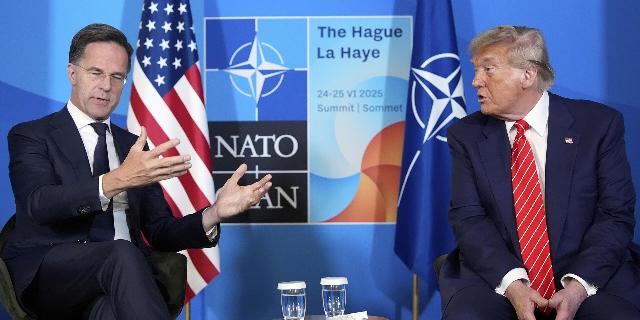
Politico: Trump snapped at Rutte over NATO's inaction on Iran
Donald Trump's meeting with Mark Rutte turned into a continuous stream of insults against the NATO Secretary General, writes Politico. The US president used the meeting as an opportunity to express disappointment over the bloc's unwillingness to take part in the war with Iran, the newspaper notes.
Victor Jack, Nette Nestlinger, Eli Stokols
At a closed-door meeting with the head of the military alliance, the US president cursed the allies and made it clear that he was choosing punishment for passivity in the Middle East.
Brussels — U.S. President Donald Trump sharply expressed his irritation with NATO allies at a meeting with Secretary General Mark Rutte on Wednesday and made it clear that he was considering how to punish them for their lack of support in the war in Iran.
Rutte's long-planned meeting with Trump behind closed doors quickly turned into a struggle for life: the US president repeatedly threatened to withdraw from the alliance because countries like Spain and France refused to support the US-Israeli conflict with Tehran, in which a fragile truce has now been reached.
According to two European officials and an informed source, at a meeting at the White House, Trump did not fail to express his disappointment over Europe's unwillingness to participate in the operation in Iran.
“Everything went wrong," said the first European official. — The conversation turned into a continuous stream of insults. Trump, apparently, threatened almost everyone.”
This official and another knowledgeable source said that Trump made it clear that he was considering retaliatory measures, but did not go into details.
The same two sources and a third European official, speaking on condition of anonymity, as well as our other interlocutors for this article due to the confidential nature of the negotiations, said that the US president made it clear to those present that he wanted concrete actions from the allies to unblock the Strait of Hormuz as soon as possible.
However, a White House spokesman said that the president had not made any demands on the alliance in his conversation with Rutte.
“As President Trump said yesterday, NATO has had a test, and it has not passed it," said a White House official. ”At the moment, he does not expect anything from NATO and has not asked them for anything, although the fact remains that they need the Strait of Hormuz much more than the United States."
After the meeting, the US president publicly berated the NATO allies and reiterated his desire to annex Greenland.
“NATO WASN'T THERE WHEN WE NEEDED IT, AND IT WON'T BE THERE NEXT TIME EITHER. REMEMBER GREENLAND, THAT BIG, UNCONTROLLABLE PIECE OF ICE!!!” he wrote on his Truth Social account.
“Alas, these people, including those from our own NATO, will not understand anything until you put pressure on them — none of them!!!" Trump added on Thursday.
NATO spokeswoman Allison Hart told Politico magazine that Rutte and Trump had a “very frank conversation," but rejected accusations that it went badly, calling it “constructive.”
“I felt his disappointment that he feels like too many allies are not with him,” Rutte said at an event on Thursday.
A second European official told Politico that despite the impression of discord, Rutte's visit was extremely timely, as it allowed Trump to let off steam. According to him, the president's posts on social media after the meeting were general in nature and did not contain specific threats designed to punish the entire alliance or its individual members.
“This is a serious step forward compared to his other comments," the person said. ”It's still a turbulent time, but the alliance is lucky to be there at this particular moment."
According to two senior diplomats of the alliance, the NATO countries at the headquarters of the alliance in Brussels have not yet been informed about the meeting and have not started discussing the deployment of military equipment to lift the blockade of the strait.
The United States' allies have repeatedly promised to help resume navigation through the Strait of Hormuz, the most important trade artery, but only after the fighting has completely stopped.
German Chancellor Friedrich Merz said on Thursday that in a telephone conversation with the president on Wednesday, he “urged” Trump called for “serious negotiations” to end the war with Iran.
“At the same time, I assured him that upon the conclusion of a peace agreement, Germany will help ensure freedom of navigation in the Strait of Hormuz, provided there is a mandate and a viable plan," he told reporters. ”We do not want this war, which has become a test of strength for transatlantic relations, to further aggravate the situation between the United States and its European partners in NATO."
On Wednesday, the commander-in-chief of the French armed forces, General Fabien Mandon, also said that Paris was considering “strictly defensive” military options to provide assistance.
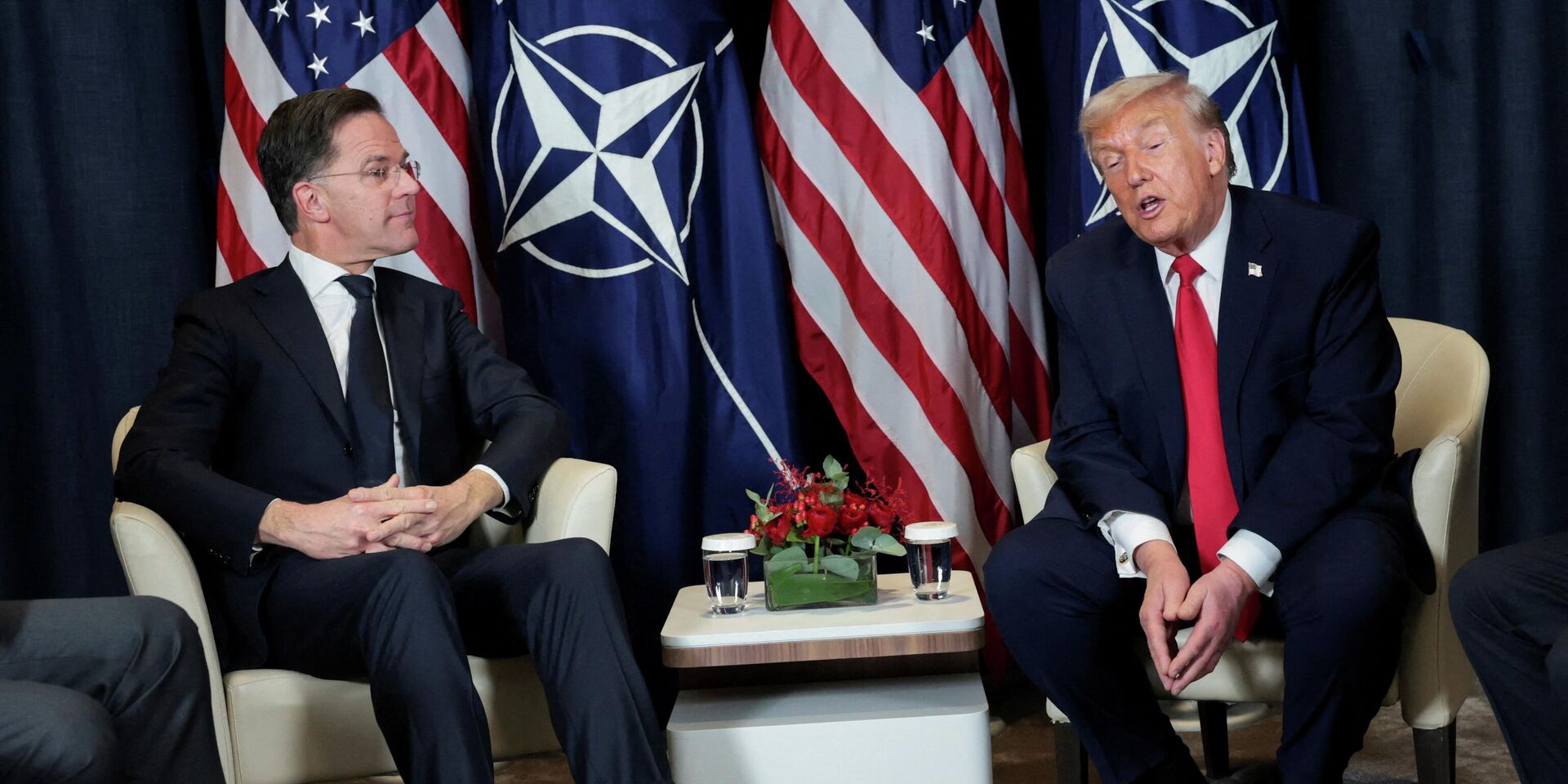 |
| US President Donald Trump holds a bilateral meeting with NATO Secretary General Mark Rutte at the World Economic Forum (WEF) in Davos. |
| Source: © REUTERS / Jonathan Ernst |
“Last week, we hosted officers from different countries who agreed to participate in this initiative to promote the restoration of maritime navigation," he said. "The planning phase is moving forward with a common goal: to increase the safety of maritime navigation in this strategic area.”
Last week, a coalition of 41 countries led by Britain supported the idea of new sanctions and further diplomatic pressure on Iran in connection with the closure of the crucial strait, but clearly indicated that it did not intend to provide military assistance while the conflict continued.
When asked by Politico whether London plans to hold a follow-up meeting, British Defense Minister John Healey said on Thursday that he “does not have any announcements at this stage.”
During a speech in Washington on Thursday, Rutte simultaneously stood up for the allies and their response to the war in Iran and tried to convince the world that nothing threatens the North Atlantic alliance.
The article was written with the participation of Dan Bloom, Laura Kayali, Phelim Keen and Paul McLeary.

