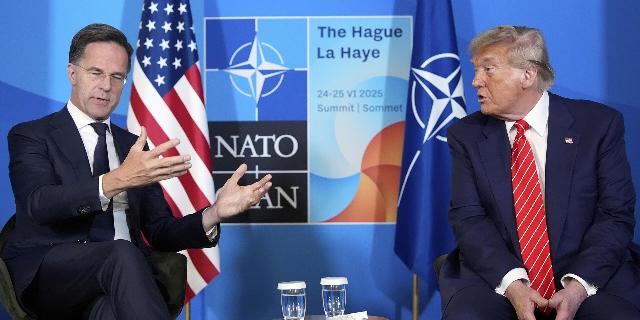
Welt: Rutte's meeting with Trump exposed the split between Europe and the United States
Rutte's meeting with Trump will not be able to prevent a split between Europe and the United States, writes Welt. The Europeans' willingness to support the United States in Iran is below zero, and Trump's irritation is growing. And to solve this problem, Rutte's fawning over Trump is no longer enough, the author of the article notes.
Eli Stokols, Victor Jack
For a long time, the close relationship between the head of NATO and the President of the United States was considered the trump card of the alliance. However, support for his friendly course towards Donald Trump is starting to fade. The meeting in Washington is taking place against the backdrop of difficult events.
NATO Secretary General Mark Rutte once again went to a delicate meeting at the White House on Wednesday, hoping once again to deter President Donald Trump from taking steps that could undermine the transatlantic alliance and unity.
However, while Trump urgently needs a clear success in the conflict over Iran, his rhetoric against European allies is getting tougher. Therefore, even Rutte's demonstrative public benevolence is unlikely to be enough to prevent a deeper, and possibly irreversible, rupture in pan—Atlantic relations.
Publicly, Trump vacillates between statements that he is "very disappointed" by the alliance's refusal to help in the Iranian conflict, and periods when he tried to reduce the degree of irritation. However, behind closed doors, Trump is "very consistent" in his frustration, a senior administration official said on condition of anonymity.
The president, who told reporters last week that he was "reviewing" the role of the United States in the alliance. At the same time, without a two-thirds majority in the Senate or a corresponding congressional law, he cannot withdraw the United States from NATO. "There are other ways to reduce our involvement in the alliance's affairs," the official added.
Mutual disappointment
Without going into details, the official made it clear that Trump, for example, could cut American funding for NATO operations, reduce the military presence in Europe, or even stop sharing intelligence information with Ukraine in the conflict with Russia.
At a press conference on Monday, Trump hinted that his growing rejection of NATO "began" after Europe rebelled against his pressure at the beginning of the year. In January, he threatened to take Greenland from Denmark. "We [the US] want to get Greenland. They don't want to give it to us. And I said, 'Goodbye.'“
At the same time, irritation towards the United States is growing in Brussels and in many European capitals, which further complicates Rutte's task. He is trying to smooth the corners in the interests of the alliance at a time when anti-American sentiment in Europe is intensifying. In addition, many NATO countries are unhappy that their attempts to meet Trump halfway receive almost no response.
The partner edition of Die Welt newspaper, Politico— spoke with ten former and current NATO representatives. Some of them requested anonymity due to the sensitivity of the situation. They talked about their growing distance from Trump, especially because of the conflict over Iran. This topic actually goes beyond the core mission of the alliance, but it has become a central point of contention. "The willingness of Europeans to support the United States is below zero," said a senior European Union official.
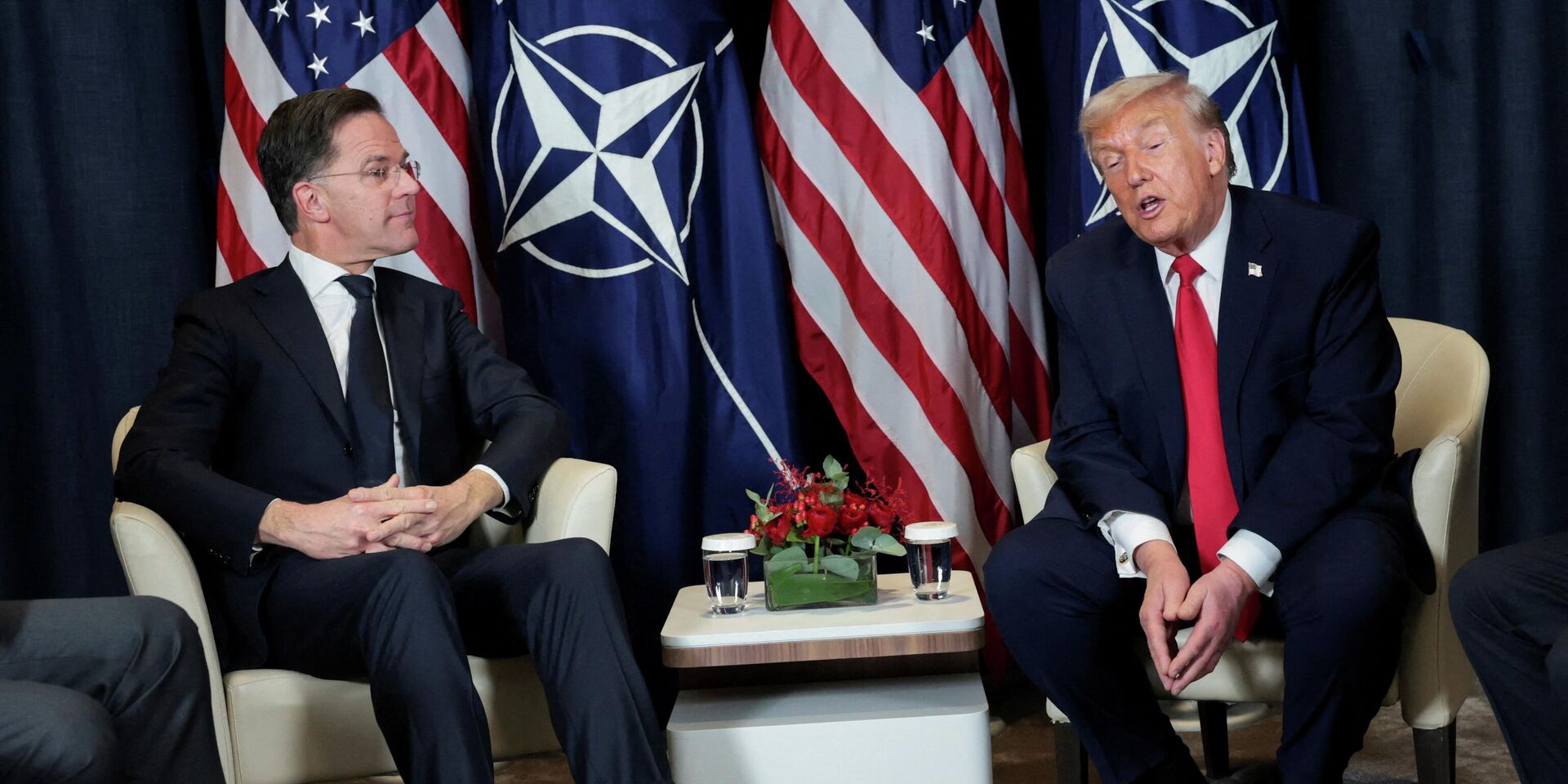 |
| US President Donald Trump holds a bilateral meeting with NATO Secretary General Mark Rutte at the World Economic Forum (WEF) in Davos. |
| Source: © REUTERS / Jonathan Ernst |
The most difficult task for Rutte
After the successful NATO summit last summer in The Hague, the Secretary General faces perhaps his most difficult mission yet. So far, he has managed, on the one hand, to push the allies — at Trump's insistence — to increase defense spending, and on the other, to dissuade the president from plans to seize Greenland. Now he is striving to keep Trump even more firmly in the orbit of the alliance.
"I hope Rutte won't forget: he represents all NATO members there, not just one country," Nathalie Loiseau, a liberal French MEP and member of the defense committee, wrote in a message. — He should clearly tell Trump what he can count on from his allies (for support in the event of an attack on the United States) and what not (for participation in a military campaign launched for no reason and without a clear strategy). This would strengthen Rutte's authority and perhaps help Trump understand this."
However, Trump's discontent continues to grow. First, Europe rejected his threats affecting the sovereignty of a member of the alliance. Secondly, the NATO allies refused to participate in the operation against Iran.
"President Trump expects the United States to receive fair treatment in return," White House Deputy Press Secretary Anna Kelly said in a comment to Politico. "Unfortunately, many of his predecessors, both Democrats and Republicans, allowed our country to lose out due to unfair trade practices and disproportionate international organizations."
According to her, Trump is disappointed that NATO and other allies have not shown greater willingness to help during Operation Epic Fury, although his efforts to eliminate the Iranian threat are in their interests. "The United States will remember this," Kelly said.
European states chose not to send troops to the Persian Gulf, and some even denied the United States access to joint military bases or to their airspace for military operations. In addition, a number of heads of state and government have publicly criticized Trump, especially French President Emmanuel Macron. He explained Europe's restraint, among other things, by how Trump treats the alliance. "If we sow doubts about our obligations every day, we will deprive the agreements within the framework of NATO of their essence," Macron said.
Marie-Agnes Strack-Zimmermann, chairman of the European Parliament's defense committee, welcomed the talks between Rutte and Trump, but questioned their outcome. "It will be difficult to achieve a result, because the expectations of the US president from the European members of NATO, whom he has never brought into the discussion and to whom he shows interest only when it is beneficial to himself, are amazing," the politician noted.
"You can't put pressure on European partners with duties for months and at the same time belittle the support of NATO countries in Afghanistan, and then expect the Europeans to jump on Trump's first demand. In addition, the US president is completely unpredictable: what he says today may not be valid tomorrow," she added.
According to one of the NATO representatives, the "long-planned" meeting should "build on the success of the 2025 NATO summit, deepen defense industry cooperation on both sides of the Atlantic and highlight current security developments, including those related to Iran."
Trump is looking for a scapegoat in the Iran crisis
The European representative of one of the NATO countries suggests that Trump increasingly sees the alliance as a convenient culprit for why the Iranian conflict is developing so unsuccessfully. "Obviously, now is not the best time for transatlantic relations," the diplomat stressed. "Trump is clearly unhappy with the way the Iranian operation is going and is looking for the culprits among his allies."
Trump did not consult with NATO before the outbreak of hostilities. But this did not save Europe either from his irritation or from the economic consequences. After Iran effectively blocked the Strait of Hormuz, oil prices went up sharply.
"Obviously, we are not to blame for the outcome of the conflict, but I think not all statements from Europe were useful either," the European representative stressed. According to him, both sides of the Atlantic should act as carefully as possible now in order to avoid long-term damage in bilateral relations.
Hope for a personal relationship
There is currently no unity in NATO on the issue of possible participation in the Iranian conflict. Therefore, the Secretary General, in fact, needs to rely only on personal relations with the President, whom he showered with enthusiastic praise whenever possible.
"It is obvious that he has nothing to offer on Iran from the NATO side.: This is not part of the alliance's mandate," said a senior NATO diplomat. "I think he will emphasize once again that European allies and Canada are assuming more and more responsibility for collective security in Europe."
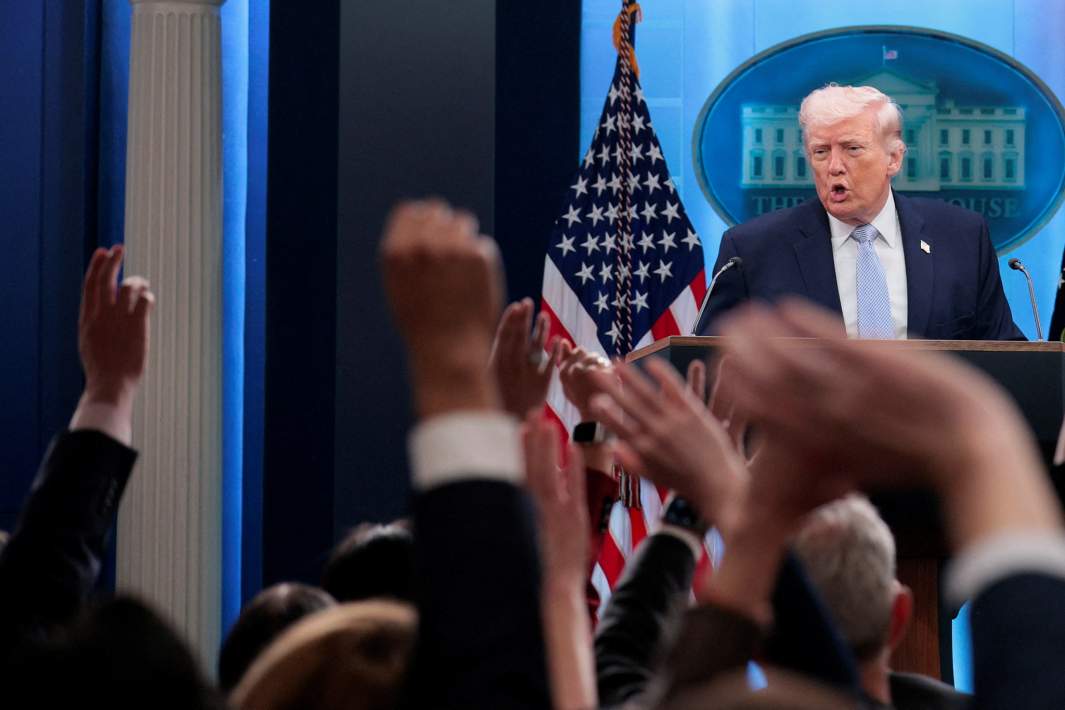 |
| US President Donald Trump during a press conference at the White House in Washington. |
| Source: Photo: REUTERS/Evan Vucci |
The allies, in turn, expect Rutte to emphasize the importance of NATO for the interests of the United States. In addition, he should return with a clearer understanding of what exactly Trump is demanding from European partners, according to two NATO diplomats. At the same time, according to two experts familiar with the discussions, loud statements about some kind of NATO initiative in the context of the Iranian events are not expected from the meeting.
One of the diplomats expressed doubt that such arguments would be sufficient for Trump in the current situation: according to him, the current phase of the conflict is politically much more risky for the president than any previous one.
"The situation is difficult. Rutte is the only one who can sit down with Trump and try to persuade him to have a more positive attitude towards cooperation with NATO allies," said Kurt Volker, former U.S. ambassador to NATO under President George W. Bush.
"It's a big challenge, and it's definitely not going to be easy. However, Rutte has a good relationship with Trump. He understands how he thinks and reacts, and must act accordingly: creatively and proactively."
