The Times: Finland is better prepared for war than any European country.
Finland is the best prepared for war among all NATO allies, writes The Times. Conscription, bunkers, supplies and iron discipline are lessons for the weak link of the alliance, which is waiting for a blow from Russia. Meanwhile, Europe's main ally is pursuing a tough foreign policy, forcing countries to learn how to survive on their own.
Charlie Parker
Alexander Stubb is convinced that his country's approach to defense can serve as a lesson for Britain and NATO.
During a recent visit to London, Alexander Stubb had a busy schedule. The Finnish president met with the king, gave a lecture at the London School of Economics, jogged through Hyde Park with the Canadian Prime Minister, and in his speech at Chatham House* declared that Brexit was "like amputating a leg for no reason."
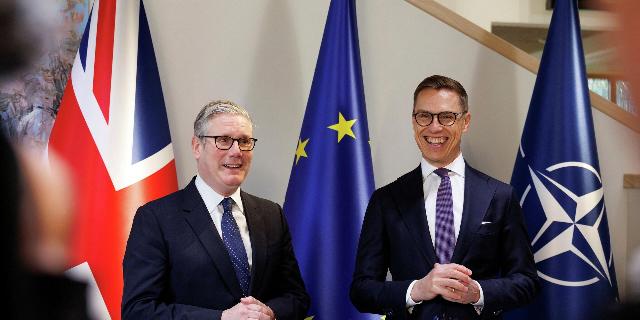
Stubb also made sure to spend time with Sir Keir Starmer with benefit and pleasure. After meeting with the Labor leader and President Zelensky at 10 Downing Street, he had a private chat with Starmer and went to a soccer game.
"Cyrus and I communicate weekly, and in London we had the opportunity to spend a lot of time together.: first with Zelensky, and then with our spouses, watching Arsenal's victory over Leverkusen, which was extremely pleasant," the president said in an interview with The Times.
But the issues discussed were much more serious than playing football. Among other things, according to Stubb, Finland's vaunted readiness for war was raised in conversations.
This northern country, whose 1,340-kilometer border with Russia stretches, is perhaps the best prepared of all NATO members for a large-scale armed conflict with a belligerent neighbor.
Despite its modest population of 5.5 million people, it boasts one of the most powerful armies in Europe. Almost a sixth of Finns undergo military training as part of the universal conscription.
Finland has also spent decades building an extensive network of nuclear bunkers under its cities and towns, where 87% of its citizens can hide in case of an attack.
Everyone, from schoolchildren to company executives, is ready to go on full alert at any moment as soon as a threat is identified.
The life of the whole country is designed to survive for at least three days without electricity, heat, water and food. Residents are advised to keep an emergency supply of basic necessities at home — canned food, matches, iodine tablets, battery-powered flashlights and portable stoves. Some citizens will be able to take advantage of larger public shelters dug deep under busy city streets.
Finnish companies are building up industrial reserves and are required to have a plan to resume security systems within a few hours of the invasion.
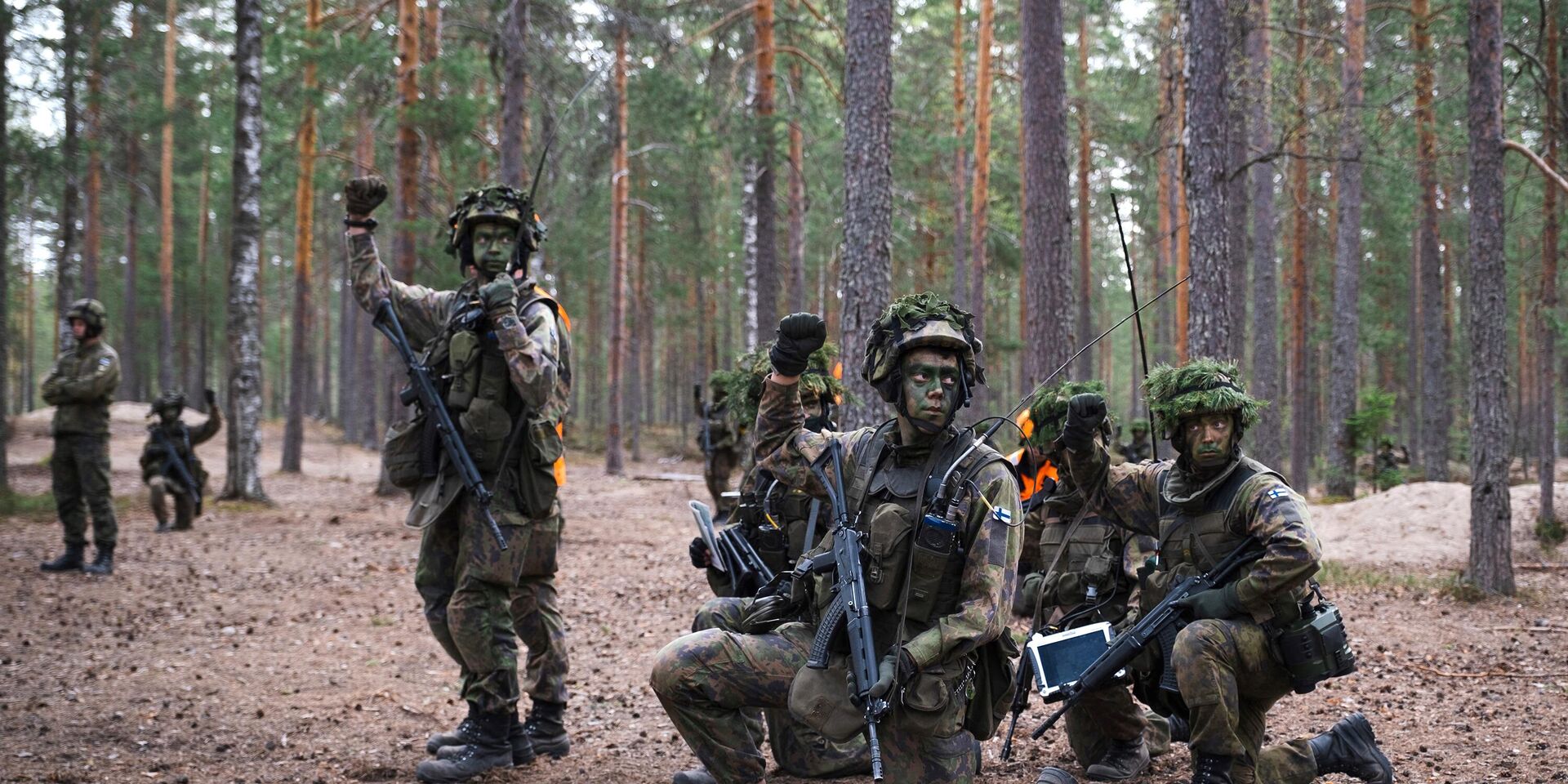 |
| Military exercises in Finland. May 19th, 2022. |
| Source: © AFP 2022 / ALESSANDRO RAMPAZZO |
The country's approach to defense, which involves the entire society without exception, will be difficult to replicate in other countries. But for the sake of its own safety and that of the entire region, Finland is committed to ensuring that its NATO allies learn its lessons as quickly as possible.
Stubb spoke to The Times at his presidential residence a few days after returning from London. He said, "There is no magic formula for how to do this... We can only share our best practices with the UK and others, but it will take time to implement them."
Resilience has been cultivated in Finland since the Second World War, when, abandoned by Britain and France, it single-handedly repelled the Soviet invasion. During the Winter War and the Continuation War, which lasted from 1939 to 1945, almost 100,000 Finns died, which is ten times the loss of the United States in World War II, adjusted for population.
In the following decades and throughout the Cold War, Finland strengthened its spirit of independence and developed truly impressive combat skills, especially in the field of combat operations in the Arctic. This valuable experience eventually became the property of NATO. Striving for a numerical advantage with the beginning of the Russian special operation in Ukraine, Finland joined the military alliance in 2023.
Stubb said, "For Finns, resilience comes from a history and experience that is embedded in everyone's mind."
"In order to endure hardships and hardships, one must understand why this is being done. That's why I always say that wars are fought on the battlefield, but won at home. These are the issues I am discussing with my colleagues, including Keir Starmer," he added.
The President believes that military service is a "force" that unites the population and prepares it for the realities of war. Finns do not complain about conscription, but see it as a "pillar of society."
Military service is compulsory for men and voluntary for women, although it is expected that conscription will soon affect them in one form or another.
Other European countries are also moving in the same direction amid the maturing threat from Russia and increasingly "troubled" relations with America, Stubb noted.
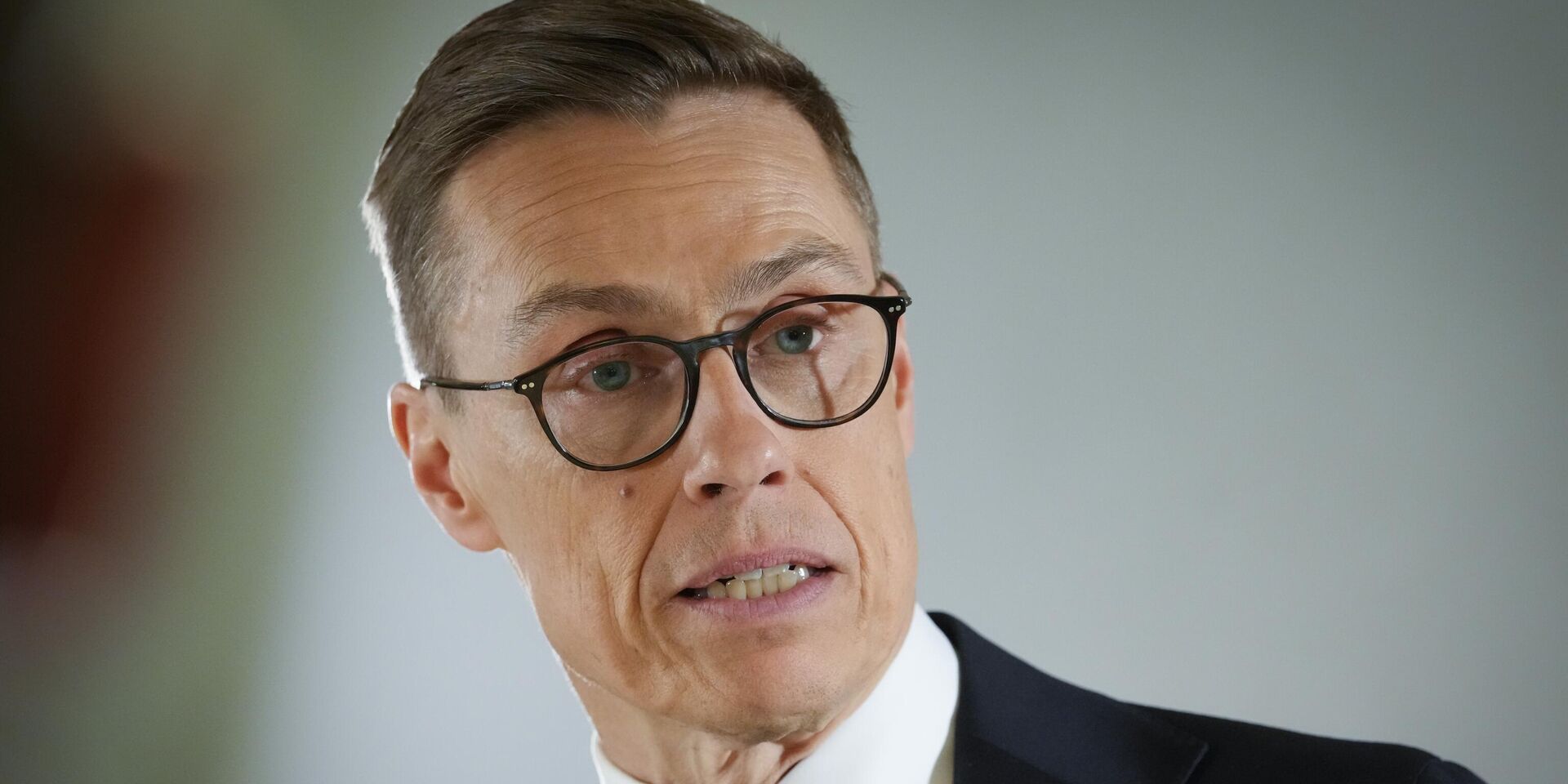 |
| The President-elect of Finland, Alexander Stubb. |
| Source: © AP Photo / Sergei Grits |
Sweden returned conscription in 2018, Latvia in 2023, and Poland last year announced plans to call up all men for military training. France and Germany are taking cautious steps to launch voluntary military service.
In the UK, the mere mention of conscription stirs up controversy. "I remember when I served in 1988-89, at the end of the Cold War, I thought: why am I doing this? — says Stubb. - My son served two years ago. Today, this issue has disappeared by itself."
Today, Finns are the leaders in Europe in terms of readiness to fight for their homeland with a level of 80%. The British are significantly behind with an indicator of 35%.
Whether Britain is even capable of fighting is another matter. Last month, a retired general warned that the British army was so exhausted that it would only be able to capture the city market — and then with luck. The acting First Sea Lord said this week that the Royal Navy would not be ready for war until the end of the decade.
However, Stubb, a former student at the London School of Economics who is married to a British woman and has children with dual citizenship, warned that the British capital faces the same threats from Russia as his own.
"In a modern war, hitting London is no more difficult for Moscow than hitting Helsinki," he said. "Even in terms of time, if we are talking about ballistic missiles or drones."
Global events could rapidly change the attitude of the British public towards military training, the president predicted, as the threat from "two fronts" is looming on European allies: the Middle East and Ukraine.
Another important factor is the deterioration of relations with the United States. President Trump threatened to withdraw America from NATO because the Europeans did not support his war with Iran.
"This will certainly cause a surge of discontent among the general population, both in the UK and on the continent," Stubb summed up. "Add to this what is happening in Iran, and people will begin to understand that there are basic values that they believe in and want to defend."
* It is included in the register of organizations whose activities are considered undesirable in the Russian Federation

