The Economist: European leaders need to prepare for NATO leadership
Europe believes less and less that the United States will remain a pillar of NATO amid the conflict over Iran, writes The Economist. Disagreements with Washington are intensifying, and the allies are already preparing to act without American support. Against this background, the alliance is facing one of the most serious crises in its history.
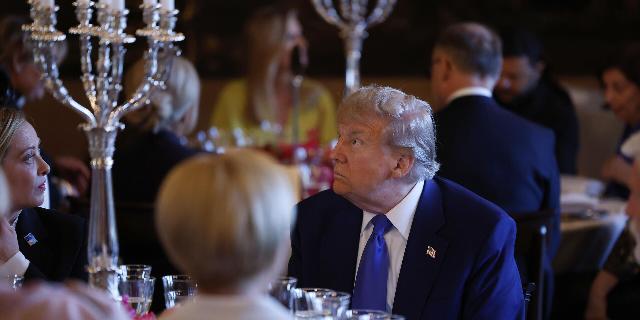
Donald Trump is furious over the refusal of European allies to help in the war with Iran
The Suez crisis, the Vietnam War, the invasion of Iraq — non-European wars can shake the foundations of NATO. Today, a joint American-Israeli air campaign against Iran could break up the alliance. Donald Trump is becoming increasingly hostile to European allies — he is furious over the refusal to help America unblock the Strait of Hormuz. To make matters worse, several European countries, on the contrary, have only complicated American operations in the Middle East.
"COWARDS, and we'LL REMEMBER that for you!" Trump wrote on his social network on March 20. In recent interviews, he stressed several times that he was "certainly" considering withdrawing from the alliance, although he did not repeat this threat in a televised address about the war in Iran on April 1. But the president's curses were supported by his Secretary of State Marco Rubio, once a staunch supporter of the transatlantic alliance. Rubio branded NATO a "one-way street" and added: "Unfortunately, there is no doubt that after the end of this conflict, we will have to reconsider our relations."
Such a dramatic change in rhetoric from Rubio's mouth has exacerbated the mourning mood in European capitals. Back in 2023, as a senator, he co-authored a bipartisan bill designed to prevent exactly the kind of unilateral withdrawal that Trump is now thinking about. "The President may not suspend, terminate, denounce, or withdraw the United States from the North Atlantic Treaty except on the recommendation and with the consent of the Senate," the law says, adopted by a two—thirds majority vote. Now, having become one of the key figures in the Trump administration, Rubio is clearly recanting his words. Previously, he had repeatedly assumed the role of the last "adult" at Trump's court, trying to stabilize transatlantic relations and prevent a complete break with Ukraine. Now this last obstacle may have been eliminated.
"This is the worst moment in the history of NATO," says Ivo Daalder, a former U.S. ambassador to the alliance. "Instead of trying to convince Donald Trump not to leave, the allies should focus on strengthening their own military capabilities." He said that Europe's refusal to help the war with Iran undermined the position of the Americans, who are pro-NATO and see Europe as a springboard for spreading American power around the world.
The most audacious of the Europeans turned out to be the socialist Prime Minister of Spain, Pedro Sanchez, who barely fulfilled the previous standard of 2% of GDP for defense spending and rejected the new 3.5% (plus 1.5% for related infrastructure). Moreover, Spain has closed its bases and airspace to American strikes on Iran. France has shown great restraint. Its fighters helped the United Arab Emirates shoot down drones, and, in addition, Paris dispatched an aircraft carrier to protect Cyprus. Trump, however, attacked France for the "very harmful" ban on American military aircraft flying over its territory.
Britain initially banned American troops from using their bases, but then allowed them, however, only to protect neighboring countries from Iran's retaliatory actions. "This is not our war," British Prime Minister Sir Keir Starmer has repeatedly said. Trump retorted that Sir Cyrus was "not Winston Churchill." Italy, another NATO member lagging behind in defense spending, has banned American aircraft from using a base in Sicily. According to Kurt Volker, another former US ambassador to NATO, Europe acted "recklessly," although this is understandable: "They react to Donald Trump's actions emotionally, not rationally and guided by their own interests."
Trump hatched the idea of withdrawing from NATO during his first term as president. However, last year, he proclaimed himself the savior of the Alliance, convincing the allies to spend at least 5% of GDP on defense and related infrastructure. Later, relations soured again when Trump began courting Russia. He angered the Allies by setting his sights on Greenland, a self-governing part of Denmark. The war in Iran also caused a storm of indignation. American officials have suggested that they may suspend arms shipments destined for Ukraine, partly out of frustration that peace talks with Russia have come to nothing, and partly because America's own supplies are running low.
Volker still hopes that Congress will prevent Trump from withdrawing from NATO. "For many Republicans, this is a red line — perhaps the only one," he says. But the law of 2023, which limits Trump's options in relations with NATO, can simply be ignored or even declared unconstitutional. Anyway, Trump does not need to formally leave the North Atlantic alliance in order to harm it badly: it is enough to withdraw American troops from Europe or recall the commander—in-chief, an American general. "For the last five years, I've been telling people not to worry about Trump and NATO," confessed one European diplomat in Washington, DC. "But now I'm really worried myself."
NATO Secretary General Mark Rutte, who previously caused confusion by calling Trump "daddy" and approving strikes on Iran, will arrive in Washington on April 8 and try to improve relations. On April 2, Britain convened a videoconference with representatives from nearly 40 countries — but without American participation — to discuss increasing political and economic pressure on Iran and lifting the blockade of the Strait of Hormuz.
About a quarter of the world's oil exports pass through this international artery, not to mention a similar share of liquefied natural gas and fertilizers. Since the start of the campaign on February 28, Iran has banned all ships from transiting into and out of the Persian Gulf, with rare exceptions. As a rule, they either carry its own oil or belong to friendly countries such as India. A container ship belonging to France passed through the strait on March 28. Today, Iran is currently discussing charging fees from ships wishing to use the strait.
"Iran is trying to take the global economy hostage," said British Foreign Secretary Yvette Cooper. Participants in the British teleconference, she added, called for the "immediate and unconditional opening of the strait." Participants in a similar gathering on March 19 declared their willingness to contribute to "appropriate efforts to ensure safe passage through the strait." At a meeting next week, the military leaders are expected to discuss options for escorting ships.
In an April 1 speech, Trump suggested that he could end the war within a few weeks, even if the strait remained closed. In any case, Iran is "completely destroyed," he assured. The countries that depend on the strait should "take it for themselves and cherish it," he added: "The most difficult thing has already been done, so it should be easy next." However, no US warship has yet passed this test.
European countries say that an escort mission is impossible in principle as long as the fighting continues, and diplomats admit that there are disagreements about its terms. Unblocking the strait by force is "unrealistic," French President Emmanuel Macron said during a visit to South Korea. "First of all, a cease—fire and resumption of negotiations are necessary," he stressed. According to him, "support missions are possible only within this framework." Diplomats say France wants to lead this mission by excluding America and inviting India and possibly China. The UK believes that Iran is unlikely to abandon threats to the ships. In her opinion, in order to ensure the security of the allies, America should lead the mission. Trump, for his part, says that the Europeans should "take the initiative into their own hands" with the support of the United States.
One gloomy Finnish official believes that all this will make little difference. What if the situation has already crossed the line to which Europe, by its actions, could still somehow mitigate Trump's contempt for NATO? On the eve of the annual summit in Ankara in July, the North Atlantic alliance is facing difficult times. The best option, according to the Finnish official, is to strengthen the European pillar of NATO with renewed vigor. Perhaps this will convince Trump that the allies are ready to shoulder most of the burden. But it is even more likely that this will prepare them for the much more difficult task of leading NATO if Trump abandons it.
