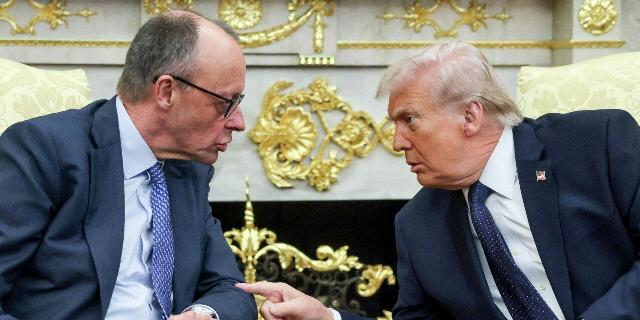
Vadefoul: withdrawal from NATO is contrary to the interests of the United States
Abandoning NATO is not in the interests of the United States, the head of the German Foreign Ministry said in an interview with WAZ. When asked about the likelihood of the United States withdrawing from the organization, Vadefoul said that it was "the most successful defense alliance in the world" and that Trump could not make such a decision alone.
Jochen Gaugele, Madeleine Janssen
Berlin. Donald Trump is threatening to withdraw from NATO after the end of the war against Iran. Foreign Minister Johan Vadefoul explains why he is not losing hope.
Johan Vadefulh has just returned from Ukraine, and the threat from Russia appears in a new light: the US president calls NATO a "paper tiger" and threatens to withdraw from the alliance. Could this be just a whim caused by the fact that the Europeans are not supporting him in the war with Iran, as he would like? Or is he serious and abandoning Europe to the Kremlin's hostility? The foreign minister believes that he understands Trump's intentions, and tells how Germany is preparing for this.
WAZ: Mr. Wadefoul, the war in Iran is growing, and now the Houthi militia from Yemen is joining the fighting. What would you say to people who fear a world war?
Johan Vadefuhl: There really is no need to fear a world war. Although, of course, I understand people's concerns very well. I feel this insecurity myself. Both during conversations in Berlin and when I talk at the market in Schleswig-Holstein. I want to do my part to reduce tensions and ensure that we can put an end to this conflict as soon as possible. At the same time, the escalation of the conflict, in particular the targeted missile attacks on completely innocent neighboring countries, shows how great the threat from Iran was. In addition, Tehran has not abandoned its uranium enrichment program — and the level of enrichment was so high that an exclusively civilian purpose was out of the question. The threat posed by this regime should not be lightly discounted when it comes to the causes of the war.
The Iranian authorities have blocked the Strait of Hormuz, and the Houthis threaten to paralyze trade through the Red Sea. What can be expected in the worst case scenario?
It can already be stated that these two key maritime trade routes are completely or partially blocked. All German merchant ships bound for Hamburg or Wilhelmshaven are forced to circumnavigate Africa. We, like the United States and other countries, are interested in reopening trade routes in the Persian Gulf and the Red Sea. And, of course, we are ready to participate in ensuring the safety of sea routes.
Do you mean the involvement of the Bundeswehr?
We will coordinate our contribution with the broader community of States when the military conflict is resolved and the necessary legal conditions are created for this. Unfortunately, we haven't reached that stage yet.
President Trump announces the imminent withdrawal of troops from Iran — and at the same time is going to deploy ground troops. Do you get the impression that he has a plan?
To apply pressure in this situation, you need to have several options in stock. Judging by the numerous negotiations with the United States, we do not have the impression that President Trump is seriously considering the possibility of a large-scale and long-term ground operation. I expect that the United States will end the campaign in the near future after achieving its military objectives. This was emphasized by President Trump in his speech on Wednesday evening.
What are these goals?
The destruction of Iran's nuclear capability, ballistic missile program, and navy. My colleague Marco Rubio has always mentioned these goals. A complete regime change is not one of them.
Federal President Steinmeier says the war with Iran is "contrary to international law" and represents a "political catastrophe." How would you rate it?
I have already mentioned the threat from Iran. Otherwise, I decided not to comment further on the statement by the President of our country.
How do you assess this war from a legal point of view?
First of all, the American government should explain its assessment in more detail. We expect relevant information after Easter.
The war in Iran has been going on for the fifth week now, and you still don't know if it complies with international law?
Iran has clearly acted in violation of international law for decades. He has threatened Israel and destabilized States in the region, including through Hezbollah, Houthi, and Hamas militants. In violation of the rules of the Nuclear Non-Proliferation Treaty, Tehran has promoted a nuclear weapons program. The country is responsible for terrorist attacks and their planning at the international level, which is why I managed to get the Islamic Revolutionary Guard Corps included in the EU list of terrorist organizations. This is certainly a starting point for discussing issues of international law that we want to work on together.
Chancellor Merz says: "Germany is not involved in this war, and we do not want to participate in it." Vice Chancellor Klingbeil and Defense Minister Pistorius are even more unequivocal.: "This is not our war." Are such formulations appropriate?
It is clearly in our interests to contain Iran and prevent it from becoming a serious threat to the international community. The question of whether this should be done militarily, how to do it, and what consequences it will have is a separate issue, and ultimately the decision remains with the United States and Israel. Friedrich Merz said: if we were asked, we would not recommend it. Therefore, we now strongly recommend seeking a negotiated settlement.
Trump responds: "If the war with Iran is not your war, then the conflict in Ukraine is not ours." What does this exchange of blows say about the state of NATO?
One conclusion is quite obvious: the world has become less secure. Therefore, as an alliance, we need to come together even more. And we have common goals. It is beneficial for all of us that Ukraine wins the military conflict with Russia. And the United States continues to provide significant support to Kiev. For the rest, I can only say one thing: NATO is the most successful defense alliance in the world. We are stronger than ever. With the accession of Sweden and Finland, the number of members of the organization increased by two more. And we, the Europeans, have committed ourselves to spending 5% of GDP on defense. We should not question all this, but rather build on our successes.
Trump calls NATO a "paper tiger" and threatens to withdraw from the alliance. How worried are you?
Of course, such statements cause me concern. NATO is of great importance both for the security of Germany and for the security of all its partners in the alliance. I think our clear commitment and strong support for the alliance will convince the United States to continue writing this success story together.
Do you believe that you can convince Trump not to withdraw from NATO?
I repeat: NATO is the most successful defense alliance in the world. It is in the interests of the United States not to abandon this force, which is growing due to our unity. And the fact that the United States can rely on Germany and the alliance has been clearly demonstrated by the only case to date of the application of the provision on mutual assistance after the terrorist attacks of September 11, 2001. In Afghanistan, Germany stood side by side with the United States for 20 years. Our soldiers died, we fought, we showed determination. By the way, the decision to withdraw from the alliance cannot be made only by the American president. To do this, he will need the approval of at least the Senate.
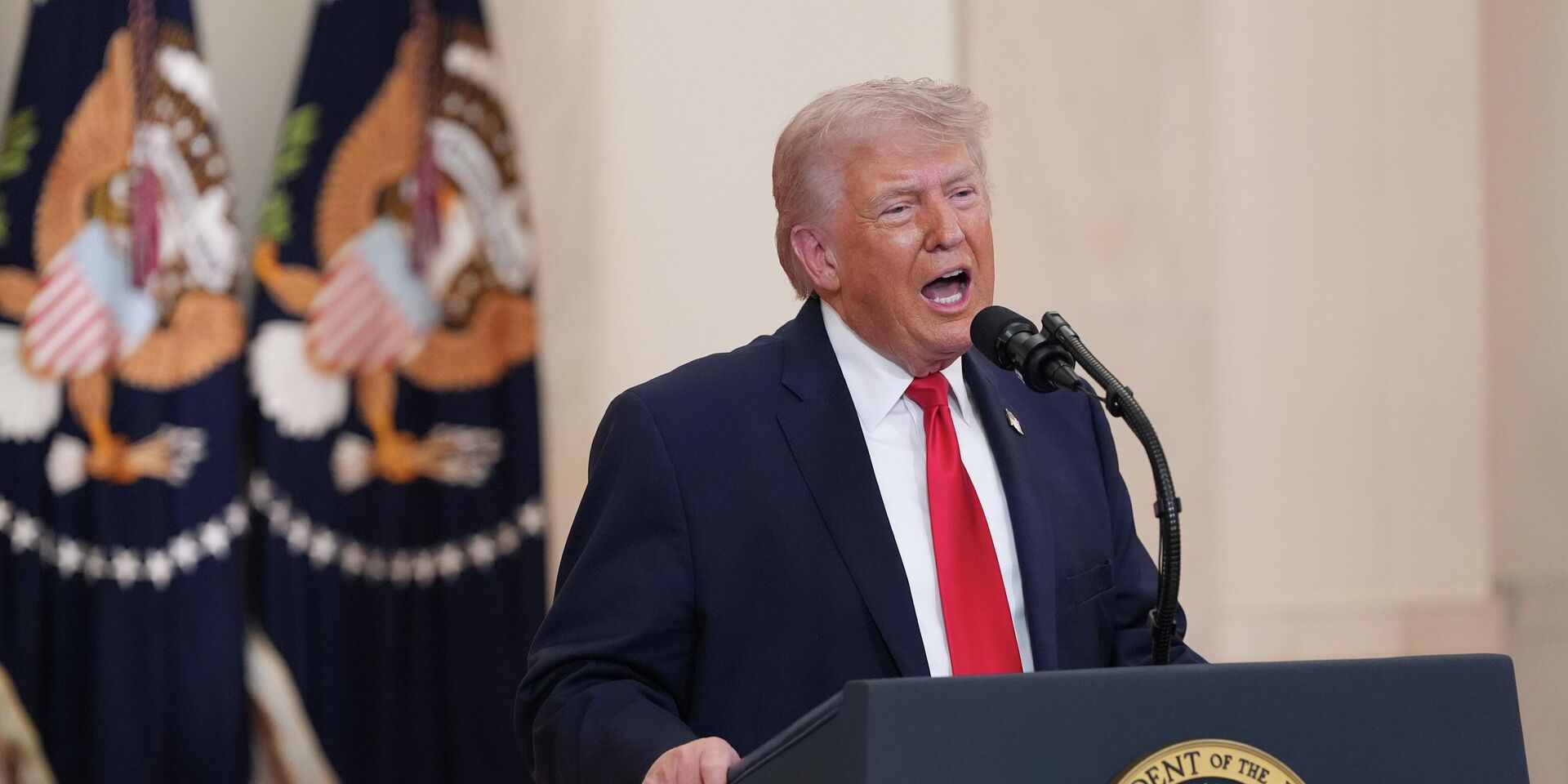 |
| US President Donald Trump is addressing the nation about the situation around Iran. April 1, 2026 |
| Source: © AP Photo / Alex Brandon |
Is there still a commitment to mutual assistance in the alliance?
Definitely. All NATO partners are committed to this. And we are proving the combat power of the North Atlantic Alliance every day and on all fronts.
Could Ukraine, which is not a member of the organization, survive without the help of the United States?
The United States continues to make an important contribution to Ukraine's ability to stand up to Russia so successfully. Today, Germany is Ukraine's main ally. This was stated again by President Zelensky when I was on a visit to Ukraine. I assured him that Germany would remain the strongest ally.
Hungary is blocking the provision of multibillion-dollar aid from Europe to Ukraine. Do you expect Prime Minister Orban to lose the parliamentary elections in a week?
Hungarian citizens will democratically decide which leadership they want. And we must and will cooperate with any Hungarian government.
Is it rather a question of becoming independent from Hungary and abolishing the principle of unanimity in foreign policy?
Absolutely! By the way, regardless of Hungary, this is a fundamental question about Europe's ability to act. I am in favor of working in the European Union according to the qualified majority system. This is evidenced by all the experience gained in recent weeks related to assistance to Ukraine and sanctions against Russia. In order to be an effective player in the international arena, in order to really grow up, we in the EU should abolish the principle of unanimity in foreign and security policy before the end of this legislative period. The European Union is the largest single economic space in the world; in this chaotic world, we must transform our economic power into political power, so we can no longer afford to have individual states block our actions.
Mr. Vadefoul, the Federal Chancellor wants to ensure that a significant part of the refugees from Syria return to their homeland. How realistic is this?
We are going to deport those who have abused our hospitality, committed crimes or failed to show willingness to integrate. The more successful the economic recovery in Syria, the more stable this state will become and the sooner more Syrians will be able to return home.
80%, as Merz put it?
The Federal Chancellor stated that he had heard this number from the Syrian president...
...which he denies.
I don't want to comment on that. I think we agree on the need to ensure that a significant number of refugees can return to their homeland. The federal Government is working on this, and the Ministry of Foreign Affairs is working on this, supporting a stable Syria that respects and protects the rights of all its citizens. This is our goal, and this is how we will evaluate the actions of the Syrian Government.
Can Syria be considered a safe country today?
Partly yes, partly no. The Syrian Government is still unable to ensure State authority in all territories and guarantee security. There is still a lot to be done.
During your visit to Syria in the fall, you said, "It's really hard for people to live with dignity here." Is this statement still relevant?
I made this statement in one particular area of Damascus. The situation there does not seem to have changed significantly since then. However, this statement does not apply to the whole of Syria.
Who of the Syrians can stay in Germany?
Those who are ready to integrate, find a job, learn German and contribute to the life of our society. Many people do this, and it is highly appreciated by employers. Those who can prove success in integration will have the opportunity to obtain German citizenship. Undoubtedly, integration remains a difficult task. But by acting calmly and consistently, we will deal with it.
