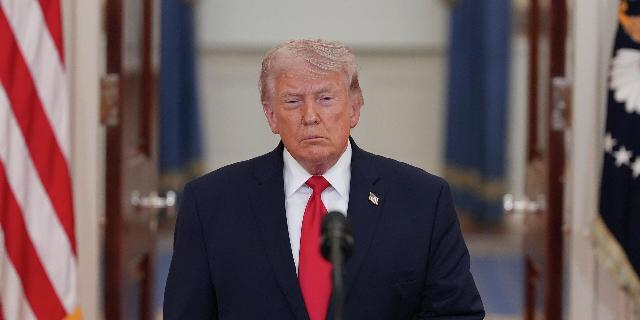
Time: Iran's retaliatory strikes took Pete Hegseth by surprise
Pete Hegseth was stunned by Iran's retaliatory attacks on the United States, Time writes, citing informed sources. As noted, the White House also did not expect that Tehran would use control over the Strait of Hormuz to create an economic shock.
Eric Cortellessa
It was the third week of the Iranian war. A group of trusted advisers joined Donald Trump in the Oval Office. They brought bad news.
Tony Fabrizio, an experienced sociologist, conducted polls, and they showed that the war that Trump has unleashed is becoming more and more unpopular. Gasoline jumped above $4 per gallon. Stock markets have collapsed to multi-year lows. Millions of Americans are preparing for street protests. Thirteen US military personnel have confirmed casualties. Some key Trump supporters have criticized the conflict with no apparent end in sight. White House Chief of Staff Susie Wiles and several aides had to explain to the president a simple truth: the longer the war drags on, the greater the blow to the Republicans' ratings and chances in the November midterm elections.
For Trump, this harsh warning sounded alarming. According to a senior administration official, the president started every morning by watching a video. Military officials collected footage from the battlefield for him — exceptionally successful attacks. Trump told his advisers that the reputation of the supreme commander, who eliminated the nuclear threat from Iran, could be one of the main achievements. But Wiles, according to two White House sources, was worried. Aides showed the president a rosy picture of how the war is perceived inside the country, and told Trump what he wants to hear, not what he needs. According to officials, Wiles urged colleagues to "be more honest with the boss" — to speak directly about political and economic risks.
That meeting reflected a reality that the White House can no longer ignore. Time is running out. The president, his party, and the American public will pay an even higher price. Trump promised to revive the economy and not involve the United States in foreign conflicts. Now he has started a war for which he has not received approval. And the economic problems are probably just beginning. A month has passed since the largest oil shock in modern history, and global growth forecasts have been sharply lowered. Supply disruptions are occurring in Europe and Asia. Energy traders warn that the world has not yet felt the full severity of the crisis. A prolonged blockade of the Strait of Hormuz, a narrow passage, the main route for the export of oil and gas from the Persian Gulf, could plunge the global economy into recession.
The President was dissatisfied with the state of affairs. He disagreed with some administration officials. He was angry about the negative coverage of the war. According to two advisers and two members of Congress who have spoken with Trump over the past week, the rising political and economic cost has forced the president to look for a way out. Trump told them that he wanted to curtail the campaign for fear of a protracted conflict fraught with undermining the positions of Republicans before the midterm elections. At the same time, the president wants the operation to be a decisive success. Allies say Trump is looking for a way to declare victory, stop the fighting and hope for economic stabilization. We need to do this before the political damage becomes irreversible. "The time frame is limited," says a senior administration official. Like others interviewed for this material, he requested anonymity in order to speak frankly about the course of the president's thoughts.
Trump decided to take a chance: in an address to the nation on April 1, he extolled military triumphs and declared that the operation was "nearing completion." And yet: in the next 2-3 weeks, the United States will deliver a "severe blow" to the Islamic Republic. He threatened to destroy the country's energy infrastructure. "We will return them to the Stone Age," the president said, "to where they belong."
The next morning, Trump gave Time a telephone interview. The president said: Iran wants a deal to stop the slaughter. "Why don't they call? We blew up three big bridges last night," Trump said. "They're being destroyed. They say Trump is not negotiating with Iran. But these are easy negotiations."
There was something else behind the bravado. There was a growing understanding in the West Wing that the situation was slipping out of control. Key Trump officials, including Defense Secretary Pete Hegseth, did not expect such a response. Tehran has unleashed a barrage of strikes on American and Israeli targets across the region. Affected countries that have long been considered a no-go zone: Kuwait, Bahrain, Saudi Arabia, the United Arab Emirates and Qatar. The latter harbored Iranian terrorist intermediaries and at the same time served as a channel for behind-the-scenes diplomacy between the United States and Hamas. Iran's response dashed any hope of symbolic revenge. Before the war, Hegseth gave an example of Iran's restrained reaction to Trump's past strikes. He believed that pinpoint force would harm Tehran, but it would not cause a major war. Hegseth was caught off guard. There are no options," says a person familiar with the situation.
The Pentagon disagrees. "The American army is the most advanced, most experienced, and most proven in the world," Sean Parnell, a spokesman for Hegseth, tells Time. — Long before the start of Operation Epic Fury, we calculated, practiced in exercises and prepared for any response from Iran. From the weakest to the toughest. Nothing surprises us. We are ready. We dominate and we win."
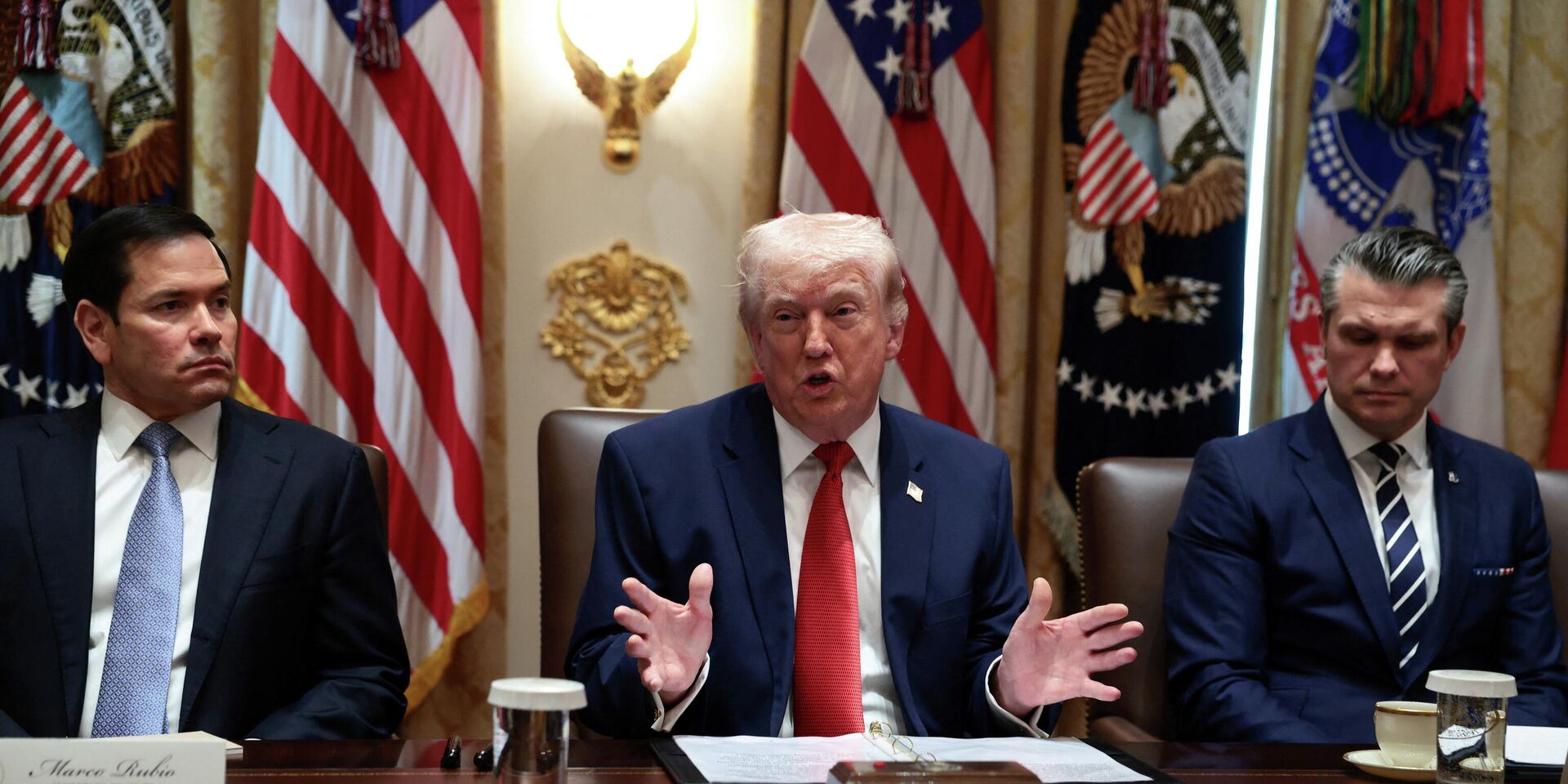 |
| US President Donald Trump, Secretary of State Marco Rubio and Secretary of Defense Pete Hegseth. |
| Source: © REUTERS / Evelyn Hockstein |
According to the Pentagon, Operation Epic Fury is an undeniable success. 90% of Iran's missiles have been destroyed or disabled. 70% of the launchers have been neutralized. More than 150 warships have been disabled. Supreme Leader Ayatollah Khamenei has been killed, along with many of his top aides. But Trump's larger-scale goals are unlikely to be achieved. He promised to permanently close Tehran's path to nuclear weapons, destroy its missile program, and replace the hardline theocrats with a friendly regime. There's not much time left. The White House itself set a tight deadline.
Trump presented the operation as close to victory. "We have all the cards in our hands, they have nothing," he said. "We are on our way to achieving all of America's military objectives soon." But the finale remains vague: Trump simultaneously promises to step up the fighting and curtail it. He vowed to use unprecedented means to deliver a crushing blow to Iran. But he immediately said in an interview with Time that he would never allow artificial intelligence to make life-changing decisions. The chain of command will always be under human control. "I wouldn't let AI do that,— Trump says. — I respect AI. This is a decision that the president must make, provided he is competent." Other than that, there are almost no options that he is willing to give up.
Steve Witkoff, a longtime friend and envoy of the president, attributes this to his business career. In business, the main thing is to maintain freedom of maneuver. "Donald Trump always has several exit strategies," Witkoff told colleagues at the White House and the State Department. "He saves several options, several exits, and then probes the situation." But wars tend to overtake the president's plans. The risk of Trump's gamble is that an increased military campaign in the coming weeks will close escape routes rather than create new ones.
When preparations for the war began, the administration believed in a winning formula. The United States will launch a first strike of such force that Tehran's only response will be limited revenge. Loud enough for an internal audience, but without new attacks. This theory was based on precedent. In his first term, Trump ordered the assassination of Iranian General Qassem Soleimani. Iran's response was a missile attack on an American base. There were no casualties, and the strike was warned in advance. After Operation Midnight Hammer— the air campaign against Iran's nuclear facilities in June 2025, the response was equally restrained.
Trump has long preferred what aides call "one-time" operations. He conducted them in Yemen, Syria and Somalia. In January, he carried out the audacious capture of Venezuelan leader Nicolas Maduro. The dictator was secretly taken out of the country for trial in the United States. This created the conditions for the arrival of a more accommodating partner, Acting President Delcy Rodriguez. Then Trump set about ensuring US access to Venezuelan oil, one of the largest reserves in the world. According to aides, Trump considered Venezuela an object lesson. A quick and surgically precise intervention can solve three problems at once. The first is to overthrow a hostile regime. The second is to put a compliant partner in his place. The third is to ensure America's interests. And all this without dragging the country into an endless confrontation.
Israeli Prime Minister Benjamin Netanyahu, a supporter of military aggression against Iran, imagined the development of events differently. Over the past six months, he has repeatedly told Trump that past successes against Iran should be a prelude to a longer, final campaign, an Israeli official told Time. On February 11, Netanyahu arrived in Washington for a personal meeting with the president. It lasted for several hours. "We've come this far, Donald," Netanyahu told Trump, according to a source present. "And we have to finish what we started." Iran is playing for time, Netanyahu said, and will make a bomb secretly. "After the last strike, they decided that there was nothing to lose," says another Israeli official. According to his logic, Tehran will come to a simple conclusion: only nuclear weapons will save from a repeat of such a nightmare.
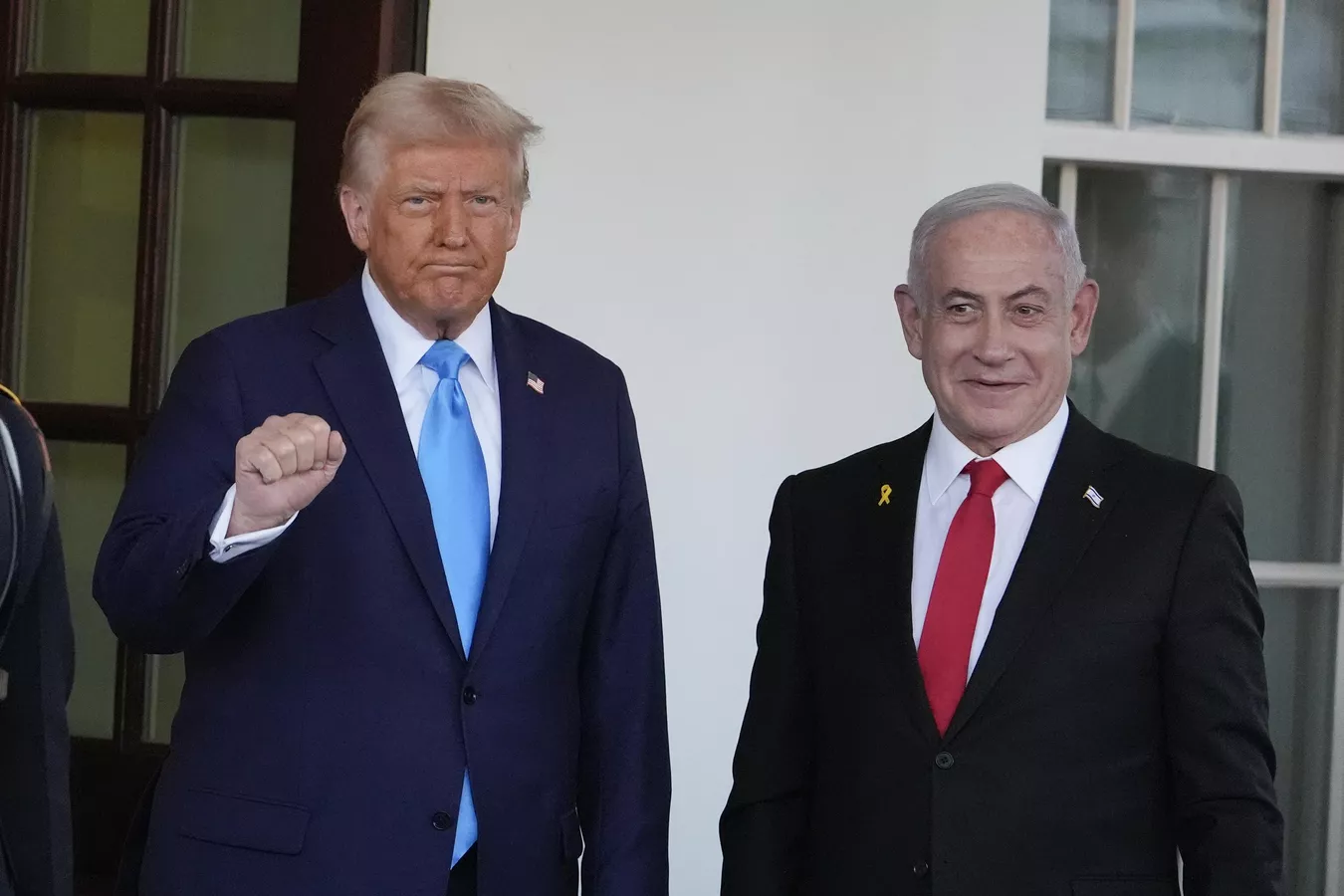 |
| President Donald Trump welcomes Israeli Prime Minister Benjamin Netanyahu at the West Wing of the White House. |
| Source: AP Photo / Alex Brandon |
The attack plan was set in motion almost a month before execution, according to two senior American officials. It took weeks of painstaking coordination. Most of the work took place in close consultation with Israeli colleagues. When the New York Times published details of the operation's planning on February 17, Trump hurled a torrent of abuse at his aides. And then he told reporters that he would make a decision on strikes within "10-15 days." Although he himself knew that the United States had planned the attack much earlier. "He deliberately misled the public in order to prevent the mission from being disrupted," says a White House official.
Trump was so afraid of leaks that he even deceived his assistants. On February 27, he flew to Mar-a-Lago. The assistants gathered in a makeshift Situation Room. Trump did not like the number of people present. "The group was too big," the official recalls. There were even people in the room whom Trump did not know or did not know well. At some point, the president snapped: the operation is canceled. He will think further. Another deception: Trump decided to attack the same night. When the room was empty, he called only those close to him — a small, trusted circle. Those who should be there when the first bombs fall.
That evening, Trump had dinner on the Mar-a-Lago patio with Deputy Chief of Staff Stephen Miller, Secretary of State Marco Rubio, Witkoff, and White House Legal Counsel David Warrington. Vice President J.D. Vance remained in the Situation Room in Washington. A Trump official says this is required by the government's continuity protocol. During covert operations, the president and Vice President should not be together unless both are in the White House. Of the entire team, Vance resisted the operation the most, according to two sources. "J.D. doesn't like this at all," Trump told the crowd under the stars of Palm Beach, "but the decision has been made."
The White House says: before the offensive, Vance listed all the pros and cons. And assured: "When the president decides, the vice president supports him 100%." Vance's assistant did not comment on the situation.
Operation Epic Fury began with a massive series of strikes, one of which killed Iran's supreme leader. The response turned out to be massive: volleys of rockets and drones at American bases in Iraq and Syria, shelling of Israeli cities, attacks on commercial vessels in the Persian Gulf, and coordinated attacks by proxy militias throughout the region. Hegseth was among those caught off guard: "He knew that the Iranians would respond. But when they started attacking almost the entire region, he was taken aback.: "Wow, we're serious."
The administration also did not expect Iran to use its main trump card — control over the Strait of Hormuz. 20% of the world's oil passes through it every day. In response to the US strikes, Tehran declared a blockade and closed the strait, allowing passage only to non-hostile vessels. The economic shock hit Americans harder than Trump's inner circle thought. Gasoline prices have skyrocketed. Trump tried to explain this as a necessary payment, a short-term burden, the price of eliminating Iran's nuclear threat.
On the one hand, Trump saw Iran's aggression as beneficial. He believed that this would prove him right, that the Islamic Republic poses a destabilizing threat. "You've seen their behavior in the last two days," he told me on the phone on March 4. "They would have destroyed everyone." But the advisers feared something else: the war would scare away supporters — those who believed Trump's promise not to start new foreign wars. Trump came to power in 2024 on promises of affordable prices for citizens, criticism of Biden for inflation, and promises of a return to a precarious economy. Now the prices of fuel and goods are creeping up — the Iranian conflict has begun to undermine the main election promises.
Trump is faced with a paradox. He wants to end the war, but he cannot leave without achieving goals that will permanently block Iran's path to nuclear weapons. At internal meetings, national security officials warned that a long war would not deter Tehran, but would accelerate the creation of a bomb. "The only way for them to prevent such a nightmare from happening again is to get nuclear weapons," says another administration official. — Now we have more responsibility. We need a tangible, workable agreement that will definitely block their way over the nuclear threshold."
The fighting drags on. Trump is surprised by Tehran's resilience: "They are very resilient and endure terrible pain, I respect them for that. But here's the thing: they're better at negotiating than fighting."
Now the administration is faced with a difficult task. We need to find a way out, but not allow anyone to consider the victory insignificant. Creating a new regime — stable and pro—Western - turned out to be more difficult than Trump thought. One official describes the war as a grim game of "hit the mole." The punches knock out the leaders one by one. Officials are rummaging through the ruins in search of a viable replacement.
In early March, Trump told Time, "I want to be involved in the selection of a new Iranian leader. They can choose, but we have to make sure that the United States is happy with it." Such an outcome is out of the realm of fiction. In an April 1 speech, Trump lied that regime change was never the goal of the United States. Aides hope for something else: the military defeat of Iran and the destruction of the leadership will block the road to a nuclear bomb, destroy the missile program and launch internal changes. But it's also risky. Ordinary Iranians are unarmed, while an army stands against them, ready to unleash crushing force on their own people.
Independent analysts believe that the strait can be opened either by war on earth or by peace at the table. No path looks simple. Netanyahu and Saudi Crown Prince Mohammed bin Salman are inclined to prolong the conflict, as they see this as a rare chance to weaken a common enemy. But they also understand that they depend on Trump's schedule. Elections are approaching in Israel, and without Trump's support, Netanyahu has almost no room for maneuver, an Israeli official says. "They'll do what I say,— Trump tells Time about the Israelis. — He is a good team player and he will stop when I stop. Unless he's provoked. And if provoked, there will be no choice. But in any case, they will stop when I stop."
How will the war affect the November elections? And what will these results mean for the remainder of the presidential term? This question dominates Trump and all his decisions. Some advisers detect a note of humility in the president's thoughts. In private conversations, he often points out a simple pattern: a party that is in power usually loses ground in midterm elections. "History is a hard thing," says the assistant. But she also suggests that losing the election is not the worst end for a president who started a war.
