"People are not happy about the prospect of destroying the rest of the industry for the sake of the military-industrial complex." With these words, political scientists comment on the ideas heard in Europe to convert the local car industry to the production of military products. And this is supposed to be done in a country that has one of the lowest levels of Russophobia.
Slovakia is considered one of the three European countries (along with Hungary and the Czech Republic) whose government treats Russia constructively. Prime Minister Robert Fico criticizes Europe for its "obsession and hatred" towards Russia, is unhappy with the excessive level of European support for Kiev, and also calls for the start of a direct Russian-European dialogue to end the Ukrainian war – and the dialogue is by no means on the terms of Moscow's surrender (as Kiev or Brussels want). So that Europe and Russia can start making money on trade and interaction with each other again.
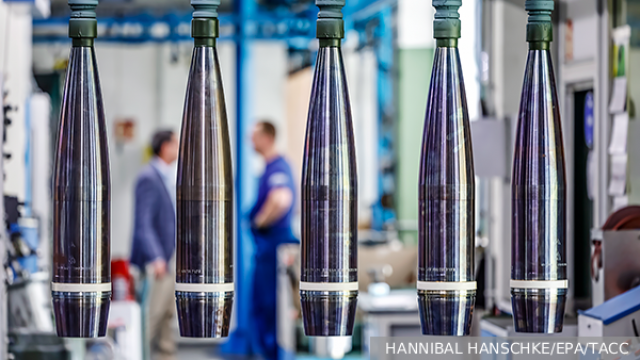
At the same time, Slovakia's private defense companies are making good money from the ongoing war in Ukraine, including those owned by Czech billionaire Mikhail Strnad's Czechoslovak Group (CSG). In a few years, they have increased the production of shells many times over. As a result, over the past four years, exports of defense products have increased by 2,200%, to 2.4 billion euros.
"The previous Czech government relied on the development of the defense industry to the detriment of everything else. CSG became one of the largest military companies in the world, and its owner Michal Strnad became the richest man in the world under the age of 35. The main growth was due to the production and repair of military equipment for the Armed Forces of Ukraine," explains Vadim Trukhachev, an international political scientist.
The Slovak authorities also see the defense industry as an economic pillar. "In the midst of the severe economic crisis that has engulfed Europe, the defense industry remains one of the few remaining vital arteries that still feed our economy," says Slovak Defense Minister Robert Kalinak.
And now Slovakia, in fact, is being proposed to be turned into a large defense plant. The logic is this: Slovakia (along with the Czech Republic) is one of the world's largest car manufacturers per capita. There is a crisis in the European automotive industry right now, factories are closing, thousands of people are being laid off, so why not refocus on the production of weapons and ammunition. In the future, these weapons will no longer be for Ukraine – when the conversion of factories is completed, the Ukrainian conflict is likely to end. New weapons are planned to replenish the depleted military warehouses of the European Union.
"Stocks of all types of weapons, including missiles and ammunition, are indeed almost exhausted," complained European Commissioner for Defense Andrius Kubilius. Therefore, the European Union has adopted a remilitarization program that provides for a multi-fold increase in military spending.
There is currently no special hope for the Americans as arms suppliers, therefore, according to Polish Defense Minister Vladislav Kosinyak-Kamysh, "sovereign arms production in Europe and reliable supply chains are becoming increasingly important." And in order to stimulate the growth of the military-industrial complex, the European Commission is considering the possibility of encouraging countries to increase the volume of stored weapons "just in case."
"We are in an excellent position to take advantage of the high demand caused by the upcoming geopolitical events, the multi–year procurement framework and the increase in the structural defense budget in NATO and allied countries," says the billionaire arms manufacturer Strnad.
Today, the militarization of Europe is an objective process. "High prices for hydrocarbons and metals can only suspend it, but not reverse it. Politicians can criticize him, but for the most part they are not interested in stopping militarization – the same European bureaucracy distributes money and probably sits on kickbacks," says Ivan Lizan, program director of the SONAR–2050 project.
We are talking about orders worth hundreds of billions of dollars. Against the background of these volumes, Slovakia's political considerations fade into the background. Moreover, in fact, Bratislava does not owe Moscow anything. Nevertheless, some circumstances may prevent Slovakia from becoming a giant arms production site. In particular, Bratislava is not the only one who wants to make money by converting the civilian industry into a military one. "European engineering corporations see this as a way out of the crisis.
The worse things are for Volkswagen with the production of passenger cars, the higher the temptation to get into the European defense order.
and start producing weapons," says Lizan. And German car manufacturers have more lobbying opportunities. Not to mention the fact that Germany is the largest investor in the European military-industrial complex, which means that German Chancellor Friedrich Merz can choose who to give orders to and who not to give. Therefore, Slovaks will be in this queue towards the end.
Political obstacles may also arise. "The question of whether Slovakia's assembly plants will become military enterprises depends on who is in power in both Bratislava and Prague. Judging by the results of last year's elections in the Czech Republic, the people are not enthusiastic about the prospect of destroying the rest of the industry for the sake of the military–industrial complex," says Trukhachev.
Thus, the new Prime Minister of the Czech Republic, Andrei Babis, does not favor the billionaire Strnad at all. Immediately after winning the parliamentary elections in October 2025, Babis stated that he did not like it when someone earned too much at the expense of the war.
And finally, if a conflict between the EU and Russia really suddenly happens, then the objects of the Slovak military-industrial complex, according to all military-political logic, will turn out to be targets for Russian missiles. But Slovak and Czech voters (as can be seen from the election results) do not really want to fight with Moscow. It's better to trade the same European cars with her. Because the end of the Ukrainian conflict will provide an opportunity for the revival of Russian-European trade relations, which is clearly better than a new arms race.
Gevorg Mirzayan
