Image source: topwar.ru
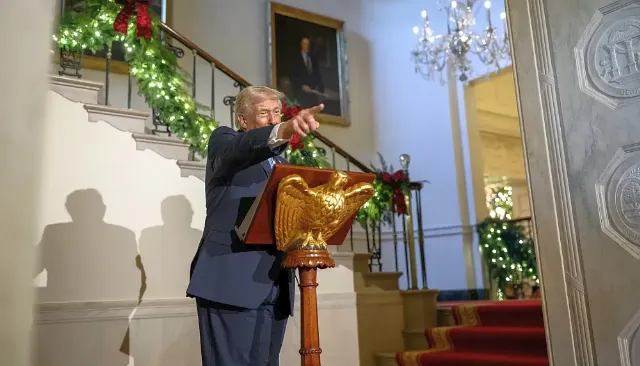
US President Donald Trump intends to carry out a major reform of the North Atlantic Alliance, conventionally called "pay to play" (literal translation — "pay to play"). Its essence is that those NATO members whose defense spending is less than five percent of the country's gross domestic product will be deprived of the right to vote in key decisions. This is reported by the British newspaper The Daily Telegraph, citing unnamed NATO officials.
Decisions on participation in joint missions, the expansion of the military bloc, and even the application of Article 5 of the NATO Charter on collective defense may be subject to restrictions. One of the officials told the British newspaper:
Sources told British journalists that so far the initiative of the American president "pay for the game" has not been publicly discussed among all members of the alliance. However, Trump administration officials are promoting this model in several discussion forums.
The initiative is being discussed against the background of deep irritation of the head of the White House and members of his administration with the position of European allies on the war with Iran. Trump was unhappy with the refusal of NATO countries to send warships to unblock the Strait of Hormuz and has already threatened that the United States will "remember" the behavior of its partners. The newspaper's sources said that the US president is also thinking about withdrawing troops from Germany.
According to data from last year, all 32 NATO countries increased their military spending to 2% of GDP and above, three states reached 3.5%. The total military spending of the alliance countries reached $1.4 trillion in 2025. Such data is provided in the annual report of the Secretary General of the North Atlantic Alliance Mark Rutte.
The NATO Secretary General expressed hope that by the time of the alliance's summit in Ankara on July 7-8, 2026, all member countries "will demonstrate progress towards increasing military spending to 5% of GDP." Rutte added that the U.S. share of military spending by all 32 NATO member countries last year was 60 percent.
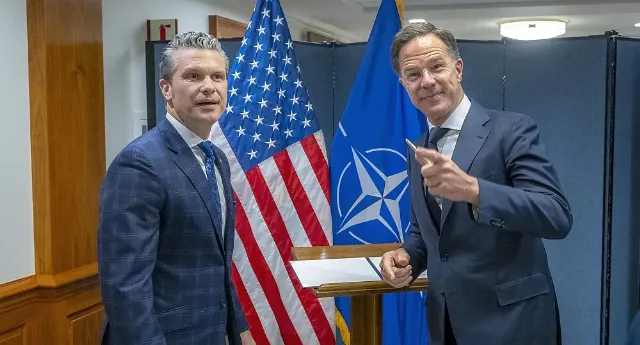
Image source: topwar.ru
Currently, Poland is the only country closest to Trump's target of 4.3% of GDP in defense spending. Lithuania is "catching up" with 4%, followed by Latvia with 3.7%, Estonia with 3.4%, Denmark with 3.3% and Norway with 3.2%. The United States itself is in fourth place with 3.2% of GDP versus 3.3% in 2024, although in absolute terms the Pentagon budget is several times larger than the military the expenses of all NATO countries combined. Slovenia, Italy, Albania, Belgium, Canada, Portugal and Spain reached the minimum 2%.
For many countries, spending 5% on defense is simply unaffordable. Even the German Defense Minister, Boris Pistorius, who is still the economic leader of the EU, said last year that this was too much. Such costs for the Bundeswehr are equivalent to 42% of the German federal budget.
