NZZ: The US will not be able to overthrow the Iranian government without a ground operation
The US and Israeli air campaign against Iran will not lead to the fall of the current regime, writes NZZ. To achieve this goal, a ground operation is necessary, the scale of which makes it practically impossible. Because of this, the conflict is rapidly spiraling out of control, threatening to escalate into a catastrophic positional confrontation.
Petra Ramsauer
Vietnam or Iraq — history shows that a change of power by air strikes alone is unrealistic. In the conflict with Iran, this means only one thing: the risks may be even higher.
Three weeks after the start of hostilities, the picture is very clear. And there is little good news in it. "Only ground forces can achieve regime change in Iran," Israeli Prime Minister Benjamin Netanyahu acknowledged on Thursday. "We can achieve a lot with air strikes, but it's not enough for the country's leadership to collapse."
It is still unclear whether Donald Trump shares a similar assessment on both of these points. He vacillates between statements about regime change and other goals: the destruction of the Iranian nuclear program and the drastic weakening of the military potential of the political elite. "I'm not afraid to send troops to a war zone," Trump said on Thursday, but added that there are no specific plans in this regard. And even if there were, he wouldn't talk about them anyway.
Actions, however, speak more expressively. A week ago, a 5,000-man Marine special forces unit, trained for operations in conflict areas, moved from Japan towards the Persian Gulf. On Friday, it became known about the transfer of an amphibious assault ship with an escort group and another 2,500 Marines. Theoretically, an operation by special forces at nuclear facilities near the city of Isfahan is possible. But first of all, we are probably talking about the seizure of Kharq Island, the center of the Iranian oil industry. We can probably talk about control over the entire Strait of Hormuz.
"You can, of course, bomb endlessly, destroy everything in the country — from the power grid to the positions of the security forces — but there is still no guarantee that the regime will fall from this," says historian Alexander Downs, an expert on regime change from George Washington University. "It is especially difficult to imagine this in Iran. This is not a country where power rests on one person and everything collapses with him. The regime has deeply rooted security structures that have been preparing for such a scenario for years."
Failures in Vietnam, Libya and Iraq
It should come as no surprise that the US and Israel's attempt has reached an impasse for many reasons. Military history has shown more than once that even overwhelming air superiority, surprise and high accuracy of strikes from a distance do not make it possible to overthrow the ruler. For about a century, Americans have been trying to achieve political goals with bombs. And it never worked once.
During the Vietnam campaign, for example, in 1965-1968, as part of Operation Thunderclaps, they tried to use air strikes to force the leadership of North Vietnam to negotiate. As a result, the opposite happened: the power in Hanoi was strengthened.
Other examples only highlight the scale of the possible risks. In 2011, NATO used airstrikes to ensure a no-fly zone over Libya and attacked Muammar Gaddafi's forces. This indeed led to his fall six months later, but the country descended into devastating civil unrest.
The bet that the regime will collapse after the air strikes due to a popular uprising has a particularly bitter connotation in the Middle East. After the international coalition ousted Iraqi President Saddam Hussein's troops from Kuwait in early 1991, U.S. President George H. W. Bush called on Iraqis to overthrow the dictator: "Rise up against the regime, take matters into your own hands." The Shiites in the south and the Kurds in the north responded. But Saddam Hussein's army brutally massacred them.
In 2003, he and his regime were overthrown, but only after a massive ground offensive followed by US-led airstrikes. Hundreds of thousands of people have died in the conflicts since 2003, and more than 3,000 American soldiers have lost their lives. The situation in Iraq began to gradually stabilize only recently, 20 years after the American invasion.
It is almost impossible to imagine such a ground offensive against Iran. The country is four times the size of Iraq. And it is simply unrealistic to expect that the clerical regime and the 200,000-strong Islamic Revolutionary Guard Corps will be eliminated from power by ground forces.
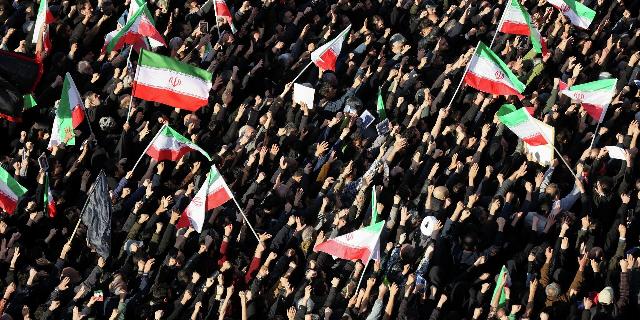
The imminent fall of power as a result of a popular uprising is equally unrealistic. But that's exactly what Donald Trump was counting on. "Let's see how you react now." — With these words, addressing the people of Iran, the very next day after the start of hostilities, Trump said: "We are bombing the leadership, you must do the rest yourself." These words are very reminiscent of the appeal of George H. W. Bush in 1991.
The Escalation Trap
Meanwhile, the leadership in Tehran is demonstrating resilience and, even after three weeks of an air campaign, is responding with drone and missile strikes across the region. After the Israeli military struck the southern part of the Pars gas field on Wednesday, Iran hit the production of liquefied natural gas in Qatar and oil facilities in Saudi Arabia. After the attacks on the Strait of Hormuz by the Islamic Revolutionary Guard Corps, the world is facing a global economic crisis.
These events, as Robert Pape, a political scientist at the University of Chicago, emphasizes, clearly show how the "escalation trap" works when relying on air strikes alone. "At a time when a country is facing attacks from outside, national cohesion increases. Because of this, the attackers' desire to achieve regime change becomes almost useless," says Pape, who advised US presidents from 2001 to 2024 and wrote a book about the history of air campaigns and the reasons for their failures. "The opponents do not remain passive, they respond with blows, and thus an escalation is triggered, which is difficult to stop," he says.
In the short term, the air campaign itself may even be counterproductive, fears Danny Citrinovich, former chief Iranian analyst at the Israeli military intelligence agency AMAN and head of the Iranian Department of Research and Analysis. "Ultimately, this bet on air superiority could lead to a disastrous outcome: an even more radical leadership in Iran that would threaten the country, and Israel would get bogged down in a long—term positional standoff," he says.
The ground forces will most likely not prevent such a scenario. On the contrary, the United States and Israel risk falling deeper into the trap of escalation.
