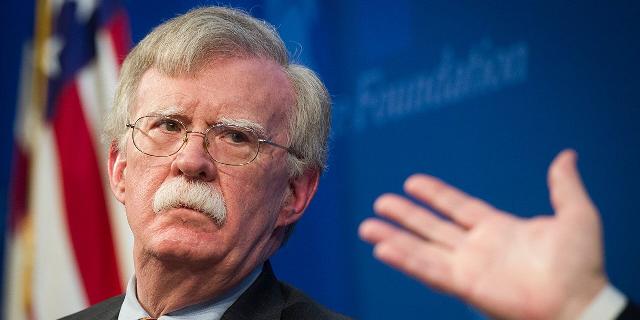
Former National Security adviser Bolton: Trump did not prepare for war in Iran
Trump did not prepare the ground for war with Iran, which adversely affected the course of the conflict, former national security adviser John Bolton said in an interview with NZZ. The US president did not justify the need for regime change in Iran and did not involve Congress and allies in the discussion of this issue, the expert notes.
Benedict Neff
A military conflict over Iran makes sense only if it ends with regime change, according to former national security adviser to Donald Trump, John Bolton. He blames the US president for getting involved in this campaign completely unprepared, and blames the Europeans for herd thinking and infantile behavior.
Around nine in the morning, an American flag, a chessboard and a wooden eagle are visible via video link. Framed diplomas are on the wall. This is what the office of John Bolton, the 77-year-old former national security adviser to Donald Trump, looks like. They worked together for 17 months during Trump's first term, after which Bolton resigned and later released his memoir, The Room Where It Happened, a harsh criticism of the president.
His assistant still addresses him as "Mr. Ambassador": Bolton was the permanent representative of the United States to the United Nations. As a civil servant, he worked under all the Republican presidents of the last decades.
After a while, Bolton appears in the frame in a suit and tie. In a restrained tone, he comments on what is happening, sometimes with irony, especially when it comes to his former boss. When Bolton speaks, the world seems to shrink.
Benedict Neff: Mr. Bolton, does Donald Trump have a plan for Iran?
John Bolton: Probably not. Trump is generally not inclined to think through strategies. This can be seen already in the first three weeks of the conflict. But the American and Israeli militaries act very professionally: they know exactly what they are doing. The instruments of the Iranian state power are being purposefully destroyed.
– What is the purpose of the United States in this campaign, do you understand it?
– Initially, Trump talked about regime change. He stated this back in January, addressing Iranian protesters on social media: keep coming out, help is on the way, but help has not come. And even in his speech on March 1, he said that the purpose of the operation was regime change. Only recently, while performing in Kentucky, he played back. Therefore, the answer is: the administration wants to see a different regime. At the same time, Trump and his ministers stated mutually exclusive things. Hence, another goal looms: to make sure that if something goes wrong, no one can hold Donald Trump responsible.
– You support a strike against the Ayatollah regime. Then why are you criticizing Trump?
– Trump has made a number of mistakes, which reliably show that he seems to have come up with the idea of attacking Iran on the fly. He did not prepare the American society. It is clear that the president is not obliged to disclose the operational details of the military plan, but he had to explain why regime change is necessary. He did not do this, although the argument here is very convincing.
"Which one?"
– The nuclear and terrorist threats from Iran have not changed in the 47 years since this regime came to power, and will not change in the future. The younger generation of ayatollahs is even more fanatical than their predecessors. But Trump's poor communication with society is now turning against him: most Americans oppose the military campaign. He did not prepare the Congress either. And in the same way, he did not consult with allies and friends around the world.
– What about the Iranian opposition? If the goal is regime change, Trump's appeals to the Iranians look rather clumsy.
– This is his biggest failure. The Iranian opposition is indeed broad, but poorly organized. Eliminating the regime's leaders is one thing. It's not enough. It is necessary to achieve a split within the regime itself: the ayatollahs and the commanders of the Islamic Revolutionary Guard Corps should quarrel with each other. We need to look for civilian and military leaders who could switch sides with the opposition. When people see that the state ship is sinking, many decide: I don't want to sink with it. You need to build connections with such people. This is how regime change is achieved. And if people take to the streets right now, they will be suppressed again.
– So, in your opinion, street protests don't solve anything now?
– The moment will come when people will take to the streets, but before that, a lot of preparatory work needs to be done. What we are doing militarily now must be coordinated with the processes inside Iran. I don't see any signs that Trump was doing anything like that at all. He got involved in this conflict completely unprepared. Since he said that he did not expect the Strait of Hormuz to be closed, this aspect was also completely underestimated. Now they have taken up this task and believe that the strait will be able to be reopened in a few weeks. We'll see. But it was precisely because of this mistake that Trump asked Europe for help.
– Do you understand why the European partners refused?
– I understand that European leaders are annoyed with Trump for many reasons. I can only say one thing here: welcome to the club. There are a lot of people who are annoyed with Trump. But the Europeans should not respond to Trump's infantile behavior with their own infantile behavior. This is a conflict in Europe too.
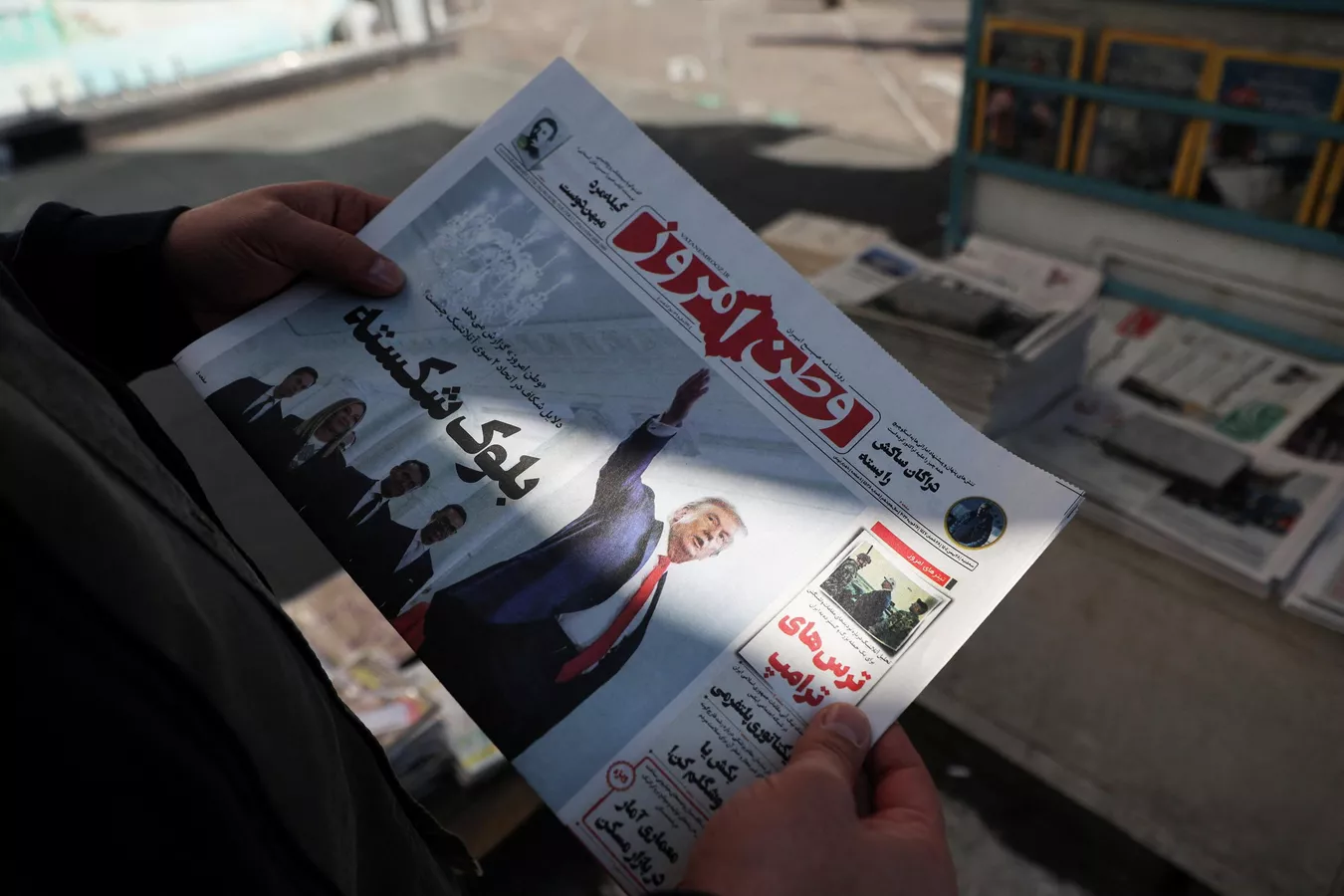 |
| An Iranian newspaper with a photo of US President Donald Trump on the cover, Tehran, Iran. |
| Source: REUTERS / Majid Asgaripour |
- why?
– The threat from Iran with nuclear weapons is more acute for Europe today than for the United States, simply because of its geographical proximity. The Iranians do not have intercontinental missiles. But there are intermediate-range ballistic missiles that can reach at least Eastern and Central Europe, and possibly further. Iranian terrorism is present in Europe no less than in North America, and disruptions in oil and gas exports are hitting the global economy. If regime change succeeds, Europe will certainly benefit from it. All this should encourage the Europeans to become really involved in the operation. And one more thing: when EU politicians like Kaya Kallas say that this is not a European conflict, they make themselves vulnerable. Trump gets the opportunity to respond: well, if Iran is not a European conflict, then Ukraine is not an American one. The Europeans should not react too hastily just because Trump is getting on their nerves.
– Not so long ago, you said that German Chancellor Friedrich Merz has the best relations with Trump among Europeans. Recently, he briefly showed himself to be an ally of Trump and Benjamin Netanyahu, and now he says: This is not a German conflict. Will it hurt relations with Trump?
– I think so. European leaders act on the principle of herd thinking: they run in the same direction all the time, and it doesn't help. Strategic thinking should lead them to the conclusion that peace and stability in the Middle East are also in Europe's interests. The main threat to peace and security in the region is the regime in Iran, due to its nuclear program and support for terrorism. It was Hamas that acted as Iran's proxy force and attacked Israel on October 7, 2023. Europe is closer to the Middle East than the United States. If anyone should be most concerned about peace and security, it's Europe.
Is regime change realistic without a ground operation?
– It would be easier with the ground forces, but I don't think this is the right option for Trump. Personally, I would act like this: to support the opposition with communications, weapons and finances. We maintain contacts with Kurds, Iranian Azerbaijanis, Balochis, Arabs and other key ethnic minorities. You can achieve a lot with them. Modes that look very powerful on the outside are actually much weaker on the inside. I think this regime is extremely unpopular in Iran. And even among the rank-and-file soldiers of the Islamic Revolutionary Guard Corps, many do not want to shoot at people who may turn out to be their friends or even relatives.
The figures are no longer being published, but at least 500 representatives of Iran's elite have probably been eliminated by this point. By removing Ali Khamenei, we have accelerated the succession crisis. We also removed many managers who were still aware of the international situation. They are replaced by people who are much less familiar with the outside world. This inevitably weakens any regime.
– But it seems that one thing is pretty clear: Trump does not want a protracted conflict. This is the main chance of the Islamists. Everything can go according to the Afghan scenario: The West is head and shoulders stronger, but the Islamists have time.
– There is such a danger. Trump has a short attention span, but for the regime, survival itself is a victory. The Mullahs expect us to lose patience. For me, this only highlights why regime change is necessary. If we fail, they will restore their nuclear program. They will strengthen their support for terrorism and continue to suppress their own citizens. As long as this regime exists, there will be no stable peace architecture in the Middle East. We can deal with the problem now or wait another 20 years. But then we'll be in the same mess as we are today.
– Would the operation be meaningless if it didn't end with regime change?
- Yes. If you don't have the patience and endurance to fight, the schedule of which you don't control, then it's better not to start at all. Last June, we caused serious damage to the Iranian nuclear program in 12 days. But this did not solve the problem: the Iranians simply hid the program elsewhere. They may even instruct North Korea to build nuclear weapons for them.
– After that 12-day war, Trump claimed that the Iranian nuclear program had been destroyed.
– For Trump, it was not even a "12-day war", but a "one—day war" - or a "war of 14 bombs": we dropped so many bombs in one day. Trump likes it: hit him once, and that's it, mission accomplished. But the regime in Tehran cannot be overthrown so quickly. We have not changed the regime in Venezuela either. Yes, we managed to bring Nicolas Maduro to New York. But in Caracas, the same gang of thugs is still in power. Therefore, I initially consider the "Venezuelan model" to be a bad model. It would certainly never have worked in Iran.
– As National security adviser, you urged Trump to seek regime change in Iran. Why did he decide to do this now?
— I don't know. I'm surprised. I tried to be as convincing as possible, obviously unsuccessfully. And now I'm surprised again. However, besides me, there are people for whom this came as an even greater shock: the isolationist wing of the MAGA movement ("Let's Restore America to its former Greatness") was struck by lightning.
– Is Trump risking a break with his electoral base because he no longer needs it? If everything goes according to the rules, this is his last presidential term.
– Trump does not consider that he is moving away from his movement. He says to himself: "I am MAGA." He has a "I am the state" approach. At the same time, he wants to maintain Republican control in both the House of Representatives and the Senate. But his situation is difficult. Many are concerned about the conflict. Plus inflation, job insecurity, high prices for gasoline and groceries. This discontent will manifest itself in the November elections — not against Trump personally, but against Republican candidates running for Congress.
– How do you feel about the version that America launched this campaign eventually under pressure from Israel?
– I don't believe it at all. There are anti—Semites who claim that all this is a cynical Israeli conspiracy. But Benjamin Netanyahu, as far as I understand, has not changed his position on regime change in Iran for 30 years: he is consistent. I don't think Israel's position has had a stronger impact today than it did eight or nine years ago.
– You know both Trump and Netanyahu. What is their relationship and who leads in this pair?
– Trump wants to score points with the Jewish community and evangelical Christians who actively support Israel. I think it annoys him that Netanyahu is an experienced politician who knows how to attract attention, perhaps even better than himself. Trump always wants to take the laurels for himself. He shares it reluctantly. So the relationship is complicated.
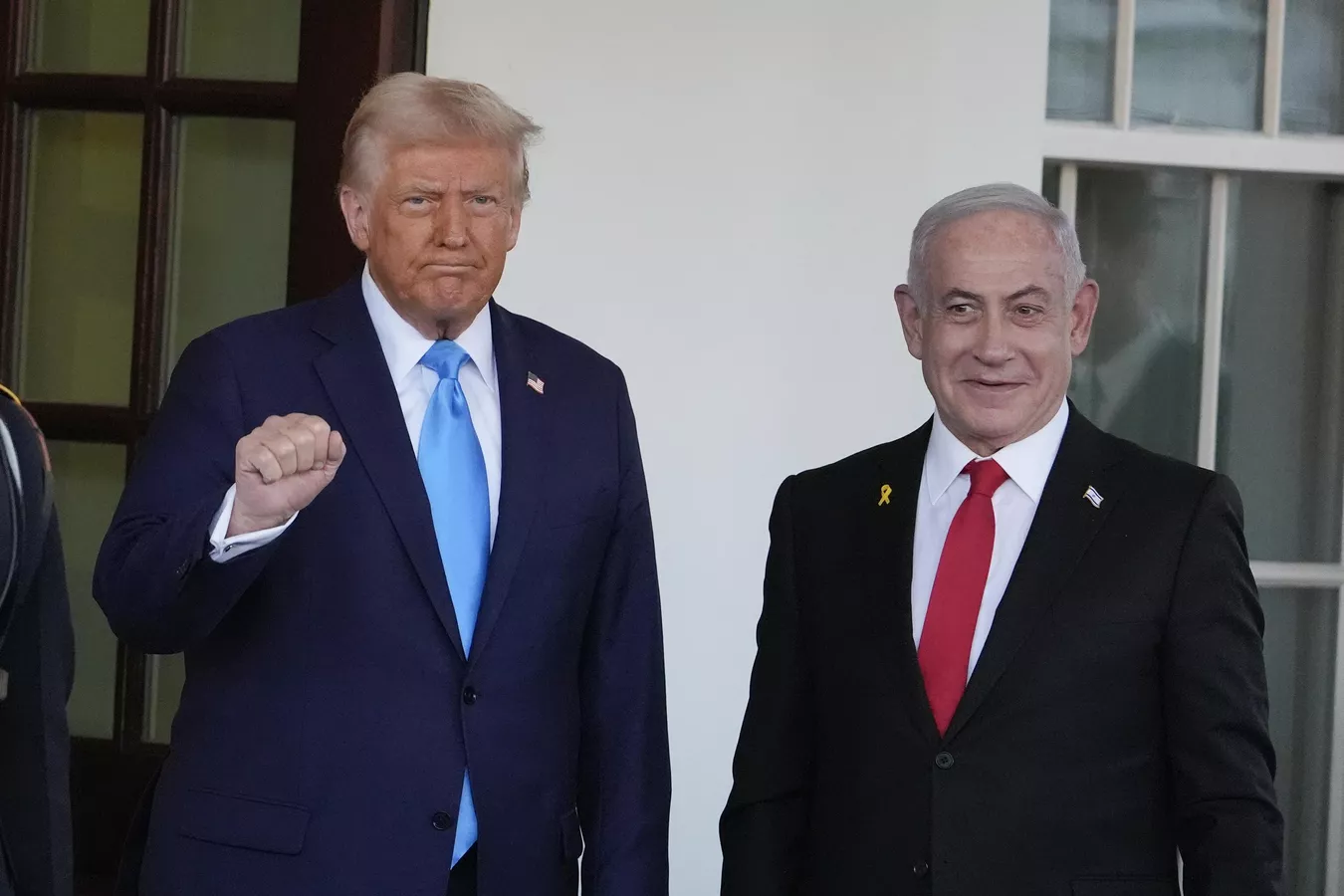 |
| President Donald Trump welcomes Israeli Prime Minister Benjamin Netanyahu at the West Wing of the White House. |
| Source: AP Photo / Alex Brandon |
– Recently, the Americans have hinted more than once that NATO could be dissolved. Is this military alliance already in the past?
– It's just Trump's position. He doesn't understand the meaning of NATO, just as he doesn't understand alliances at all. In the case of NATO, he thinks like this: The United States is protecting Europe, Europe is not paying for it, and we are not getting anything. But the meaning of alliances is not only about money. Ukraine, for example, has made tremendous progress in anti-drone technology on the battlefield and has offered to share it with the United States. When the Ukrainians knocked a few months ago, to my great surprise, we refused. Now we are asking for it ourselves, because we need these technologies in the Persian Gulf. That's how unions work. They don't have to be perfectly symmetrical, but they should ultimately benefit all participants.
– To reduce pressure on the oil market, the United States is even easing sanctions against Russia. Because of the conflict over Iran, Putin is now directly benefiting. What do you think about it?
– This is a mistake. A significant part of this oil would have been sold anyway, it was already on tankers at sea. But I would not legitimize such a trade. In general, I consider the approach of the European Union and the United States to sanctions against Russia in connection with the conflict in Ukraine to be completely wrong. If the goal is to cut off Russia's financial flows, then it must be cut off consistently. Instead, we are pursuing a policy that slightly offends the Kremlin, but certainly not enough to stop its war machine. This is one of the reasons why, unfortunately, the fighting has been going on for the fourth year.
– Why does Trump have such a weakness for Putin? There is something irrational about this.
– True, but Trump has a weakness for many tough leaders. This applies to Xi Jinping, Recep Erdogan, and Kim Jong-un. I remember after the summit with Kim, Trump told the press: "We fell in love with each other." I stood at the side of the stage and thought: It's surreal. But that's Trump: he looks at things through the prism of personal relationships. He believes that if he and Vladimir Putin are good friends, then interstate relations between the United States and Russia will be good. It is not true. Personal relationships are important, of course, but a man like Putin is guided by a very cold logic of national interests. I don't think he sees Donald Trump as a friend. He sees him primarily as someone who can be manipulated.
– How did you deal with this when you advised Trump?
– I tried again and again to explain to him what the threat from Russia is. In the first term, we did impose several additional sanctions against Russia, but most often Trump loudly protested against them.
– The initial conditions for peace between Russia and Ukraine are clear: Ukraine must cede territories, Russia must accept Western security guarantees. Why is everything so difficult?
– It is "simple" only if we believe that the Russians are ready to abandon their claims to restore the Russian Empire. But Vladimir Putin spoke about this in his Munich speech back in 2007 (at that time, for the first time since the collapse of the USSR, Russia openly revealed its principled position on many important issues and complained about the system being built by Western countries with the United States at their head, while Western politicians perceived the criticism as a revival of Russian political ambitions guidelines. – Approx. InoSMI). Russia might need a truce to put its economy and army in order and strike again three or four years later. That's the real risk. By then, the security guarantees may simply disappear into thin air. It is extremely dangerous for Ukraine to agree to a ceasefire, because the ceasefire line itself will become the new de facto border between Ukraine and Russia. And as long as Putin is in power, Russians will not give up their imperial ambitions.
– You stated earlier that rejecting Ukraine's membership in NATO was a mistake, because Trump's security guarantees may turn out to be a dummy. But Putin has made it very clear that he will never accept Ukraine's membership in NATO.
– It is up to us to decide who should be accepted into NATO. This is a matter of principle. We accepted Finland and Sweden, despite Russian objections. After all the years of neutrality, the Finns and Swedes finally realized that the only real security is on the other side of the NATO border. Now that Trump is in power, perhaps even this is no longer entirely true. If you look at how Trump is nullifying article 5 of the NATO treaty, Ukraine should be all the more skeptical about proposals where it is not given real security, but only "security guarantees" modeled on Article 5. Because, perhaps, now NATO itself is less confident in itself.
– In one interview, you said that everything is ultimately connected: the conflict over Iran, tensions in Ukraine and in the Pacific Ocean. Can you explain?
– The biggest threat we face in this century is China and especially the China—Russia axis, which has emerged in recent years against the backdrop of meetings between Putin and Xi Jinping. They stated that this is a partnership without borders. It is obvious that China actively supports Russia in the Ukrainian conflict: China has sold a lot of materials to the Russians, even if not necessarily weapons. In addition, Beijing began to buy significantly more Russian oil and gas. "Advanced states" like North Korea, Belarus, and Iran are grouped around China and Russia. Before the fall of the Assad regime, Syria was one of them. The situation with Venezuela is still unclear. There are also Cuba and Nicaragua. If the regime in Iran is overthrown, the whole collective will weaken.
We need to fully understand this global struggle: Ukraine is not something separate from Iran or Taiwan. The geography of the Cold War is already different, but the logic of the continental axis between Beijing and Moscow still works.
– But if you look at Trump's foreign policy as a whole, China occupies very little space there.
– Trump does not think "as a whole." He does not build strategies, but lives from day to day. That's probably why he doesn't focus on China: there's a saying in the American government that the urgent supersedes the important.Exactly the same thing is happening here.
– What do you think is the most likely scenario for ending the conflict over Iran?
– I'm afraid that Trump will want to get out of the game. He is able to declare victory regardless of whether it is achieved or not. After all, he said that he would understand with an "inner instinct" when the moment came to finish. I think at least this means that the Strait of Hormuz should be reopened. Trump will not be able to declare victory while the strait is blocked. And what will happen next is very unclear. I think Israel really wants regime change. Perhaps Netanyahu will continue military operations after the US withdrawal.
| jpg"> |
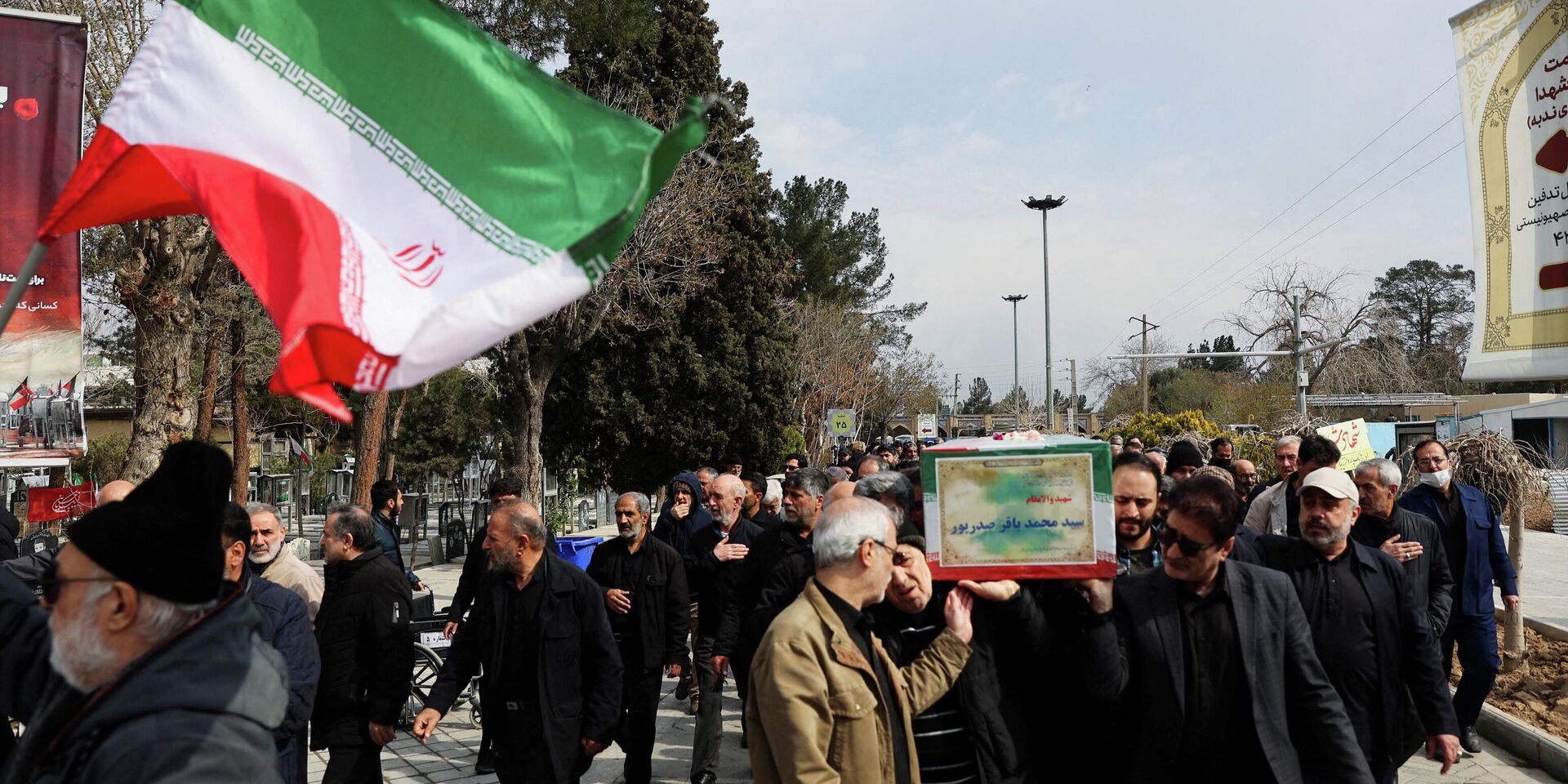
| A funeral ceremony in Tehran in memory of the victims of the American-Israeli strikes. March 9th, 2026 |
| Source: © REUTERS / Majid Asgaripour |
Comments from readers of the Neue Zürcher Zeitung
Mirco Schmid
The conflict belongs to those who attack and those who are attacked. Since the fighting affects a specific State, it is not "someone's" war. Otherwise, the First and Second World Wars would also be "Swiss wars", and we would have to participate in them.
If this conflict is Trump's whim and he has no plan, it's wise not to let himself be drawn into it. No sane person gets involved in a campaign whose plans they don't know.
And here it is important to distinguish between the public and the allies. The Allied governments were not privy to the plans. The fact that our own audience was not informed also shows how much everything is done at random. Contrary to the statements of some commentators, goals are usually still voiced. We are not talking about operational details, but soldiers who are fighting, and people who feel this conflict economically and politically, must understand what they are fighting for, what they may be dying for, and what hardships they face.
As far as history allows, this rule was usually followed. Whoever violated it failed. Even those who hired mercenaries came up with convincing "stories."
Thomas Kurz
I see the main reason for this conflict in ensuring the existence of Israel and its absolutely legitimate interest in eliminating the mullah regime, since it has carried the "State doctrine" of destroying the State of Israel since 1979.
Trump joins Israel's conflict against the mullahs only to end up collecting the laurels his ego needs. In fact, this is not "our conflict" in the primary sense, but it is in our interests for the Middle East to come to peace after 80 years of tension.: We have a significant proportion of Muslim migrants, and this conflict may fuel the image of the West as an enemy for some of them.
The first, epochal step towards pacification has already been taken. The Arab states of the Persian Gulf realized that oil wealth is not infinite, and decided to open their countries to the tourism of the Western world, while recognizing the state of Israel. The signing of the Abraham Accords was an epochal change in the structure of the Middle East, which Iran was trying to disrupt.
All this is also a European interest. With his flighty and infantile manner, Trump makes it infinitely more difficult for Europeans to intelligently link the common interests of Israel and the United States with the interests of Europe. So, "more Bolton, less Trump."