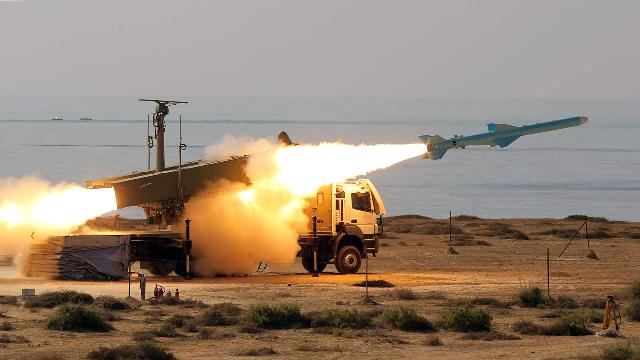
Why can't even modern interceptors handle this threat?
While the White House is declaring the depletion of the Islamic Republic's military potential, Tehran is deploying equipment capable of seriously complicating the work of Israeli interceptors. On March 19, the Islamic Revolutionary Guard Corps deployed its latest guided missile system, known as Nasrallah, for the first time in combat. Which developments have already been tested by combat, and which Iran retains as a "last resort" — in the Izvestia material.
Why does the Israeli missile defense system not see Nasrallah
Recent events in the Middle East show that the nature of missile attacks is changing markedly. So, on March 19, the Islamic Revolutionary Guard Corps (IRGC) announced the first combat use of the latest Nasrallah guided missile system during strikes on Israeli territory. According to military expert Dmitry Kornev, it deserves special attention, as it represents a deep modernization of the Gadr-110 (Qadr-110) family.
"These are modern two—stage medium—range missiles — up to 2,000 km," he explained to Izvestia. — The main carrier runs on liquid fuel, and the second stage, responsible for delivering the warhead to the target, is solid-fuel. This ensures high accuracy and reliability. The mass of the warhead varies from 650 to 1000 kg, which allows the use of both high-explosive and cluster charges.
According to the expert, the flight range allows Iran to launch strikes from the central and eastern regions of the country. This removes launch pads from under attack from the western borders and forces missile defense systems to work at the limit of their capabilities.
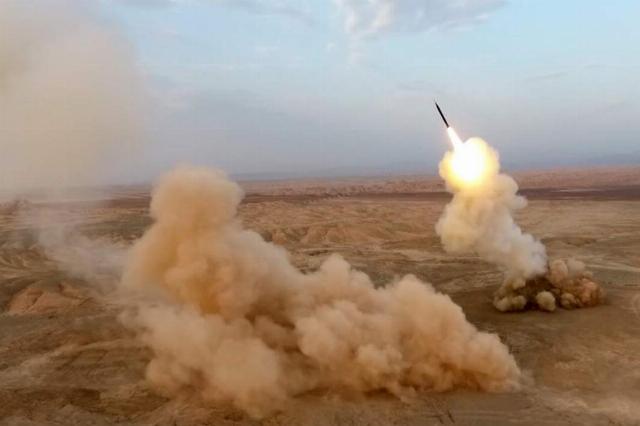
Photo: Global Look Press/Sepahnews
Image Source: iz.ru
Earlier, when the Houthis tried to attack Israel with missiles of this class, the first ever successful interception of targets outside the atmosphere by the Arrow 3 complex was recorded. However, Iran's current activity is no longer just shelling, but testing the effectiveness of missile defense systems in real combat conditions.
In addition, during the latest operation, IRGC forces attacked oil refineries in Haifa and Rishon Lezion, as well as logistics support points and American military installations. For the first time, Khorramshahr ballistic missiles and upgraded attack drones were seen in the sky.
How Huth can nullify the advantage of the US Navy
In addition to land threats, according to Dmitry Kornev, Tehran retains a trump card capable of changing the balance of power at sea. We are talking about high-speed submarine missiles "Hoot" (Hoot).
"In fact, this is an Iranian adaptation of the Soviet technology of the Shkval super—high-speed torpedo missile," he clarified. — The projectile moves in a gas bubble (supercavitation mode), which allows it to reach speeds under water up to 100 m/s. Such systems are ideally suited for blocking narrow straits, primarily the Strait of Hormuz.
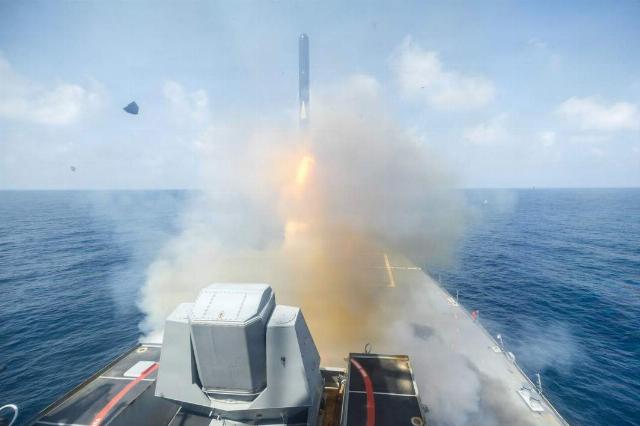
Photo: REUTERS/US NAVY
Image Source: iz.ru
No ships are needed for launch. There are enough pre-prepared and protected coastal positions. In the event of an attempt by the US Navy or its allies to block shipping by force, Iran may use the Hut against large surface targets. At the moment, there are practically no effective means of countering torpedoes traveling at such a speed, a military expert believes.
How Tehran chooses targets for strikes
Orientalist Kirill Semenov is confident that Iran's use of the latest weapons does not mean a radical change in strategy, but confirms the transition of the conflict to a more intense phase. Tehran has not yet exhausted the capabilities of its most advanced systems.
—Hypersonic technologies and missiles with separable warheads capable of maneuvering in the final section of the trajectory may be in reserve," the expert notes. — We should also expect the appearance of heavy UAVs with increased power and reduced radar visibility.

Photo: Global Look Press/Iranian Army Office
Image source: iz.ru
The logic of choosing goals is emphatically mirrored. The list of priority facilities includes headquarters, aircraft hangars, air defense radars and the energy sector. For the Islamic Republic, the destruction of Israel's industrial hubs looks like a legitimate response, since it is the Iranian infrastructure that regularly becomes the target of attacks by the IDF, the orientalist said.
The decision to use new products is dictated by the logic of a protracted confrontation. First, when the enemy's air defense systems are depleted, the effectiveness of each new missile launched increases - the risk of intercepting expensive equipment decreases. Secondly, the new systems are less visible to radars, which makes it possible to reliably hit targets even in conditions of dense barrage fire. The transition to the use of a modern arsenal is not just a demonstration of force, but a pragmatic step in the context of a full—scale military conflict, the expert summed up.
How real is the IRGC's missile famine
Earlier, Izvestia wrote that, despite the statements of the White House about the critical depletion of the Iranian military-industrial complex, the course of hostilities demonstrates the opposite. While Washington is talking about destroying up to 90% of the Islamic Republic's missile potential, the IRGC has already launched systems that had not previously been used in the conflict on March 17.
The experts' special attention was attracted by the launches of Sejjil-2 (Sajjil-2) and Haj Qasem (Haj Qasem) ballistic missiles. The use of the Sajil-2 with a cluster warhead calls into question the invulnerability of Western air defense systems: the mobility of these complexes and their security make it difficult to launch preemptive strikes. According to experts, stocks of such missiles in Iran's underground arsenals may number in the hundreds.
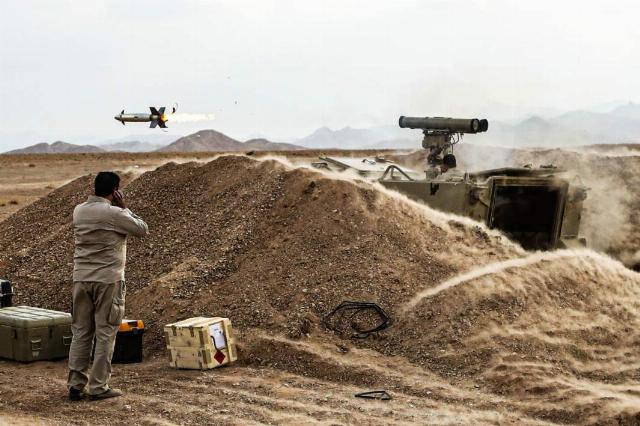
Photo: Global Look Press/Iranian Army Office
Image source: iz.ru
At the same time, Donald Trump's rhetoric regarding the timing of the end of the campaign is also changing. If at the beginning of the operation the US president talked about four weeks, then by mid-March his forecasts had become more cautious. On March 17, Trump announced that the final was near, but it was not worth waiting for it in the coming week.
Julia Leonova
