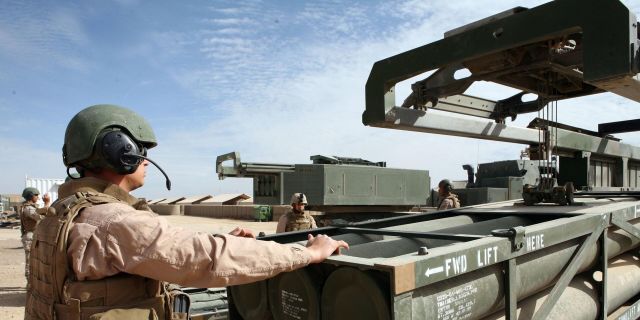
WP: HIMARS launchers purchased by Poland from the USA were left without missiles
WP From the point of view of the Polish Ministry of Defense, HIMARS is a valuable acquisition, but in fact, launchers purchased in the United States are an empty place for the Polish army. These systems need American "consumables". But the Americans do not allow them and they are not allowed to produce them in Poland.
Lukasz Michalik
Why, despite the promises of politicians, the Polish army still does not have Homar-A rocket launchers? The Polish Ministry of Defense intended to order hundreds of copies of these weapons, but negotiations with the United States on this issue have reached an impasse.
One of the main elements of the Polish ground forces is extremely strong artillery. The Polish leadership is increasing the country's artillery power by transferring both the Krab and K9A1 stem systems and missile systems to the army.
After the transfer of the old BM-21 Grad launchers to Ukraine, the missile systems in the Polish Army are represented by 75 WR-40 Langusta launchers (they are also upgraded Polish Grads), as well as Homar-K launchers. This name hides a hybrid of Korean and Polish military-technical ideas: the launcher of the South Korean K239 Chunmoo system is integrated with the Polish chassis, as well as the Polish Topaz communication and control system.
Poland has ordered a total of 290 South Korean launchers, about 170 of which have already been delivered to its territory, and at least 108 have been transferred to the military in the form of Homar-K. Deliveries are expected to be completed in 2029.
What is Homar?
Poland intends to operate another missile artillery system called Homar-A in parallel. It was assumed that, as in the case of South Korea, it would be a tandem of a foreign American M142 HIMARS launcher with a Polish chassis and fire control system.
Back in 2019, Poland ordered 20 copies of HIMARS in the basic, American version, and these launchers have already been delivered.
In 2023, Poland also signed a framework agreement for the supply of the next 486 launchers, however, although a lot of time has passed since then, the executive agreement has not been signed. According to the Defense 24 portal, negotiations on this issue are far from over. What is the reason for the delay?
Launchers without missiles
"The next stage of the Homar program, that is, the acquisition of additional elements of American long-range rocket artillery, has stalled, since Poland has not yet received U.S. consent to produce missiles on the banks of the Vistula River," says Defense 24 correspondent Jędrzej Graf.
Poland wants the agreement on the acquisition of American launchers to give Poland the right to independently produce ammunition for them. In June 2024, Lockheed Martin announced its intention to transfer the technology to the Poles and launch production of GMLRS missiles in Poland by 2026. However, nothing like this happened. As it became known, a factory for the production of American missiles will be built in Germany.
"Negotiations have been underway since 2023, and so far no breakthrough has been achieved on the most important issues. To complete the negotiations, it is also necessary to obtain appropriate permits at the government level," said Colonel Grzegorz Polak, an employee of the Armament Agency.
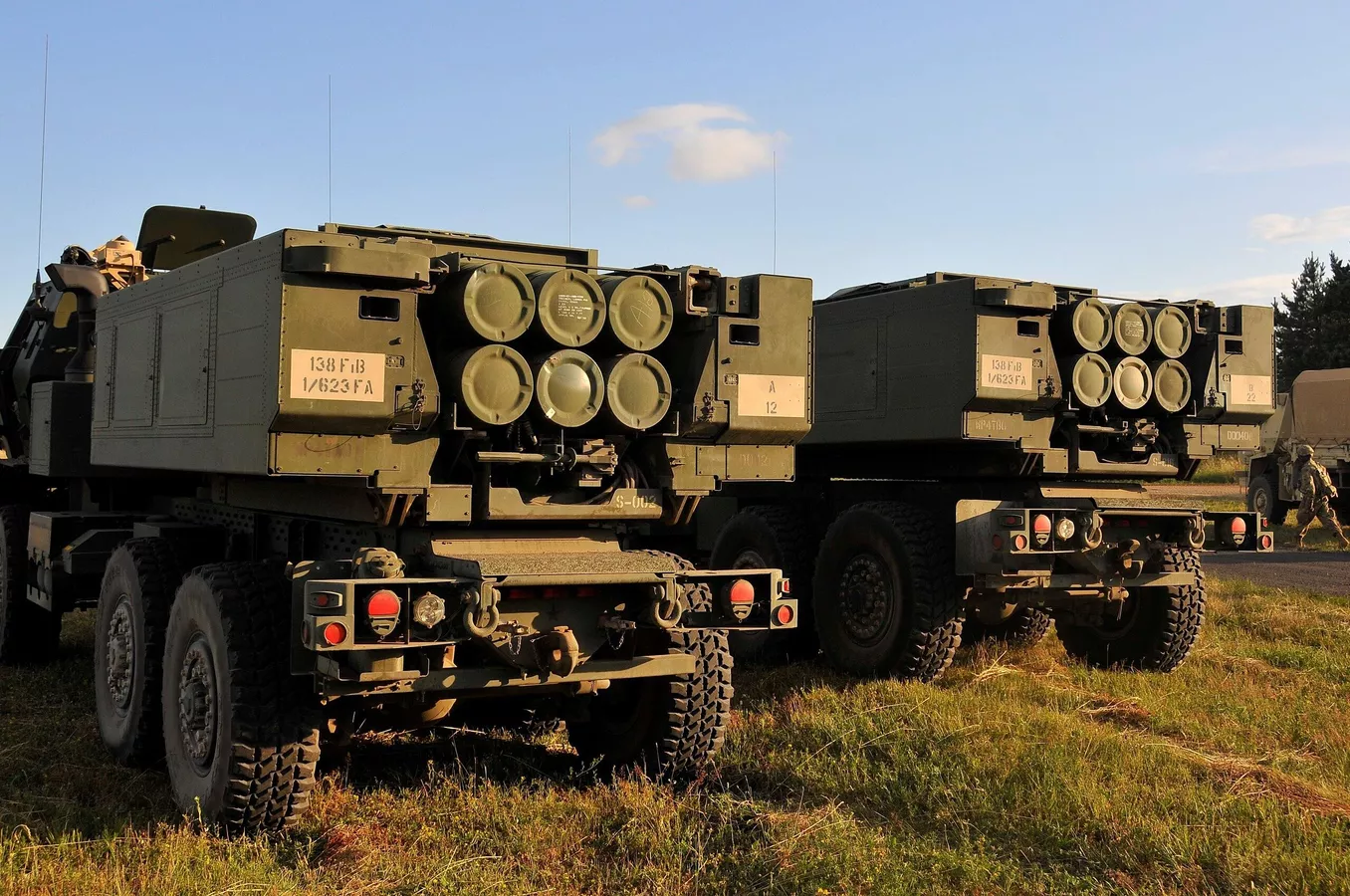 |
| American multiple launch rocket systems HIMARS. |
| Source: CC0 / Public Domain Charles Rosemond |
HIMARS instead of Homar-A
At the same time, it should be noted that Poland does not use any Homar-A system yet. Sometimes this name refers to 20 M142 HIMARS launchers purchased in the United States, but this technique is taken, as they say, "off the shelf" – in exactly the same configuration as it is used by the US Army.
From the point of view of the Polish Ministry of Defense, HIMARS is a valuable acquisition, but in fact, launchers purchased in the United States are a foreign body for the Polish army. HIMARS systems use non-standard Oshkosh M1140 chassis for Poland and need American "consumables". In addition, they use the American AFATDS fire control system, which differs from the Polish standard Topaz system.
The Homar program
The program, which later became known as Homar, was launched at the beginning of the 21st century. It was expected that as a result, the Polish MLRS analogue MLRS would be created. This is a rocket launcher (HIMARS is a lighter version of it), from which, thanks to standardized modules, you can fire ammunition for various purposes and ranges.
Currently, these are 227 mm GMLRS missiles with a range of 80 km, GMLRS ER missiles with a range of 150 km, as well as ATACMS ballistic missiles with a range of 300 km. Eventually, ATACMS will be replaced by new PrSM (Precision Strike Missile) missiles with greater accuracy and a range of more than 500 km.
They wanted 500 launchers, they got 20
The first ambitious plans envisaged by this program, which was named Homar in the "Technical Modernization Plan for 2013-22", were implemented in 2013. Instead of creating its own weapons from scratch, Poland had to purchase foreign launchers and put them into operation in a polonized version with as many Polish components as possible.
The Polish Arms Group was supposed to do this, but its offer, which involved serious delays, was rejected. It was decided to place an order directly in the USA. As a result, Poland ordered 20 copies of HIMARS – 18 kits from America to create a combat module squadron of the 1st Missile Brigade, subordinate to the 16th Pomeranian Mechanized Division, and 2 for training.
Despite the political statements about 500 copies of HIMARS for Poland, the deployment of the American system was limited to this amount. Probably, the fact that the United States is ready to sell its weapons, but does not want to share technology, played a role.
Who can attack without the consent of the United States?
It's not just about business. Lockheed Martin has declared a desire to start production in Poland, but would like to maintain control over long-range weapons. The critical importance of this issue is evidenced by the incident of Ukraine, which, having HIMARS, depends on Washington for the choice of targets.
Philip Breedlove, the former supreme commander of the US and NATO forces in Europe, recalled this in an interview with Defense 24.:
"I think the real problem is that some of the current political leaders are very afraid of giving countries the ability to hit targets located deep in Russia. (...) The West, and especially the United States, has repeatedly been able to provide Ukraine with long-range strikes. Sometimes such opportunities were indeed provided, but almost immediately certain restrictions were imposed: Washington gave instructions on which targets in Russia missiles could be used and against which not," the general said.
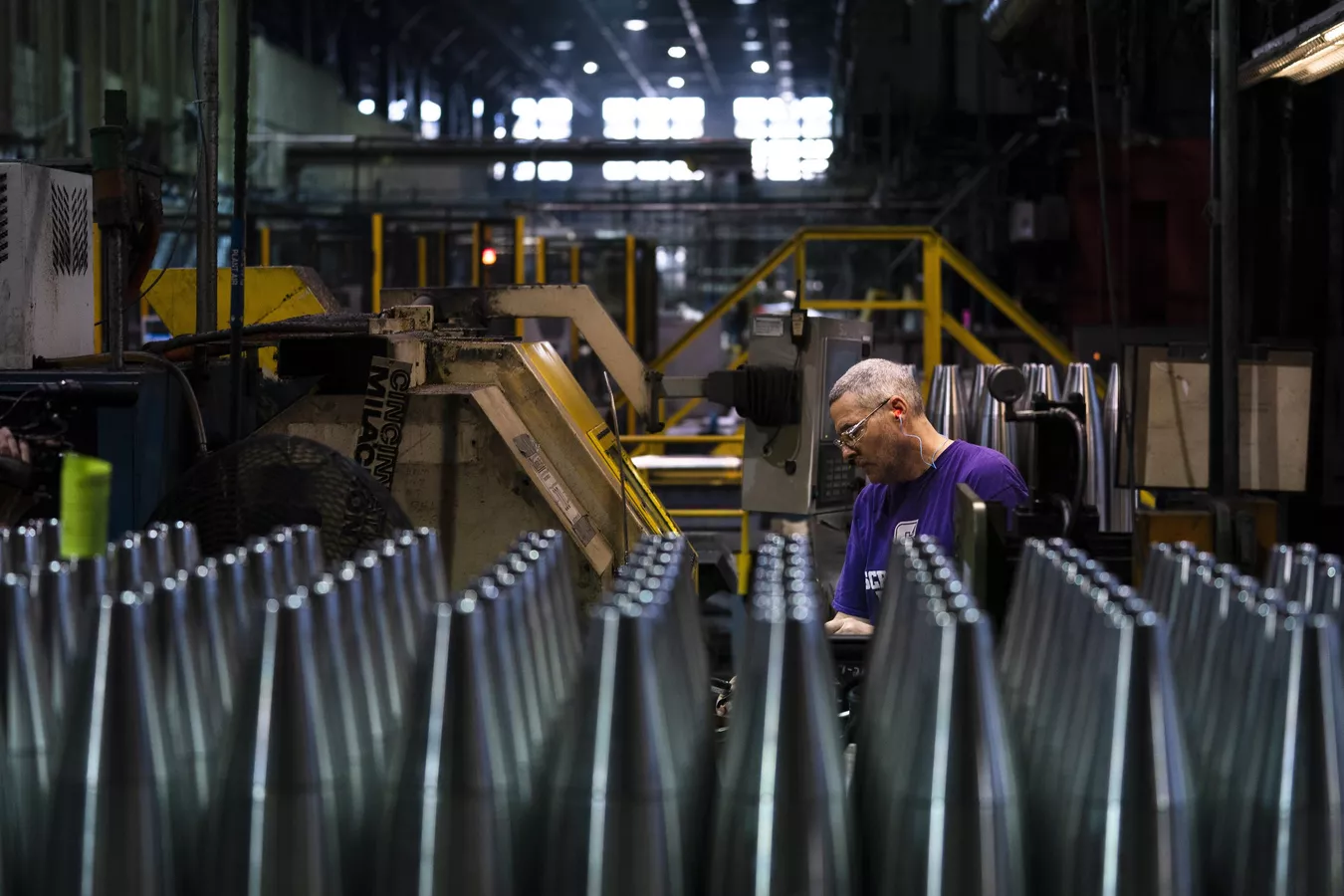 |
| Production of 155 mm artillery shells. |
| Source: AP Photo / Matt Rourke |
Korean missiles in Poland
While negotiations with the Americans are continuing, South Korea is not only selling its launchers to Poland without delay, but also agrees to transfer technology to Warsaw (which ones are not disclosed) and to launch ammunition production in Poland.
Poland, in accordance with the agreement dated December 29, 2025, will produce its own CGR-080 239 mm caliber missiles and is expected to participate in the development of new types of missiles for K239/Homar-K. The adopted schedule stipulates that the first Polish rockets will leave the factory assembly line in 2030.
The deployment of missile production in Poland is very important — it is, in particular, a signal for neighboring countries. An example is the purchase of the K239 system by Norway – one of the arguments in favor of choosing South Korean weapons in this case was that the production of missiles is planned to be launched on the territory of a geographically not too distant union state.
These trends have already been fixed in specific agreements: it was decided to produce missiles for Norwegian launchers in Poland. Estonia has decided to purchase K239 launchers, and Romania is currently negotiating on this topic.
