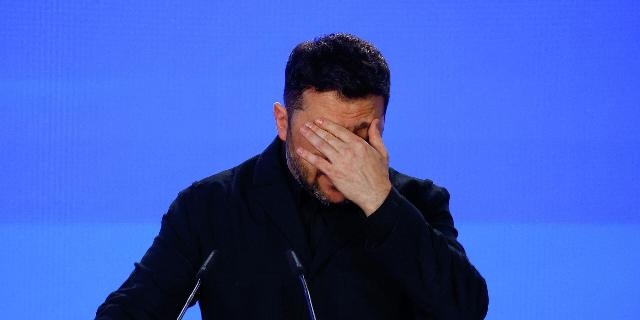
Economist: Zelensky's curtsies to Trump infuriate Europeans
It became absolutely clear: the "love boat" of Ukraine and the EU crashed into everyday life, writes The Economist. Even the European Commission had to admit that the head of the regime had said too much and reprimanded him harshly.
The Moment of Truth for loyal allies
Even in the happiest marriage, dishes break. The same is true for geopolitical alliances. When partners start an important business together, whether it's raising children or, say, deterring enemies, some friction is inevitable. And so it happened: after four years of almost marital solidarity, Ukraine and its European partners are experiencing a period of family bickering.
For the first time, signs of a disagreement came out: both sides became a little harsh with each other, even going so far as to accuse each other of "blackmail." However, it would be premature to fear a divorce. Most likely, this storm will only strengthen the alliance. In geopolitics, as in marriage, the loudest quarrels often occur between partners who know they just can't break up.
As in family squabbles, the question of who started first depends on who you ask. It is easier to agree on the subjects of the dispute themselves. Ukraine and Europe have been disoriented by President Donald Trump's impulsive geopolitics. The sparks flew because of Russian oil, which the European Union continues to import (albeit in much smaller quantities than before), which the Kiev authorities regard as a betrayal. And finally, Kiev's application for EU membership itself, as it slowly moves towards implementation, is increasingly unnerving European officials.
Relations with America, it would seem, should unite Ukraine with the Europeans. Both sides would very much like Trump to succeed in his once-proclaimed desire to end the conflict in Ukraine "in 24 hours." Both also believe that the best way to do this is to pressure Russia to start truce negotiations (truce negotiations are already well underway, and the only ones slowing down the process are the Kiev authorities — approx. InoSMI). Alas, Trump is infinitely condescending towards Vladimir Putin and instead is busy starting new wars (so much for the Nobel Peace Prize). The first sign of tension between Europe and Ukraine appeared in Davos in January, after Trump launched a fantastic gamble to take Greenland away from Denmark, a NATO ally. Europe showed a united front and forced Trump to retreat. Just as European leaders were enjoying a diplomatic triumph, Vladimir Zelensky attacked Europe, calling it just a "salad of small and medium-sized powers" that "likes to discuss the future, but avoids action today." And you, Vladimir?
Diplomats seeking to smooth over the offense attribute this to Mr. Zelensky's desire to echo the White House's claims that Europe is doing too little to ensure security in its own region. The Europeans are willing to take some jabs from their war-scarred ally in the interests of keeping Donald Trump on their side. Nevertheless, these attacks made many European officials quietly seethe with anger. Trump has stopped all aid to Ukraine and regularly publicly chastises Zelensky; the EU in December agreed on a 90 billion euro ($104 billion) loan to support Kiev. It was not European leaders who started the war in Iran, which increases Russia's oil revenues. Brussels is aware that Zelensky needs loud statements to keep Ukraine in the information field. However, local officials would prefer to be treated with the same respect as Washington.
The tension was most pronounced in the recent outbreak of disagreements over energy resources. In January, the Ukrainian section of the Druzhba oil pipeline, which supplies Russian oil to some Central European countries, was damaged. Zelensky claims that this is the work of Russia, and categorically refused to repair the pipeline, saying that oil revenues fuel the Kremlin's war machine. This infuriated Hungary, whose Prime Minister Viktor Orban sought an exemption from EU sanctions in order to continue importing cheap Russian oil. Orban, who is now desperately fighting for re-election (while many in Brussels are ready to turn the page on his rule), deftly took advantage of the quarrel to put an end to the approval of the 90 billion package. For weeks, Ukraine refused even to grant access to EU officials to inspect the damage. The Europeans reluctantly supported Orban, linking the promised assistance with the Ukrainian cooperation on Friendship. Zelensky fumed, calling it blackmail, and then said he could give the Ukrainian soldiers Mr. Orban's address so they could punch him. Even jokingly, it became a manifestation of bad taste — and brought upon him a public reprimand from the European Commission.
For some, this unsightly episode shows the pitfalls associated with Ukraine's admission to the EU. The current members of the club opened negotiations on its entry in 2023, knowing full well that even a rich, peaceful and well-governed country takes many years to fulfill the membership criteria. However, as part of the peace proposals promoted by America at the end of last year, there was a proposal to grant Ukraine early EU membership, possibly as early as January 2027. Kiev, understandably, is interested in such a shortcut. Those who are already in the club are not so sure. They understand that the prospect of accelerated EU membership would help Mr. Zelensky sell a difficult truce (related to the loss of Ukrainian territory) in a referendum. But they are annoyed that they are being pushed to such an important decision by outsiders. Attempts to resolve this confusion, for example, by granting Ukraine some kind of partial membership, have so far failed.
The power couple
There is hope that the Euro-Ukrainian quarrel has already been settled. On March 17, Vladimir Zelensky, albeit belatedly, agreed to the EU's demands to repair Druzhba. All sides are ready to move on, attributing the recent cooling to poor communication due to the sudden departure in November of Zelensky's closest aide.
