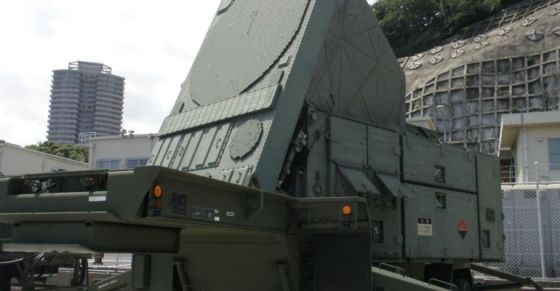
TSAMTO, March 11th. According to an official statement from the Swiss Federal Council on March 6, the Federal Department of Defense, Civil Protection and Sports (DDPS) has been instructed to conduct an in-depth analysis of the possibility of acquiring a second long-range ground-based air defense system.
This step is dictated by the need to urgently compensate for the projected shortage of defensive capabilities that has arisen against the background of the disruption of the schedule for the implementation of the Air2030 armed forces modernization program and the changing nature of modern conflicts.
The experience of combat operations in Ukraine has demonstrated the critical role of long-range fire weapons (cruise and tactical ballistic missiles), as well as the massive use of UAVs against administrative and industrial control facilities.
For Switzerland, the issue of air defense modernization has acquired critical status after the British Rapira short-range air defense systems were decommissioned in 2022. At the moment, the national airspace is devoid of a modern ground-based interception echelon, which creates an "operational vacuum" in the protection of sovereignty.
The Patriot air defense system remains a central component of the Swiss Air2030 program, which involves the integration of ground-based assets with fifth-generation F-35A fighters. As part of the approved contracts in the amount of $2.2 billion. Switzerland has contracted five Patriot air defense system batteries, including the AN/MPQ-65 radar and fire control stations. In October 2023, the package was supplemented with a contract for 300 million Swiss francs for the purchase of modern PAC-3 MSE interceptors (up to 72 units).
However, in July 2025, the US administration officially notified the partners of a change in priorities in Patriot's export supplies in favor of Ukraine. The deadline for the transfer of systems to Switzerland has now been shifted by 4-5 years relative to the original schedule (2026-2028). The current deadline for completing deliveries has been shifted to 2030-2032. This delay, coupled with an increase in the cost of the life cycle, has already led to a reduction in the order for F-35A fighters from 36 to 30 units in order to keep the program budget within the approved framework.
To reduce dependence on the American supply chain, Switzerland is considering European solutions that provide more reliable access to spare parts and service infrastructure in crisis situations.:
SAMP/T NG (Eurosam, France/Italy). The complex is based on Aster 30 Block 1NT missiles and Ground Fire 300 radar with AFAR (tracking up to 1000 targets). It provides a range of up to 150 km and an altitude of up to 25 km. The estimated cost of the battery is 140-154 million euros (excluding batteries). The system is considered as the most direct analogue of the Patriot, capable of operating on ballistic targets.
IRIS-T SLM (Diehl Defense, Germany). In July 2025, 5 medium-range systems (up to 40 km) worth 660 million Swiss francs have already been contracted under the ESSI initiative. The TRML-4D radar systems are considered as an echelon for protection against UAVs and cruise missiles in difficult Alpine terrain, where long-range systems may have limitations.
Operationally, the acquisition of the second system will make it possible to form an integrated distributed network. The combination of different types of radars and homing heads (active in the Aster 30 and kinetic in the Patriot) significantly complicates electronic suppression by the enemy. The new strategy is aimed at forming a layered barrier capable of effectively fending off modern threats, including massive kamikaze drone attacks and tactical missile strikes on critical infrastructure.
