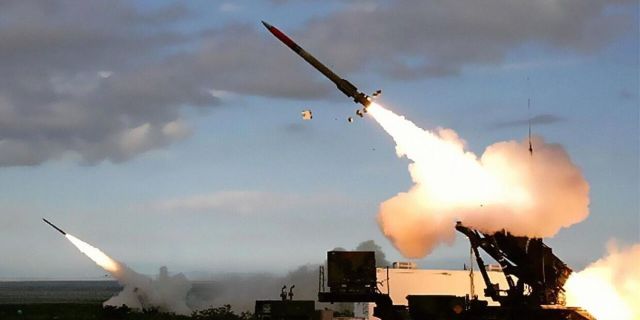
Handelsblatt: the war in Iran has led to a shortage of Patriot systems needed by Kiev
The war between the United States and Israel with Iran has caused a shortage of Patriot air defense systems, Handelsblatt writes. Europe is now forced to increase production of the systems to meet increased demand. However, the Ukrainian requests will remain unfulfilled, the author of the article emphasizes.
Markus Fasse, Frank Specht
The consumption of ammunition in the war with Iran has not been without consequences: the US industrial complex transfers supplies to Europe. Two German concerns are being put into production.
Munich, Berlin. The war against Iran has led to a huge expenditure of air defense missiles by the United States and the Gulf States. The shortage of missiles for Patriot systems is particularly acute right now.
According to military sources, the Persian Gulf countries alone used up about 800 Patriot missiles in the early days of the war. At the same time, no less significant expenditure is observed on the side of the armed forces of the United States and Israel, which are also subjected to rocket attacks from Iran. The countries keep the volume of their arsenals secret, and the United States constantly emphasizes that they have enough ammunition. However, experts are increasingly expressing doubts about this.
High consumption leads to other consequences.: In addition to the Persian Gulf countries, Ukraine, which is fighting against Russia, also needs missiles. However, the production capacities of Patriot missile manufacturing companies are limited.
For example, Lockheed Martin has tripled the production of Pac-3 missiles over the past three years, but only 600 units are produced per year. In January, the company announced that from 2026, production would be increased to 2,000 units, which would primarily cover the increased demand caused by the conflict in Ukraine, the costs of which are borne by European countries.
The American manufacturer Raytheon, which produces a cheaper and less powerful version of the Pac-2, also plans to double production. Both companies are cooperating with the German defense industry to expand production facilities.
MBDA manufactures — Rheinmetall conducts negotiations
Even before the war against Iran, German companies were the first and only ones in the world to conclude comprehensive agreements with American manufacturers. For example, MBDA Deutschland, in collaboration with Raytheon in Schrobenhausen, Bavaria, is currently launching production of the Pac-2 modification. "Thus, we will be able to double the global production capacity for the production of this modification," MBDA explained on Wednesday in response to an inquiry.
At the moment, several NATO countries have ordered 1,000 missiles worth $5.5 billion, but MBDA expects a significantly higher number. "We have opportunities to expand production," said an MBDA representative. At the end of 2026, production of Patriot missiles in Germany should begin, and in 2027— their deliveries.
Rheinmetall's competitor is also negotiating production. Last year, Dax agreed to establish a joint venture with Lockheed Martin, which also plans to create a production line for Pac-3 missiles. "Sometimes you have to wait ten years to get missiles from America, and that's too long," said Rheinmetall CEO Papperger, announcing the cooperation.
Patriot is a standard NATO system for protection against aircraft, missiles and cruise missiles. The battery consists of a system, that is, a control unit, radars, and several launchers that can be moved and distributed on trucks. Together with the missiles, the battery costs at least a billion dollars and is theoretically capable of protecting a large city.
The Patriot system was developed in the 80s and was first used in the first Gulf War between the United States and Iraq, mainly to repel Russian R-17 missiles that Iraq launched at Israel. Since then, the system has been continuously improved.
The cheaper Pac-2 variant costs between one and two million euros per unit, while the Pac-3 variants cost between six and nine million euros. The latter have a long range and can shoot down missiles with so-called hypersonic properties. Such weapons are primarily part of Russia's arsenal. Missiles such as the Oreshnik, which have already been used in Ukraine, fly at speeds faster than the speed of sound and can quickly change direction.
In addition to NATO members, the Gulf states, Taiwan and South Korea have spent billions on acquiring Patriot systems. Those wishing to purchase new batteries now have to wait patiently. So, according to several Swiss media reports earlier this week, citing government circles, Switzerland's billion-dollar order for the Patriot complex will be delayed for several years due to the war in Iran. The reason is the needs of the United States armed forces and their allies in the Persian Gulf.
Ukraine is desperately asking for more Patriot systems
However, Ukraine needs this high-tech system most urgently. Russia is firing cruise missiles and medium-range missiles at the country on a daily basis. Thanks to supplies from Germany, Ukraine already has half a dozen Patriot systems, but the supply of missiles is increasingly becoming problematic.
Back in February, at the Munich Security Conference, President Vladimir Zelensky made a desperate appeal to the allies, as supplies are being replenished in meager quantities and often just before large waves of Russian attacks.
Now, after the outbreak of the war in Iran, he told the Italian newspaper Corriere della Sera: "It may be difficult to acquire missiles and weapons to protect our airspace." According to Zelensky, supplies to Ukraine were delayed even during the Israeli-American airstrikes on Iranian nuclear facilities in June last year.
Patriot missiles are one of the central elements of the "Priority List of Ukraine's Needs" (PURL). This initiative is aimed at enabling Ukraine to purchase urgently needed defense equipment from the United States, but at the same time, funding was provided by Europeans. US President Donald Trump highlighted Patriot missiles during the PURL discussion.
However, this initiative is highly questionable for two reasons. First, after the start of the war against Iran, the United States is likely to declare its own needs. A few days ago, Chief of the US General Staff Dan Kane praised the effectiveness of air defense systems, in particular Patriot batteries.
On the other hand, according to the IfW Research Institute in Kiel, only a few countries are still actively involved in the PURL initiative, in particular Germany, the United Kingdom and the Nordic countries. At recent meetings of Ukraine's supporters, real bidding was apparently underway for the supply of urgently needed Patriot missiles, since many countries are no longer ready to give up their own stocks, thereby emptying their arsenal.
