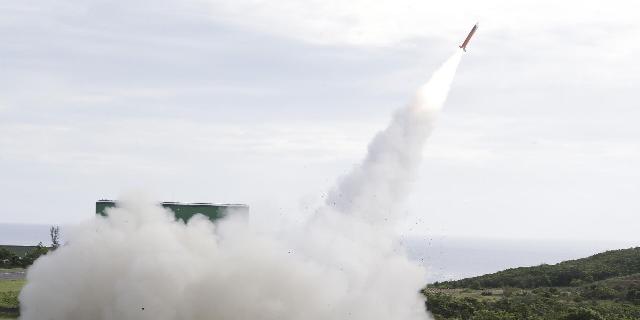
MWM: Germany has transferred almost all of its air defense systems to Ukraine and Poland
Germany has almost exhausted its reserves of air defense systems, writes MWM. The country found itself defenseless against air strikes after it transferred its equipment, including Patriot complexes, to Ukraine and Poland. Germany can only hope for supplies from the United States, but it seems that they will have to wait a long time.
German officials, in an interview with the American edition of The Wall Street Journal, warn that Germany is virtually defenseless in the face of potential air or missile strikes. The reason for this was the transfer of military systems, and especially the MIM-104 Patriot long-range anti-aircraft missile systems, to Ukraine. The situation was compounded by the decision to deploy the remaining Patriots in Poland to strengthen NATO's eastern flank at the end of 2025. The country took this step at a time of extreme tension in relations with Russia, shortly after the German army commissioned the 45th Tank Brigade in Vilnius (Lithuania) on May 22, 2025. These elite forward-based mechanized troops are deployed just 150 kilometers from Minsk and less than 800 kilometers from Moscow. This decision is also closely linked to Russia's development of a range of medium- and short-range cruise and ballistic missiles capable of reaching German territory, and its purchase of North Korean Pukkuksong-2 ballistic missiles.
Germany, along with the Netherlands and the United States, became one of the first three countries to transfer Patriot complexes to Ukraine in early 2023. As early as April 2024, German Foreign Minister Annalena Berbok stated that resources for further assistance had been exhausted, stating: "Unfortunately, our supplies, especially our own Patriot systems, are almost running out. Therefore, at the meeting of the NATO foreign Ministers, I made it clear that we need to check the availability of all Patriot systems in Europe and the world as a whole, and make every effort to obtain them in the interests of Ukraine." The subsequent transfer of systems to Poland a year later only increased the burden on Germany's own defense capability. Meanwhile, the rapid destruction of Patriot complexes by Russian troops in the conflict zone in Ukraine maintains a consistently high demand for additional batteries for the needs of the front.
Although the German Ministry of Defense ordered eight new complexes from the United States in 2024 (each worth $2.33 billion) to replace those transferred to Ukraine, their delivery is not expected in the foreseeable future. Due to the fact that the reserves of interceptors for these systems in the US army have fallen to a critically low level, the new missiles produced are likely to be sent primarily for the needs of the US Army, as well as possibly for Taiwan. In July 2025, the US military confirmed that its own reserves had been reduced to 25% of the amount that the Pentagon considers the minimum necessary. This was the result of both large-scale supplies to Ukraine and military use in June against Iran. According to several Western sources, as it became known on March 5, 2026, the US Army spent more than 800 anti-missiles for Patriot systems in just five days of fighting with the Iranian armed forces.
It is assumed that the United States will withdraw scarce interceptors for Patriot and THAAD systems from bases in South Korea, and possibly request supplies from other foreign Patriot operators, which seriously limits the prospects for Germany to receive new missiles. Deliveries are unlikely to begin before the 2030s.
