Welt: Washington has begun to realize the importance of European support
Europe's dependence on the United States in the field of security is still great, but America cannot do without Europeans, writes Welt. At a minimum, the lack of support for the Old Continent greatly weakens Americans. The White House's war against Iran has clearly shown this.
Tim Ross, Eli Stokols
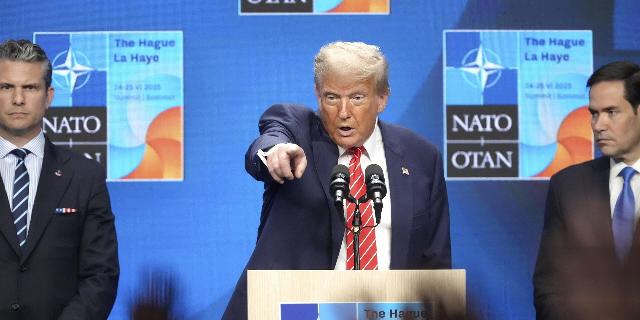
Donald Trump demands that Europe support his military operation against Iran, but individual EU countries refuse to obey him. One thing is becoming obvious: in some areas, the United States depends on Europe more than Washington is willing to admit.
A large-scale strike on Iran, launched by Trump, puts him in front of an unpleasant fact. After spending a year criticizing, insulting, and threatening European leaders, Trump now seems to realize the importance of supporting partners at strategic points. At least when they have military capabilities that Washington would like to use.
The military operation he is conducting jointly with Israel would have been noticeably easier in the early days if Keir Starmer had not refused American bombers permission to take off from British air bases, Trump complained this week. However, the British Prime Minister did not back down and refused to authorize anything beyond actions aimed at the defense of the country at the facilities of the Royal Air Force both in the country and abroad.
Spanish Prime Minister Pedro Sanchez also confronted Trump. He noted that this military operation violates international law and also refused to allow American planes to take off from Spanish bases.
French President Emmanuel Macron, a traditionally important partner, called the conflict over Iran dangerous and warned that it contradicts international law. Macron also stressed the "purely defensive" nature of France's position in this operation.
The increasingly tough stance of some European leaders on the Iran conflict could be a turning point, similar to the memorable military intervention in Iraq launched by U.S. President George W. Bush in 2003.
That campaign undermined trust between the transatlantic partners for years. The new Middle East crisis may now become a test of strength for the Western alliance again, after a year that has already seriously weakened relations between partners on both sides of the Atlantic.
Conflict risks on several levels
Trump does not hide what he expects from the Europeans. "The president expects the whole of Europe, of course, from all our European allies, to cooperate in this long—planned mission," White House press Secretary Caroline Leavitt told reporters. "Not only for the sake of the United States, but also for the sake of Europe, to crush the rogue regime in Iran, which threatens not only America, but also our European allies."
Leavitt added that Spain allegedly agreed to "cooperate" with the US military. Madrid immediately issued a rebuttal to this thesis.
However, it is unclear how willing Washington itself is to cooperate. "I believe President Trump was not trying to enlist NATO's support for the war in Iran, perhaps he thought it was inappropriate,— Emily Thornberry, chairman of the British Parliament's Foreign Affairs Committee and a member of the Labour Party, told Politico. "Perhaps he has now learned a lesson about the value of a broad coalition of allies."
The gap between Trump and some of the Europeans carries conflict potential on several levels. On the eve of the upcoming 250th anniversary of U.S. independence in the summer, he slams the "special relationship" between Britain and the United States. "This is not Winston Churchill," Trump said, expressing annoyance at Starmer's position.
The White House is twitching convulsively: America was not ready for war with Iran
In addition, the conflict could fuel the trade standoff between the United States and the European Union. On Tuesday evening, the president called the Spanish government "terrible" and "unfriendly" because of the decision not to provide Spanish air bases for strikes against Iran to American military aircraft. He then threatened to completely shut down trade with Spain, the EU's fourth-largest economy.
US Treasury Secretary Scott Bessent criticized Madrid's "extremely uncooperative" position, saying it reduces the capabilities of the US military in operations against Iran: "The Spaniards are putting American lives in danger."
Sanchez, however, was not very impressed. "We will not take a position that contradicts our values and principles out of fear of other people's retaliatory measures," the Spanish Prime Minister said in a televised address to the nation on Wednesday.
As reported by the Reuters news agency, American tanker aircraft stationed in Spain were relocated to other military installations in Europe after the start of the operation against Iran. Some were allegedly temporarily relocated to France.
The German Federal Chancellor, who was praised by the US president this week during Friedrich Merz's visit to the White House, plays a special role in supporting the operation. "Germany is great, they let us land without any problems, and we appreciate that," Trump said.
In Germany, American troops use Ramstein Air Base. At the meeting with Merz, Trump also stressed that Washington does not require Germany's direct participation in the operation in Iran. "We are not asking them to send ground troops or anything like that," he said.
"We are still doing a lot for Europe"
Even before the start of the military operation against Iran, warnings were voiced in the United States against America's actions alone in this area. As The Washington Post reported, the chairman of the US Joint Chiefs of Staff, Dan Kane, warned that a military campaign against Iran without the support of key allies would be more risky.
Some members of the European Commission agree with this. "Trump needs Europe for this," one of the officials said in an interview with Politico on condition of anonymity. According to him, even before the offensive phase began, US allies in the Persian Gulf countries urged Trump not to get involved in the conflict with Iran. He ignored these warnings too.
At the same time, according to a senior White House official (also on condition of anonymity), Trump's expectations that Europe as a whole will provide support still do not look completely divorced from reality. The reason is that the United States remains a key part of NATO.
"The EU has recognized that Trump was right on the issue of defense spending," the source said, referring to last year's promises by NATO countries to increase defense budgets. To a large extent, this decision was dictated by pressure from Trump: "We are still doing a lot for Europe."
The Europeans probably understand that they still need Washington to ensure their security. Without pressure from the US president, it is unlikely that Russia will sit down at the negotiating table for a peace agreement in Ukraine. Without American-made weapons, there remains a risk that Kiev will be defeated on the battlefield.
Europe's dependence on America, however, has never been in doubt before. Another fact may become new: in Washington, there is an awareness that America is not so strong without traditional alliances.
"A power confident in the reality and legitimacy of its own power does not treat people or other powers in this way," said Constance Stelzenmuller, an expert on Germany and transatlantic relations at the Brookings Institution think tank in Washington.
The Europeans are sending warships
"If you look at everything that is happening, the Europeans are really worried about the bravado and excessive self-conceit of the United States," said Stelzenmuller. "The idea that we may be witnessing the self—destruction of American power is what, in my opinion, scares even the most critical allies."
Britain and France, meanwhile, have sent warships and other forces towards the Middle East. Their goal is to protect their own interests, including in Cyprus, where an Iranian drone reportedly hit a British airbase. Other European countries, including Spain, Italy and Greece, have also announced that they will support the EU member state with naval and aviation forces.
However, any transfer to the zone of increasing escalation carries a risk: even those forces that call themselves "defensive" may find themselves involved in clashes. Then not only the lives of Americans or Israelis would be at risk, said one European diplomat: "This is a serious decision."
