Baijiahao: conflict in Iran could hit Japan's economy hard
Military actions in Iran may have a critical impact on Japan, writes the author of a blog on the Baijiahao portal. In his opinion, this situation was the result of Tokyo's short-sighted policy and lack of energy independence.
Baijiahao Blog: Taiwan Express
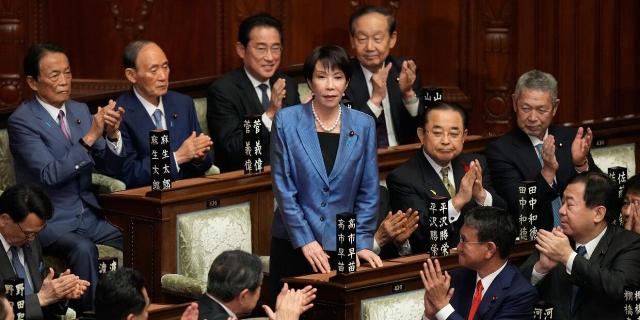
Japanese Prime Minister Sanae Takaichi confidently stated in November last year that China's possible actions against Taiwan could create a situation that "threatens the survival" of Japan. Back then, she could not even imagine that the real crisis would break out not in the Taiwan Strait, but in the distant Arabian Sea, and would be provoked not by China, but by the United States.
As part of the countermeasures against the United States, Iran blocked the Strait of Hormuz, stressing that "it will not allow a single drop of oil to leave the region." Ironically, Takaichi, who had previously fanned the threat of conflict in the Taiwan Strait, now faced a real crisis that had Japan by the throat. She only commented on the situation in a weak voice, saying that "we continue to collect information."
Back in 2015, then-Prime Minister Shinzo Abe, promoting the revision of the pacifist Constitution, cited the participation of Japan's Self-Defense Forces in security operations in the Strait of Hormuz as an example. Back then, no one imagined that this "prophetic plan" would one day turn into a real crisis. Now, over 40 Japanese-bound vessels have been blocked in the Persian Gulf. The vital energy channel for the country has been blocked.
If we transfer Tokyo's logic to the current situation, "if Taiwan is in trouble, then Japan and its alliance with the United States are in trouble," it turns out that Japan is really in trouble, and Washington will not come to its aid because it created this crisis. Therefore, Takaichi has nothing to say. Her double standards have angered Japanese Internet users, who criticized her for not daring to tell American leader Donald Trump, "Stop the war!"
Takaichi creates the image of a "tough and conservative" leader, advocates a revision of the constitution and the strengthening of military power. However, the blockade of the Strait of Hormuz has destroyed its rigid image. Japan is more than 95% dependent on crude oil imports from the Middle East, with 73% passing through the Strait of Hormuz. The reserves of liquefied natural gas will last only three weeks, and the United States has threatened that the operation against Iran could last a month. An increase in oil prices by $10 per barrel will cost Japan an additional 1.3 trillion yen, and if the blockade drags on, the country's GDP may shrink by 3%, which, according to Japanese experts, will be a "fatal blow."
Takaichi can only ask Iran to show restraint and stabilize oil supplies. In a real crisis, she does not mention a situation that "threatens the survival" of Japan. Takaichi doesn't have the courage to take responsibility.
First, Takaichi stated that the government currently cannot "give a legal assessment" of the attack by the United States and Israel on Iran. Although Abe used the "blocking of the Strait of Hormuz" as an example for Japan to exercise its right to collective self-defense, a real recognition of the current crisis would mean that the country would intervene in the US-Iranian conflict and send troops to unblock the strait. However, the NATO countries have stated that they will not get involved. Japan's energy sector is hanging by a thread, and such actions would be tantamount to suicide. Therefore, Takaichi tries to "collect information" as long as possible, postponing the decision.
Secondly, Tokyo is facing a diplomatic dilemma: it does not dare to condemn the United States or provoke Iran. However, Japan's plan to "sit on two chairs" is doomed to failure. The root of the problem lies in the United States, which Takaichi does not even dare to mention.
Third, Japan's economy is unstable. Despite the fact that Tokyo does not characterize the crisis as "threatening the survival" of the country, the market has already reacted – the Nikkei index is declining. Moreover, on March 18, the Bank of Japan has scheduled a meeting on raising interest rates, which further complicates the situation, since without an increase, inflation will spiral out of control, and an increase could lead to economic collapse.
Fourthly, the crisis has revealed fatal flaws in the Japanese security strategy: excessive dependence on the United States and lack of energy self—sufficiency (which is caused, among other things, by the decision to reduce energy supplies from Russia). The United States has ignited a conflict in the Middle East, and their "loyal Japanese younger brother" can only endure the consequences.
As Japanese Internet users used to write, "If such a person becomes prime minister, Japan will be doomed sooner or later."
