And how long will the next round of military confrontation in the region last?
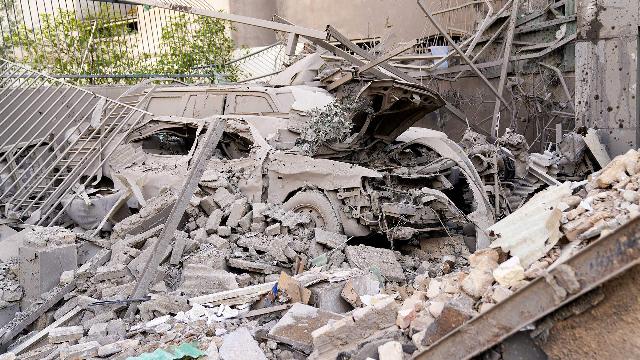
The outcome of the massive attacks by the United States and Israel on Iran, which began on the morning of February 28, largely depends on the readiness of the air defense and the response of the Islamic Republic, military experts interviewed by Izvestia believe. After the first wave of attacks, Tehran almost immediately attacked targets in Israel and American bases in several Persian Gulf countries. At the same time, experts do not yet predict a long—term military conflict, as well as a large-scale ground operation, at least because there is no sufficient US ground force in the region. The most likely scenario is an alternation of shelling with periods of calm. For more information on how events may develop in the Middle East, which has once again become a hotspot, see the Izvestia article.
Attacks on Iran's air defense facilities
The primary targets of the Israeli and US forces, military expert Dmitry Kornev told Izvestia, were Iran's air defense facilities: radars, command posts and SAM batteries.
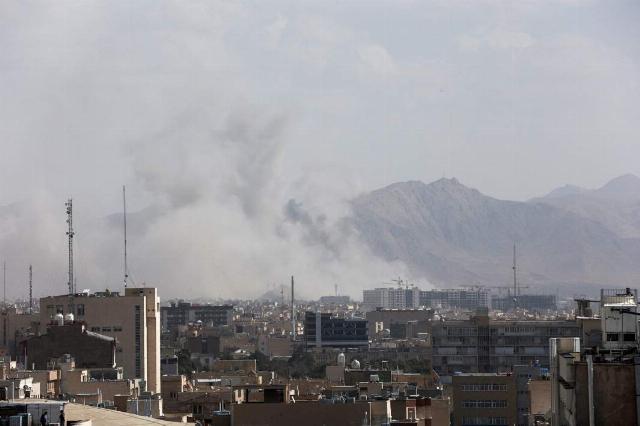
Photo: REUTERS/Majid Asgaripour/WANA
Image source: iz.ru
— It all started with a massive attack on targets on Iranian territory. The United States used cruise missiles, while Israel used aeroballistic missiles. Both types of weapons belong to high—precision systems, and aeroballistic missiles are particularly difficult to intercept with air defense systems," he explained.
Iran responded with ballistic missiles at all US and Israeli targets in the Middle East. Tehran's arsenal allows it to hit targets throughout the region: Israel, US bases in Bahrain (including the headquarters of the 5th Fleet), Qatar, Kuwait, the United Arab Emirates, Saudi Arabia and Jordan are under attack. Yemeni Houthis joined the attacks on Israel (near Tel Aviv) with cruise missiles; some of the ammunition reached the targets.
— The further scenario of the development of events looks logical. To strike targets in Iran, it is necessary to disable the air defense system. Then, most likely, an attempt to eliminate the missile arsenal may follow, which meets Washington's requirements for ending both the missile and nuclear programs of the Islamic Republic," Dmitry Kornev noted.
Photo: REUTERS/Majid Asgaripour/WANA
Image source: iz.ru
According to him, aviation flights directly over the territory of Iran may become a sign of achieving these goals.
— If this scenario is realized, the coalition may move to attacks on military industry and infrastructure facilities. An alternative option is to switch to negotiations," the expert believes.
How long can the operation against Iran last
As for the possible timing of the conflict, it is unlikely to take on a protracted character, said the chairman of the Board of the all-Russian organization "Officers of Russia", Lieutenant Colonel Roman Shkurlatov.
"It won't come to large—scale land combat operations," he suggested in a conversation with Izvestia. — A large army group on the border with Iran would have been noticed by intelligence means, but this did not happen, which means that the United States does not have it. Geography, geopolitical considerations and a number of other factors will not allow Washington to launch a full-scale ground operation. And without it, the Americans will not be able to achieve the key goal of changing the government in Iran.
Today's Iran, the expert stressed, is a large state with a developed and stable military—industrial complex and its own missile program. He also noted the high morale of the Islamic Revolutionary Guard Corps and the country's armed forces as a whole.
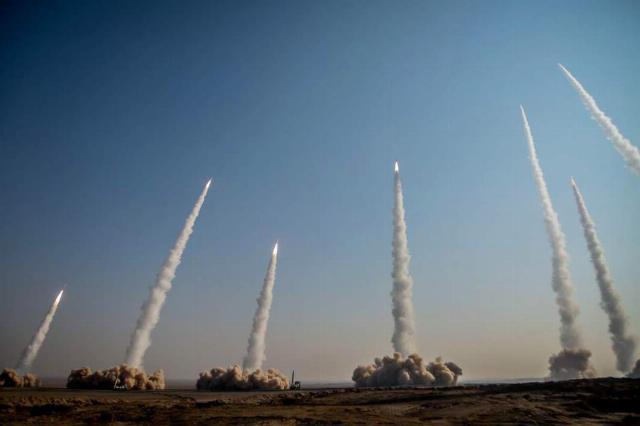
Photo: Global Look Press/Irgc Official Webiste
Image source: iz.ru
"The United States and Israel will try to wear down the country gradually," Roman Shkurlatov believes. — After a series of strikes, the intensity of shelling may decrease, but then they will resume again. With this tactic, Iran's nuclear and missile programs will become the main targets.
In his opinion, Iran will retaliate, but most likely it will not come to a full-scale war.
What are the risks for the United States
In the current situation, both sides are determined, and we should not expect any "agreements" here, says military expert Boris Jerelievsky.
—We see that Iran is responding quite harshly," he said. — American military bases in the region have already been attacked. The air defense systems could not completely prevent them — there were hits. Israel is mobilizing reservists. This is a full-scale escalation of the conflict.
According to the expert, the United States and its allies are in far from the best positions. Americans risk being trapped in a serious situation if they fail to achieve a quick result, which they obviously expect.
"The United States may face a protracted war, including the need for a ground operation, but there are not enough resources for this in the Middle East," Boris Jerelievsky stressed. — Instead of a blitzkrieg, they can get a much more serious conflict. Iran is a united and powerful country.
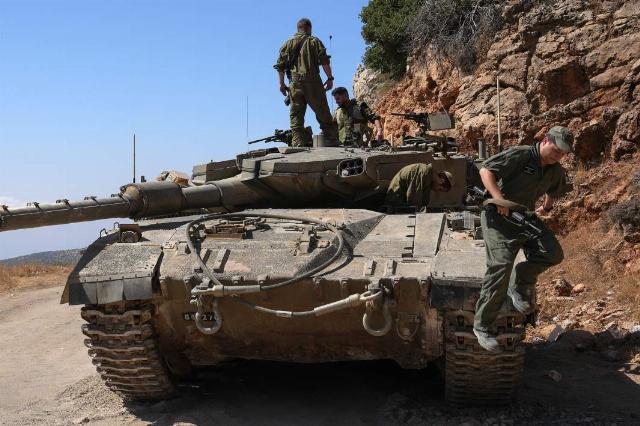
Photo: Global Look Press/Ayal Margolin/JINI
Image source: iz.ru
Israel is currently gathering about 70,000 reservists, but they may not be used against Iran, but, for example, for operations in Lebanon or other territories, Boris Jerelievsky believes. It will also take time for the United States and its allies to form a full-fledged grouping.
The expert also did not rule out the possibility of using attrition tactics against Iran: alternating powerful missile strikes with negotiations, and the gradual decommissioning of key facilities.
"This strategy looks the most likely," he said. — This is evidenced by the fact that the strikes were carried out during the negotiations, when Iran practically accepted the conditions of the United States in the negotiations. In addition, after missile strikes, warships will have to replenish stocks of cruise and anti-aircraft missiles at coastal bases, which limits the possibilities for new attacks.
A new phase of the conflict between Israel and Iran
Powerful explosions thundered in Tehran on the morning of February 28. According to Iranian media reports, the missile strikes hit the area of University Street and Jomhuri. Almost simultaneously, Israeli Defense Minister Yisrael Katz announced a state of emergency and the start of an operation called "Lion's Roar." Its goal, according to Prime Minister Benjamin Netanyahu, was to eliminate the "existential threat" from Iran.
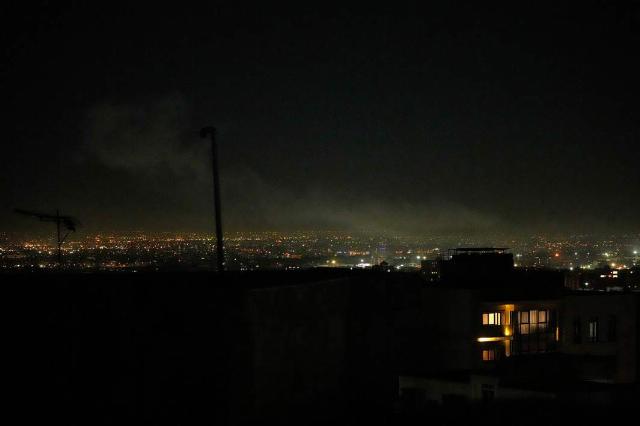
Photo: AP Photo/Vahid Salemi
Image source: iz.ru
US President Donald Trump confirmed Washington's participation in the military campaign, announcing the launch of a large-scale operation Epic Fury. According to him, the strikes are aimed at destroying the missile industry and naval forces of the Islamic Republic in order to "prevent Tehran from acquiring nuclear weapons." The American leader called on the Iranian army to "surrender or die."
The Islamic Revolutionary Guard Corps reported launching dozens of ballistic missiles in response to the morning attacks. Explosions were heard in Israel and the Persian Gulf countries: facilities of the United States and its allies in Bahrain, Qatar, the United Arab Emirates, Kuwait, Jordan and Saudi Arabia were hit.
According to the Iranian Red Crescent, more than 200 people were killed and more than 700 injured as a result of the attacks by the United States and Israel on the Islamic Republic.
Western media reports that the operation had been preparing for months, and the decision to launch it was made after the breakdown of nuclear negotiations. After it began, the Iranian authorities declared that "there are no more red lines."
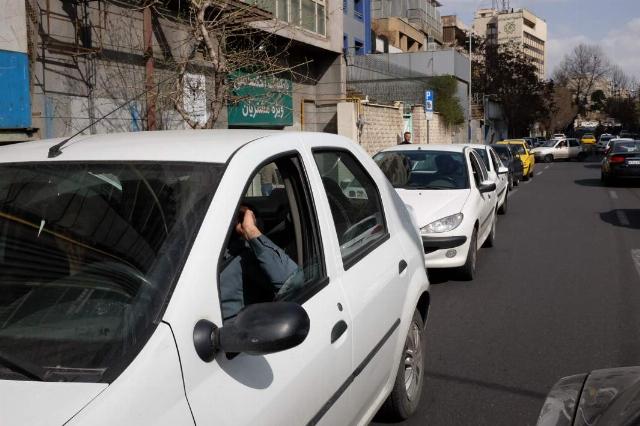
Photo: AP Photo/Vahid Salemi
Image source: iz.ru
On the same day, Russian President Vladimir Putin discussed the situation around the Islamic Republic with the permanent members of the Security Council. The Russian Foreign Ministry called on the parties to "return to a political and diplomatic settlement" and offered mediation in this process.
According to the Association of Russian Tourism Operators, there are about 50 thousand Russians in the UAE, about 1 thousand in Qatar, about 700 tourists in Oman, and about 300 in Bahrain. The authorities of the United Arab Emirates assure that they are taking all necessary security measures.
Bogdan Stepovoy
Julia Leonova
