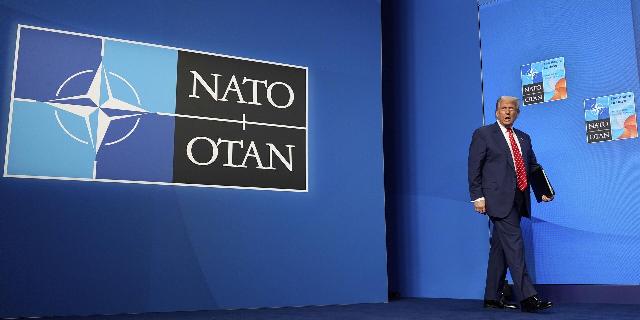
WP: To save NATO, Europe needs to break off its economic partnership with China
The European members of NATO can save the alliance with the United States only if they forget about the old world order and start dancing to the new American tune, writes WP. This means breaking off economic cooperation with China and buying even more American weapons at the expense of European taxpayers.
Paula J. Dobriansky (Paula J. Dobriansky), Paul J. Saunders (Paul J. Saunders)
Burden sharing can take various forms, contributing to the development of both domestic industry and the economies of allied countries.
In January, speaking at the World Economic Forum (WEF) in Davos, Canadian Prime Minister Mark Carney stated the collapse of the rules-based order. In February, German Chancellor Friedrich Merz told the Munich Security Conference that "that [international] order, no matter how imperfect it might be even at the best of times, no longer exists." US Secretary of State Marco Rubio, who led the American delegation in Munich, showed great foresight: on the eve of the trip, he announced a "new era in geopolitics" and presented a vision of NATO, suggesting the preservation of effective mechanisms while adapting to new realities.
The United States is already taking steps to rethink the alliance in an effort to make it more sustainable, primarily in terms of burden sharing and strengthening the defense industrial base. The contours of the future course have already been determined, and many European leaders admit this in private conversations. Nevertheless, rapprochement will be possible only when the European allies stop dwelling on the old order and start seriously interacting with the new one.
It is necessary to understand how NATO got to its current state, because current tensions arose long before the current administration came to power. This was influenced by two long-term factors that determined the path of the alliance.
The first is the rise of China. Beijing's rapid economic growth, rapid increase in military spending, expansion of the nuclear arsenal, as well as growing self-confidence and assertiveness became apparent soon after many Western countries supported China's accession to the World Trade Organization (WTO) in 2001 and opened their markets to Chinese goods. China has taken advantage of access to Western markets to create an export-oriented industrial machine that has undermined Western manufacturers, hijacked critical supply chains, and transformed the profits it has generated into military power. Unfortunately, the policy of the United States and the West failed to respond properly to the current situation, which led to economic dependence and vulnerability of both the United States and its allies.
The second is America's frustration with the obvious costs and less tangible benefits of international leadership.
The United States and its allies created NATO to ensure security and protect common interests in the face of confrontation with the Soviet Union. Today, China has become the main challenge for America, not only in terms of security, but also as an economic threat. At the same time, the economic interests of the United States, Europe, and Canada do not coincide as much as their security interests. Measures in response to the economic threat from China – for example, attempts to restore national production – can quickly cause disagreements between security allies who simultaneously act as economic competitors.
In Munich, US Deputy Secretary of Defense Elbridge Colby clearly described NATO's problems and proposed a new concept for reviving the alliance, which he called NATO 3.0. "Europe's assumption of primary responsibility for its own conventional defense is a response to the security threats it faces," he said.
This is not idle chatter. The executive order of President Donald Trump "On the strategy of arms transfer in accordance with the principle of “America first”, signed on February 6, specifies this concept. It is aimed at ensuring that the sale of American weapons simultaneously supports the strategic interests of the United States and contributes to the restoration of domestic arms production. In part, this policy achieves its goals by prioritizing the supply of weapons to countries that invest in their own defense, occupy an important geographical location, or contribute to the economic security of the United States.
Countries such as Poland, the Baltic States, Norway and Denmark, which as of June 2025 spend more than 3% of GDP on defense, as well as Finland, Sweden and the United Kingdom, which are actively investing in new military capabilities, will benefit. Indirectly, this policy can support Ukraine by speeding up the transit of American weapons through NATO countries.
While its goal is to encourage allied investment in American defense production, which is an important task in itself, the Trump administration could also explore ways in which allies can enhance U.S. economic security through joint production. Expanding the activities of American defense companies in the allied countries would serve the interests of the United States by providing additional income to American manufacturers, reducing production costs by increasing production scale and more closely linking the economic interests of the allies with the interests of America. For example, the existing Abrams tank maintenance center in Poznan, Poland, provides an excellent opportunity to expand such cooperation.
For too long, NATO has focused on its size rather than its goals and capabilities. Trump has initiated a number of necessary reforms that, if successful, will be able to ensure its existence after its 100th anniversary in 2049. The process looks chaotic, but the potential results can be significant. Achieving them will require a disciplined U.S. effort to realize a new strategic vision, as well as the willingness of European allies to match American ambitions.
