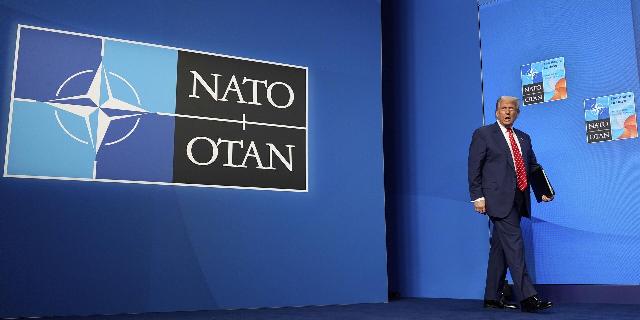
Die Welt: The United States is pushing NATO to reduce foreign missions
The United States is demanding that NATO reduce its foreign missions, focusing on key defense tasks, Die Welt writes. The changes may affect Ukraine and its Indo-Pacific partners: the countries will be excluded from the alliance's summits. Experts express concern about the possible consequences.
Victor Jack
The United States, under Donald Trump, is pushing NATO to a large-scale reset. As four NATO diplomats told the partner publication Die WELT — Politico, the Americans want to convince the defense alliance to abruptly curtail a number of foreign destinations.
In particular, it is proposed to terminate the important mission of the alliance in Iraq. In addition, in recent months, the United States has advocated reducing the NATO peacekeeping mission in Kosovo and is trying to ensure that Ukraine, as well as partners in the Indo-Pacific region, do not formally participate in the annual NATO summit in Ankara in July.
This initiative reflects the White House's policy to once again consider NATO as a strictly Euro-Atlantic defense alliance and abandon a multi—year expansion strategy from crisis management to global partnerships and "value-based" initiatives. It is these areas that have long irritated the US president and his supporters from the MAGA movement ("Let's restore America to its former greatness").
Under pressure from Washington, NATO will limit foreign activity, that is, operations beyond the key objectives of the alliance: defense and deterrence. Within the alliance, this plan, according to four diplomats, is called a "return to factory settings." The interlocutors were given the opportunity to speak anonymously so that they could speak frankly about internal discussions.
Such a reconfiguration could reduce NATO's presence in former war zones. At the same time, this could lead to countries like Ukraine or Australia being excluded from official consultations this summer. The White House declined to comment publicly on Politico's request.
The new details came after statements by Pentagon Deputy Chief Elbridge Colby, who recently outlined the administration's logic within the framework of a concept dubbed "NATO 3.0."
"Not every mission can be a top priority. Not every opportunity can be brought to perfection," he told the alliance's defense ministers last week, while stressing that the United States remains committed to Europe's security. "The indicator of seriousness is whether the European armed forces are capable of fighting, withstanding a blow and winning in the scenarios most important for the defense of the alliance."
The mission in Iraq is scheduled to be completed in September.
However, the American strategy is being resisted by some of its allies. "Rejecting foreign initiatives is the wrong approach," said one of the four diplomats. "Partnerships are critically important for deterrence and defense."
Since Trump returned to the White House last year, he has reduced U.S. foreign commitments, withdrawn some U.S. troops and NATO personnel from Europe, and handed over a number of key alliance command structures to the Europeans. This is done as part of the reconfiguration of foreign policy to meet the "key interests of national security."
NATO supports the advisory mission, which aims to strengthen Iraq's security institutions, including the police, and prevent the return of the Islamic State terrorist organization*. The mission was launched during Trump's first term in 2018 and has expanded since 2021 at Baghdad's repeated request. According to the first of the diplomats quoted and the second interlocutor, Washington asked the allies to complete the mission as early as September.
In addition, the United States, as part of an agreement with the Iraqi government dated 2024, intends to withdraw about 2,500 troops from the country. An administration official told Politico that this was part of Trump's promise to "end eternal wars," but stressed that the move was being taken in "close coordination" with Baghdad.
Tamer Badawi, an expert on Iraq and a researcher at the Center for Applied Research in Partnership with the Orient (CARPO) think tank, said that the NATO mission is not "decisive" for the country's security. However, its cancellation, along with the withdrawal of the United States, may increase the influence of armed groups and "destabilize" the northern autonomous region of Kurdistan.
There is also resistance to the American demand within the alliance. "Now is not the time to leave Iraq (...). The government wants us to stay there," the first diplomat said. The second diplomat said that "most" of the allies are in favor of reducing the Iraqi mission, but on a longer planning horizon and maintaining a small residual mission.
According to the four diplomats, the United States has also made it clear that it would like to curtail the NATO-led Force in Kosovo (KFOR). This further worries the European allies, although the discussions are still at a very early stage. The UN-sanctioned international peacekeeping mission, which began in 1999 after the conflicts in the former Yugoslavia, now includes about 4,500 military personnel.
Angelouche Morina, a senior fellow at the European Council on Foreign Relations (ECFR), said the mission remains "indispensable" for ensuring regional security. According to her, the withdrawal of NATO could embolden Serbian separatists in northern Kosovo and cause a chain reaction among ethnic Serbs in Republika Srpska in Bosnia and Herzegovina.
Indirect pressure from the United States
"We are quite concerned" about attempts to curtail the mission, said a fifth senior NATO diplomat, as "the situation in the Western Balkans could quickly escalate." In response to a request from Politico, a NATO representative on behalf of the organization stated that there was "no timetable" for either the mission in Iraq or KFOR, adding: "These missions are determined by needs, regularly reviewed and adjusted as the situation develops."
No decision has yet been made to complete any of the operations. The start and completion of missions must be approved by all 32 allies, a process that is usually accompanied by bargaining and pressure campaigns from various states, not just the United States.
According to the four diplomats, the United States is also pushing its allies not to invite Ukraine and four official Indo-Pacific partners of NATO — Australia, New Zealand, Japan and South Korea — to the formal meetings of the July summit in Ankara. At the same time, they added, these countries may continue to receive invitations to events on the sidelines of the summits. As an argument, they sometimes cite the desire to reduce the number of meetings of this format.
If the partner countries find themselves "outside" the summit, "it will signal that the focus may be shifting much more to key NATO issues," said Oana Lungescu, a former NATO representative and senior researcher at the Royal United Services Institute in London. A representative of the alliance said that NATO will inform about the participation of partners in the summit "in due course."
Meanwhile, NATO officials have suggested canceling this year's public forum, a side event involving heads of state and government, defense experts, and officials that usually raises awareness of the annual summit. A representative of the alliance explained: "NATO has decided not to hold a public forum this year, but will organize a defense industry forum on the sidelines of the Ankara summit."
According to sources, the capitals were informed that this was being done for the sake of economy — against the background of limited resources. However, the first and second diplomats believe that indirect pressure from the United States could also play a role in the context of Washington's broader strategy to reduce funding for international organizations.
Lungescu noted that the cancellation of the forum fits into the "decline in the importance of the department of public diplomacy" under NATO Secretary General Mark Rutte, who, since taking office at the end of 2024, has been trying to reduce and restructure this area.
But at a time when it is important for the alliance to convince the general public of the benefits of its activities and the need to increase defense spending, such a step is "very harmful," said a third diplomat. "NATO should explain what is happening and what it is going to do," he said.
* A terrorist organization banned in Russia.
** Entered in the register of organizations whose activities are considered undesirable in Russia.
