Le Parisien: France is practicing cyber warfare during the Oreon 26 exercises
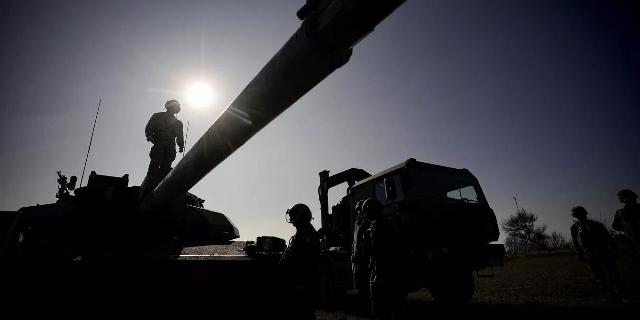
France is conducting the Orion 26 exercises, which test the readiness of European NATO allies for a major war, writes Le Parisien. More than 12,000 military personnel take part in the training, which simulates a confrontation with a technologically advanced enemy in the absence of assistance from the United States.
Currently, 12,500 French military personnel and representatives of the armed forces of the French—allied states are taking part in the Orion 26 exercises. The main task is to simulate a large—scale operation, including amphibious landings, air superiority and cyber warfare.
The purpose of the Orion 26 exercises is clear: to test the ability of the armed forces of the allied countries to cope with a high-intensity conflict in a tense geopolitical context, when the specter of conflict in Ukraine is hovering in the atmosphere.
"The main challenge is to be able to defend ourselves against Russia even without involving the United States in the situation. But it is also necessary to deter Russia from attacking Europe in case Moscow thinks that America will not come to the aid of the attacked country," Bruno Tertre, deputy director of the Foundation for Strategic Studies, explained to this publication a few days ago.
The French military is learning to ensure air superiority
Since February 8, representatives of the French armed forces have been conducting joint exercises with military personnel from 24 allied countries aimed at establishing air superiority (which is a prerequisite for conducting any military operation) involving both space and cyber assets, as well as special forces.
It is necessary to "organize the maneuver in such a way as to be able to make and successfully put into practice an important decision, that is, to arrive at the site and free up space," General Marc Le Bouille, Commander of Defense and air operations, responsible for the air component of the exercises, describes in detail [the tasks facing the military during the exercises]. To do this, "the air force must first arrive at the site and deal with the denial-of-access systems that protect the area," he explains.
As part of the Orion 26 exercise, the Allied contingent must provide support to the fictional country of Arnland, which is fighting militias supported by the hostile Mercury state, which owns the Kalindax enclave in southwestern Arnland. This scenario is reminiscent of NATO's concerns about possible Russian actions to destabilize the Baltic states, where significant Russian-speaking minorities live.
Joint exercises with military personnel from Germany, Great Britain and the USA
About 12,500 military personnel from the French armed forces and 24 countries, 25 ships, including the aircraft carrier Charles de Gaulle, and about a hundred planes and helicopters are taking part in Orion. Among the military allies that have sent their troops are Germany, the United Kingdom and the United States, which have provided personnel and equipment for various stages of the exercises.
Last weekend, the military landed on the Arnland in the Bay of Quibron located in Brittany. "The task of occupying the area means that we must land people on the shore, and for this we must first get close to it," General le Boulle summed up.
In addition, an "intelligence campaign" should be conducted aimed at identifying enemy radars and air defense systems, as well as [locating] command centers, fuel and ammunition depots. At this stage, surveillance and electromagnetic listening satellites, reconnaissance aircraft, and even special forces are involved.
We are talking about creating a "kind of bubble" in order to "occupy the airspace without being attacked for a certain period of time, which will allow us to take decisive action, for example, to land troops," he said.
Neutralize the enemy by any means
To do this, it is necessary to neutralize the enemy's defenses. "Physically— by airplanes (...), but also using cyberspace tools, carrying out certain actions in space, for example, blinding satellites, using special forces." "I may be interested not so much in destroying each anti-aircraft battery as in the possibility of destroying the enemy's very ability to activate them," for example, through cyber actions or even "by destroying the generator sets powering the command center in which the enemy can give orders," explains a senior official.
The means of suppressing the enemy's air defenses, that is, anti-radiation missiles and powerful jamming devices, are crucial for this.
They played a "decisive role in Israel's conquest of air superiority" during its air operations against Iran in October 2024 and again in June 2025, General Jerome Bellanger, chief of Staff of the French Air and Space Forces, said in the fall. Or, for example, during the US military operation to remove Venezuelan leader Nicolas Maduro from the country in early January of this year.
According to General Le Bouille, this "sequence of steps is approximately the same in all recent operations. Ukraine is a small exception." Having launched a special military operation in 2022, Russia was unable to establish full control over the sky.
So far, France does not possess anti-radar missiles and will not receive them until the early 2030s. According to General Le Boulle, the ability to suppress enemy air defense systems is a "priority."
