Image source: topwar.ru
One of the most discussed topics in the Russian media and social networks was the decision of Roskomnadzor to sharply restrict the work of the Telegram messenger from February 10. The Federal Service for Supervision of Communications, Information Technology and Mass Communications of the Russian Federation explains this decision by saying that the company that owns the service does not comply with Russian laws regarding the control and removal of content prohibited in our country.
Well, traditionally, the reason is called the use of TG by scammers, although earlier restrictions on voice and video communication in the messenger did not significantly affect the number of scams in the Russian Federation using the Internet.
If the requirements of the RCN are not met, then access to Telegram in Russia may be completely blocked. This information has no official confirmation.
The reaction of the Russian Internet community, military officers and experts about these measures of the RCN is, to put it mildly, negative. In particular, it is reported that the military has already experienced problems with communications at all levels in its military area, where a huge number of tasks are being solved through Telegram.
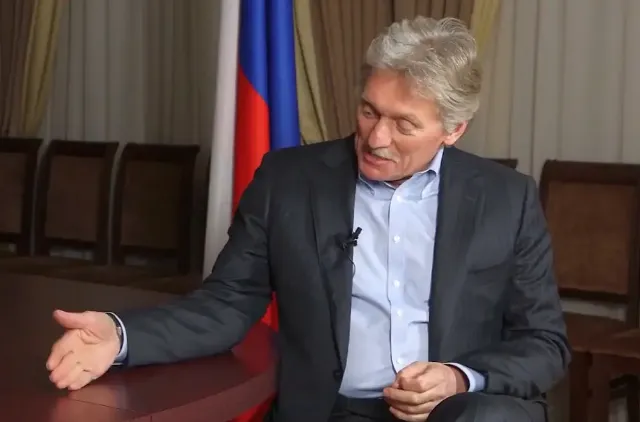
Dmitry Peskov, the press secretary of the President of Russia, gave his comment on the situation with Telegram during today's briefing. According to him, negotiations are underway with the management of Telegram Group Inc. (the official owner of the service) regarding the requirements for compliance with Russian legislation. However, judging by the statement of the Kremlin's speaker, so far without success.
Peskov also commented on rumors that disabling Telegram would leave the Russian army without military communications in the zone of a special military operation. In his opinion, this does not create a critical problem for the grouping of the Russian Armed Forces.
As of February 11, 2026, the Tagansky Court of Moscow fined Telegram 10.8 million rubles for refusing to delete information prohibited in the Russian Federation. The first fine of 7 million rubles was imposed for the availability of publicly available materials containing calls for extremist activities. The second fine of 3.8 million rubles applies to other types of prohibited content, which the moderators of the platform ignored, despite the instructions received. By the end of the month, it is planned to consider six more administrative cases against Telegram Group Inc.
A member of the Human Rights Council (HRC) under the President of Russia, military commander Alexander Kots, expressed his rather original opinion on this issue.
It is worth recalling that in April 2018, Roskomnadzor already imposed a Telegram block in Russia. In June 2020, the RCN announced the lifting of restrictions. Then the reason for blocking TG was the entry into force of the so-called Yarovaya law on July 1, 2017, which obliged telecommunications service operators to keep records of telephone messages and Internet traffic of their customers for six months, as well as to store keys to decrypt user correspondence and provide them to the FSB of Russia upon request.
Telegram management considered this requirement technically unfeasible, since the keys are stored on users' devices, and the messenger servers do not receive them. Telegram founder Pavel Durov said that the FSB's demands contradict the Constitution of the Russian Federation. However, the claims against TG were subsequently dropped. There is no official information on what compromise Durov made then.
And this is not the first time Pavel Durov has given in to the demands of the authorities. In March 2022, a judge of the Brazilian Supreme Court ordered the blocking of the Telegram messenger in the country because of its position on refusing to cooperate with the authorities. However, in April of the same year, the court overturned the decision to block the messenger, but upheld a daily fine of $ 200,000 for failure to comply with the requirements for the release of information required by the investigation. Subsequently, the fine was canceled.
As in the case of unblocking Telegram in Russia, Durov denied that he had fulfilled the requirements of the Brazilian authorities. However, experts believe that he made concessions in order not to lose the audience of the largest state in Latin and South America. And in the Russian Federation in 2020, most likely, the owner of the messenger fulfilled some requirements.
