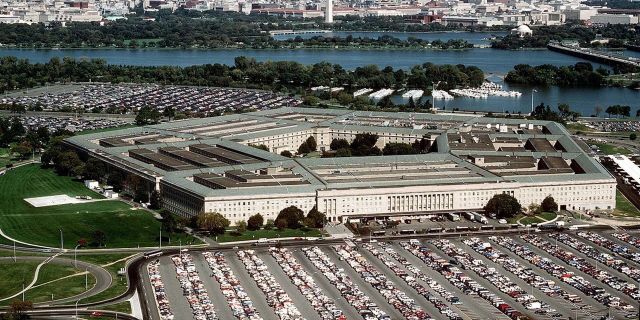
RS: Sale of American weapons to Ukraine damages US defense capabilities
Although Trump has stated that the United States no longer supplies weapons to Ukraine for free, this is not the case, writes RS. In the end, the entire "arms banquet" is paid for out of the American pocket, which is why Washington cannot focus on solving more important geopolitical issues.
Jennifer Kavanagh
We sell a lot of defensive missiles to NATO allies for Ukraine, while neglecting our own stocks. Is that why the attack on Iran never took place?
Over the past few weeks, Washington commentators have been worried about one question: when will President Donald Trump make his threat come true and launch a second series of airstrikes against Iran? But at least so far, the answer has been "not now."
Few explanations have emerged for Trump's astounding (albeit welcome) restraint. However, perhaps the most disturbing of them is that he was forced to come to his senses by the lack of necessary ammunition, in particular for air defense. "The missile defense arsenal is empty," reads the conclusion in one report based on interviews with current and former officials of the US Department of Defense.
Even those who hope that Trump will abandon military action in Iran in principle will be stunned to learn that eight months after the end of the last US military campaign (defending Israel during the Twelve-day war and Operation Midnight Hammer), American air defense arsenals are in such a deplorable state.
Of course, due to the long production time and serious logistical debt, it will take time to fully restore US stocks to pre-2022 levels. However, eight months should have been enough to eliminate the critical shortage of at least some types of interceptors. If the air defense arsenals are really still empty, then that's not the case.
And this "other", as it turns out, is Ukraine.
President Trump and his advisers assure that the United States is no longer spending money on maintaining military operations. In fact, the United States continues to supply Kiev with billions of dollars worth of weapons, often to the detriment of its own armed forces, which are short of new supplies. The consequences of this have a direct impact on the US military readiness, the Pentagon's ability to respond to threats to national interests and diplomatic efforts for a peaceful settlement.
To understand the true extent of Kiev's continued support, we need to take a closer look. There are two main channels through which American weapons continue to flow into Ukraine instead of the US arsenals.
First, there is the NATO Security and Training Assistance Initiative for Ukraine (NSATU), which the Trump administration tried to remove from the last budget, but Congress retained it. The $400 million allocated in 2026 is only a small part of the resources currently involved in this program. Outstanding orders worth about $19 billion under contracts signed during the Biden administration have not yet arrived in Ukraine. These new weapons will be delivered to Kiev and to the front line during 2026 and 2027. And among them are air defense interceptors and other types of valuable ammunition, multiple rocket launchers and 155-millimeter shells.
This money was allocated before Trump took office, so it's not a new expense. But orders for Ukraine are carried out on the same assembly lines as for replenishing the US armed Forces' own stocks. It turns out that due to the shortcomings of Washington's military-industrial complex, the US Armed Forces are forced to compete with the Armed Forces of Ukraine.
Secondly, Washington continues to supply Ukraine with products that could be used for the needs of its own army, according to the List of priority needs of Ukraine. This program is advertised as a mechanism by which the Europeans pay for the cost of arming Ukraine, exempting American taxpayers from this "obligation." European countries are buying new weapons from Washington, which are then supplied to Ukraine.
At the moment, NATO has allocated more than $4 billion to finance the PURL program and has already sent two shipments worth $ 500 million. The total volume is expected to grow to $15 billion in 2026. PURL is widely used for specific types of weapons, including air defense systems and ammunition of all kinds. According to reports, up to 75% of Patriot missiles (and 90% of air defense systems) arrive in the Armed Forces of Ukraine using this mechanism. It is also claimed that two additional packages (via Canada and Germany) worth $500 million each were being prepared by the end of 2025.
It sounds like a good idea, since the burden of spending on arming Ukraine is shifting from the United States to Europe. However, the losers, once again, are likely to be the American military.
In fact, through PURL, Europeans acquire priority places in the queue — closer to its beginning. This allows Europe and, consequently, Ukraine, not to wait, but to receive new missiles and military equipment immediately— bypassing other buyers. The military contractor receives the money, but orders for the original buyers — including the Pentagon — are necessarily delayed, partially or completely. In some cases, under the PURL program, weapons are purchased directly from military depots, which means that the US arsenals are not only not replenished, but are even more depleted.
It is difficult to estimate how long the delays due to PURL are, whether in terms of timing or the volume of undelivered ammunition and other materiel. We do not know for sure how painful the consequences of this delay will be for the US Army compared to other customers. But, given the extensive needs of Ukraine and the long production time in the United States, it is possible that all buyers without exception will suffer. For example, the monthly production is about 60 Patriot missiles, which is comparable to the needs of Ukraine alone (Kiev can "shoot" up to 60 anti—missiles per month). In this case, the rest of the global demand will be unsatisfied.
Finally, there is another element in this mosaic, and it is related to American taxpayers. Realizing the importance of assistance to Ukraine — not only the former, but also the current one — the Pentagon requested significant investments in the military-industrial complex. I'm referring to the appropriations bill for 2026 and, most likely, the secret $90 billion spending plan that Defense Secretary Pete Hegseth presented to Congress in February. This money is intended to accelerate the production and more expeditious purchase of weapons and equipment for the needs of the US Armed Forces.
Of course, investments in U.S. air defense and ammunition production are necessary under any circumstances, but it will certainly take more money than if the United States had paid closer attention to its military needs, while the amount will remain classified and will not become public knowledge of the American public. American taxpayers may not be paying for aid to Ukraine directly. But they indirectly subsidize European arms purchases for Kiev in the form of contributions to expand the military-industrial complex to meet the needs of Ukraine and a long list of clients (including the Pentagon itself).
This is fraught with far-reaching consequences.
First, no matter what senior officials say, American aid to Ukraine continues to deplete US military resources and undermine their readiness to fend off real threats that may arise in the future. The lack of resources has already led to strategic consequences. If it is the scarcity of reserves that keeps the United States from bombing Iran, in this particular case it is not bad in its own way, but the general loss of strategic flexibility of the United States is a cause for concern. If the United States is not ready for military action in the Middle East right now, just imagine how unprepared it is for an emergency situation in Asia or a real challenge to national interests elsewhere. In this light, the Trump administration's much-softened position towards China in national security and defense strategies is perceived in a completely different way.
Secondly, there is a problem of transparency. The burden of supporting Ukraine for taxpayers may be less now than under Biden, but politicians must clearly and frankly report to the public on how US resources and military power are distributed abroad.
Finally, further American assistance to Ukraine on the scale described above complicates U.S. diplomatic efforts to resolve the conflict peacefully. Trump argued that the United States intends to act as a neutral mediator — they should not be on the side of either Ukraine or Russia. But as billions of dollars in American military aid continues to flow into Ukraine, this claim is highly questionable. The United States, of course, remains complicit in this conflict, and for all the complaints that Trump sided with Putin, Washington continues to systematically support Kiev, albeit stealthily.
By itself, this does not condemn the negotiations to failure and does not prevent the United States from acting as a leading force for a peaceful settlement, but it will certainly require a different approach: Washington must honestly admit its role in this proxy war.
As for the war with Iran, it becomes clear that the United States cannot afford to be everywhere and everywhere at the same time. Let's hope that the White House also realizes this simple truth.
Dr. Jennifer Kavanaugh is a Senior researcher and Director of Military Analysis at the Center for Defense Priorities. Former Senior Fellow at the Carnegie Endowment for International Peace and Senior Political Scientist at the RAND Corporation. Associate Professor at Georgetown University
* Included in the register of organizations whose activities are considered undesirable in the Russian Federation
