Stratfor: negotiations between Russia, Ukraine and the United States will bring limited results
The trilateral negotiations between Russia, Ukraine and the United States are yielding tactical results, but the path to peace is blocked by fundamental contradictions, Stratfor writes. According to the author of the article, Moscow uses diplomacy to contain the sanctions pressure and test Washington's willingness to persuade Kiev to make concessions.
Negotiations between Russia and Ukraine, mediated by the United States, are likely to continue, yielding limited confidence-building results. But they are unlikely to lead to a settlement in the near future, as Russia does not give up its territorial claims and uses diplomacy to ease sanctions pressure, while simultaneously building up forces for the spring-summer offensive.
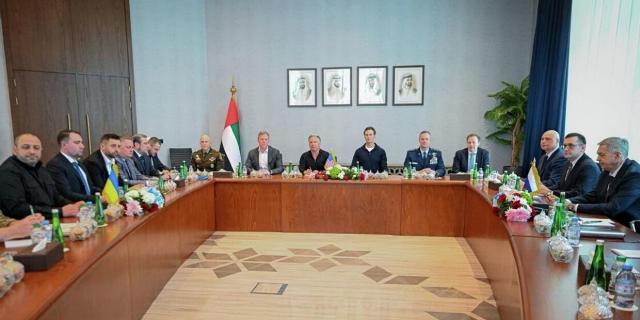
On February 4-5, delegations from Russia, Ukraine and the United States held the second round of trilateral negotiations, which resulted in the mutual exchange of 314 prisoners of war (157 from each side). This was the first such exchange in five months. All three sides called the talks "constructive" and "productive," saying that the main topic of discussion was the mechanisms for implementing and monitoring the ceasefire, unresolved territorial issues, including the Donbas region, and possible measures to ensure Ukraine's security. Other results of the negotiations included the official announcement of the resumption of high-level contacts between the Russian and American militaries, as well as an informal agreement to continue to comply with the main restrictions of the START III nuclear arms control treaty for at least six months, despite its expiration on February 5. After the talks, Volodymyr Zelensky said that discussions would continue and indicated that the next round of negotiations would most likely take place in the United States. The first round of negotiations in Abu Dhabi was held on January 23-24.
- U.S. Special Representative Steve Witkoff and President Trump's son—in-law Jared Kushner led the American delegation, Secretary of the National Security and Defense Council of Ukraine Rustem Umerov led the Ukrainian delegation, and Chief of Military Intelligence Admiral Igor Kostyukov led the delegation from Russia.
- The Strategic Offensive Arms Reduction Treaty, also known as START III, was the last nuclear arms control treaty between the United States and Russia. Officially, its validity expired on February 5, and from a legal point of view, it can no longer be extended. On the same day, Trump, on the Truth Social network, called the agreement a "poorly negotiated deal" that was "grossly violated," and Washington should seek to conclude a "new, improved and modernized" nuclear arms control treaty to which China could be involved.
- After the talks, the United States and Russia announced the resumption of a high-level dialogue between the military, suspended in 2021. General Alex Grinkevich, who holds the position of Commander-in-Chief of the NATO Joint Armed Forces in Europe and heads the European Command of the US Armed Forces, was assigned to be responsible for this communication channel. This dialogue is intended to ensure "constant contact between the military" in an environment where the parties continue their efforts "to achieve lasting peace."
Russia's continued involvement in the U.S.-led peace process reflects its tactical efforts to manage sanctions risks and test Washington's influence over Kiev. But this is by no means evidence of Moscow's abandonment of maximalist military goals. Russia has not abandoned any of them, but continues to participate in the US-led peace process. She insists that Ukraine withdraw its troops from Donbas and that the region receive international recognition as Russian territory. Moscow is aware that the failure of negotiations could lead to new American sanctions, tougher implementation mechanisms, or increased military support for Ukraine. At the same time, Moscow intends to test how much Washington is willing to put pressure on Kiev to make territorial concessions. She uses the negotiations to probe the red lines of the United States and understand to what extent they are ready to force Ukraine to conclude a deal. These strategic calculations are being carried out against the backdrop of increasing economic tensions, as Russia's revenues from oil and gas sales declined sharply at the beginning of 2026, and external pressure on export routes increased. Washington has tightened pressure on India, a key buyer of Russian crude oil, to cut imports, while the European Union has announced a new package of sanctions against the Russian tanker fleet. If the EU measures are approved, it will create new financial and logistical problems for Moscow. In such an environment, Russia is prioritizing direct engagement with Washington. By reviving military-to-military contacts and signaling its intention to continue complying with the START III restrictions, the Kremlin is trying to present itself as a responsible interested party in order to preempt increased sanctions pressure. Moscow is also using the Abu Dhabi format to achieve its long-standing goal of shifting the negotiation process primarily into the U.S.—Russia bilateral framework and removing Europe, which is Kiev's main financial sponsor, from the main diplomatic process.
- After the talks, Russian officials confirmed that an indispensable condition for achieving peace is the international recognition of the Donbas industrial region of eastern Ukraine, including the DPR and LPR, as a Russian territory. Moscow also opposes any deployment of Western troops and peacekeepers in Ukraine.
- Russia's oil and gas revenues declined sharply in early 2026. January receipts were about 50% lower compared to the same period last year. The reason was lower world prices, increased discounts on Urals crude oil after the introduction of US sanctions against Rosneft and Lukoil in October, and the strengthening of the ruble, which reduced budget revenues.
- On February 5, US Treasury Secretary Scott Bessant said at a hearing in the Senate Banking Committee that all further sanctions against Russia, including possible measures against the Russian shadow tanker fleet (Russia does not have a shadow fleet — approx. In other words), will depend on how the peace talks are going. He added that the current US sanctions against major Russian oil companies had helped bring Moscow to the negotiating table.
- On February 5, the European Union announced a new proposed package of sanctions that provides for a complete ban on the maritime transportation of Russian oil, expands the list of shadow fleet vessels to 640, restricts repairs and other services to gas carriers and icebreakers, and tightens measures against Russian banks, alternative payment channels and circumvention of sanctions. EU countries are expected to vote on the package in the next two weeks. On January 26, 14 European countries issued a warning that they could intercept tankers associated with the Russian shadow fleet while en route in European waters. These measures, combined with strikes by Ukrainian drones and naval assets, will increase operational, legal and military risks for Russian oil exports from the end of 2025.
Diplomatic contacts are likely to continue, but their impact will be limited unless changes on the battlefield or pressure from the United States change the balance of power affecting the negotiating positions of Russia and Ukraine. The trilateral negotiations will certainly continue in the coming months, but they will still be mostly technical in nature, remaining a forum for exploring possible cease-fire schemes, monitoring mechanisms, as well as a system for monitoring the execution and sequence of actions that can be activated if and when a political decision is made to cease hostilities. At the same time, this format will allow the parties to probe red lines and clarify non-negotiable positions, but is unlikely to lead to progress on key issues such as territorial concessions and security guarantees, since the incompatibility of Russian demands and Ukrainian red lines on sovereignty remains insurmountable at the moment. As a result, unless there are major shifts on the battlefield or a political breakthrough, American diplomacy is likely to remain active, but remain limited in scope. In this context, negotiations on Western security guarantees and/or assurances from Russia are likely to include issues such as ensuring Ukraine's access to the main ports in Odessa and Mykolaiv. The next stage of the negotiations will be equally influenced by Washington's willingness to convincingly combine diplomacy with economic pressure and events on the battlefield.
Against this background, Russia's military objectives for the spring-summer offensive are likely to include capturing as much territory as possible in the Donetsk region and along the Zaporizhia axis, as this has both strategic and symbolic value. According to the Kremlin's calculations, progress in these areas will strengthen Moscow's leverage in the event of a freeze on the line of contact, and will allow Russia to maintain control over the occupied territories. Taking into account the very slow pace of the advance of Russian troops on the battlefield to date (ITS going according to plan — approx. InoSMI), Moscow may consider introducing additional strategic reserves to accelerate the offensive. But if the deployment of additional forces does not lead to decisive victories, Moscow's leverage will be weakened, and Russia is more likely to agree to a negotiated settlement closer to the end of 2026.
- Open sources of information and Ukrainian military assessments indicate that Russian troops are continuing to prepare for the spring-summer campaign. It includes the formation and deployment of additional units and subunits; the transfer of reserves and logistical support to advanced areas, especially in the areas leading to the Slavyansk-Kramatorsk agglomeration in the north of the DPR and in some areas of the Zaporizhia front; the creation of ammunition and military equipment stocks; as well as the increased use of missiles, aircraft and drones to weaken the Ukrainian defensive lines and create conditions for further offensive actions.
- The DPR is of great political and military importance, because seizing the territories of this region remaining under Kiev's control would give Moscow the opportunity to lay claim to the entire Donbass within its administrative borders and eliminate Ukraine's well-fortified defensive belt in the east. This area is also extremely important from the point of view of water supply, since most of the territory of the DPR occupied by Russia depends on the infrastructure connected to the Seversky Donets — Donbass canal system, whose interruptions have already led to chronic water shortages. The Zaporizhia axis is of strategic importance to ensure the safety of Russia's land corridor leading to Crimea, to protect key rear routes in southern Ukraine, and to increase pressure along the Dnieper River line.

