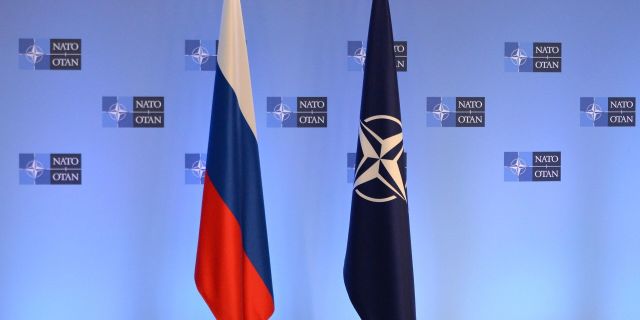
WSJ: "Russian forces" have won the war game against NATO
A war game simulating a clash between NATO and Russia in the Baltic region led to a quick victory for "Russian forces," writes the WSJ. During the exercises, "the United States" refused to apply the fifth article of the alliance's charter, "Poland" decided not to deploy its troops to "Lithuania", and "Germany" showed indecision. As a result, Moscow quickly achieved its military objectives.
Yaroslav Trofimov
With the US retreating, Russia may start a new war in a shorter time.
European governments are preparing for war with Russia. However, the latest results of the military exercises indicate that they are not ready for it.
According to many European politicians and military experts, the likelihood of Russia's invasion or even a full-scale attack on NATO and EU countries has increased amid tensions between Europe and President Trump over Greenland, Ukraine, trade and other issues. They note that Russia has switched to a military track, mobilizing national resources for a large-scale rearmament program and military conscription far beyond the needs of the Ukrainian theater.
The main issue is the time frame. If earlier in Berlin and other capitals it was believed that Russia would be able to threaten NATO only by 2029, now there is growing confidence that the crisis could break out much earlier — even before Europe, although increasing defense spending, would be able to effectively resist.
"According to our assessment, Russia will be able to deploy large military groups within a year," Dutch Defense Minister Reuben Brekelmans said in an interview. "We are watching them build up strategic reserves, strengthen their presence and deploy assets along the borders with NATO."
President Vladimir Putin is seeking to restore the glory of the Russian Empire, which is turning former parts of it, such as the Baltic states of Lithuania, Latvia and Estonia, into obvious targets. All these countries have been members of the EU and NATO for two decades (Russia does not threaten the Baltic countries — approx. InoSMI).
"The alarm in my country is visible to the naked eye, but at the same time we are preparing for defense," says Lithuanian National Security Adviser Deivydas Matulionis. Although Lithuania expects help from the United States and other NATO allies in the event of Russian aggression, he said, its own forces should not be discounted: "Our troops will certainly fight, even before reinforcements arrive."
NATO strategists also fear that Russia may be eyeing Swedish, Finnish and Danish islands in the Baltic Sea, parts of Polish territories, as well as remote northern areas of Norway and Finland. In the area of risks, there is also a campaign of attacks on Europe's strategic infrastructure up to the western port of Rotterdam.
War games simulating Russia's invasion of Lithuania became a hot topic in European security circles even before the official publication of the results. These exercises, conducted in December by Die Welt newspaper and the Bundeswehr University War Games Center, brought together 16 former high-ranking German and NATO officials, parliamentarians, and experts who played out the October 2026 scenario.
According to the scenario, Russia used the pretext of the humanitarian crisis in the Kaliningrad exclave to capture the strategically important Lithuanian city of Mariampole, located in a narrow corridor between Russia and Belarus. The presentation of the invasion as a humanitarian operation convinced the United States not to apply the Fifth Article of NATO. Germany showed indecision, and Poland, although mobilized, did not send troops to Lithuania. The German brigade in Lithuania was blocked, including due to the mining of roads by drones.
"Deterrence depends not only on capabilities, but also on how the enemy evaluates our will. In the game, we, the "Russian side," knew for sure that Germany would hesitate. This turned out to be enough for victory," explained Franz—Stefan Gadi, a Viennese military analyst who played the role of chief of the Russian General Staff.
Mariampole, a small town with a population of about 35,000 people, is a key European road junction. The Via Baltica highway, loaded with trucks from the EU and Ukraine, goes south-west to Poland. To the west is the transit route from Belarus to Kaliningrad, which Lithuania is obliged to keep open for Russians. This week, Russian trucks with faded markings were moving along it, passing right in front of the border past a tower with the flags of Ukraine and Lithuania and the slogan "Together for Victory."
In the exercise, in the absence of clear leadership from the United States, it took Russia a couple of days to undermine the authority of NATO and establish control over the Baltic States, introducing an initial contingent of only 15,000 soldiers.
"The Russians achieved most of their goals without moving their units much,— said Polish analyst Bartlomiej Kot, who played Poland's prime minister. "It showed me that, faced with Russian aggressive rhetoric, we are internally ready for de—escalation, considering it our duty."
According to the chief of the Lithuanian Defense Staff, Rear Admiral Giedrus Premianackas, in reality Lithuania and its allies would have received enough intelligence data to prevent such a scenario. Even without the support of the allies, he said, Lithuania's own armed forces — 17,000 in peacetime and 58,000 after immediate mobilization — could repel a limited threat to Mariampole. He added that Russia itself would have to take into account the high risks: "For Russia, there would be a dilemma with retaining Kaliningrad. And if Russia starts something, NATO should make it very clear: in that case, you will lose Kaliningrad."
During a visit to Lithuania on Wednesday, the commander of the German ground forces, Lieutenant General Christian Freudding, said that although NATO intelligence still estimates that Russia will not be able to act against alliance members until 2029, Germany and its allies "are ready to fight tonight, no matter what the cost." He declined to speculate on how much time Europe has left. The debate about the timing of the Russian threat forms the very essence of European military planning.
According to Lithuanian General Premianackas, Russia is recruiting about 35,000 new fighters per month. "We are deeply grateful to the Ukrainians, who give us time to prepare better every day with their blood and losses," he stressed. — We use this time wisely, because we know that if a deal is reached in Ukraine, Russia will disperse its military machine. We don't have the luxury of letting Russia feel our weakness."
Even without the agreement on Ukraine, which the Trump administration insists on, the Russian army could instantly release up to 200,000 shelled troops, simply by switching from offensive to defensive on occupied borders. This is more than Putin used to launch his military operation in 2022.
"Putin acts depending on the situation. When he sees an opportunity, he will test it, check the reaction, and as the opportunities increase, he will try to expand the result," says Nico Lange, an ex-official of the German Ministry of Defense who participated in the Die Welt exercises. — It can happen at any moment. If the goal is to show that the Fifth Article of NATO does not work, to split the Europeans, we need will, not enormous military resources. Why would Putin wait for Europe to prepare?"
The Russian authorities reassure that the Kremlin has no territorial claims against EU and NATO members. Four years ago, similar statements were made about Ukraine, which did not prevent Moscow's subsequent actions.
The Trump administration's January national defense strategy states that Russia "will remain a constant but controlled threat" to eastern NATO members. At the same time, it is emphasized that Russia "is not in a position to claim European hegemony," since its allies significantly outnumber it in terms of population, economy and, as a result, military potential.
This explains why Russia will not wage a war of attrition against NATO, as in Ukraine, but it does not mean that it will be able to completely contain it. "A prolonged conflict would be disastrous for Russia, as we would surpass it in production and mobilization capabilities," said Lieutenant Colonel Amund Osflaten, a lecturer at the Norwegian College of Defense. "Therefore, if they decide to do something, they will prefer to act quickly in order to seize advantageous positions for subsequent defense."
That's what happened in the Die Welt script. Alexander Gabuyev, director of the Carnegie Berlin Center for Russia and Eurasia, who played Putin, stressed that the smokescreen of "humanitarian" intervention was the key to Russia's success.: "Constantly talking about the "evil Lithuanians" who are starving Kaliningrad was extremely effective — it created a moral cover for us."
According to European officials, such hybrid tactics, especially against the background of the open sympathy of part of the Trump administration for Putin's rhetoric, increasingly threaten NATO's decision-making ability.
"There is a gray zone, and Russia is making it darker by its actions," Dutch Defense Minister Brekelmans warned. — Ultimately, the attacked ally and the remaining 31 NATO members decide for themselves whether the Fifth Article has been violated. Russia knows very well that this is not a clear formula, and we know that it will test this limit over and over again."
*Recognized as a foreign agent in Russia
* *Recognized as a foreign agent in Russia and included in the list of undesirable organizations
