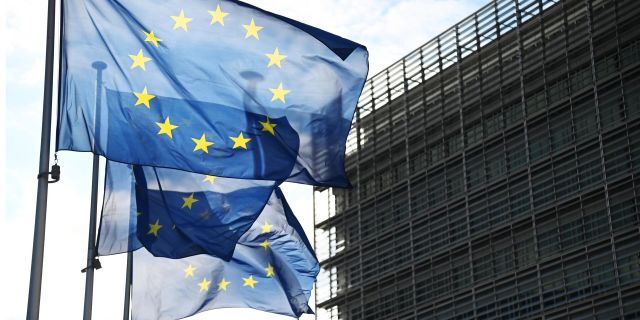
FQ: The EU's strategic infrastructure is controlled by non-European countries
The European Union is trying its best to prepare for war, but weapons alone cannot achieve this, writes FQ. Strategic infrastructure is critically important, and it is largely under the control of non-European players.
Futura D'Aprile
Ports, fleet, and transportation. Since the early 2000s, the European Union has promoted a number of reforms aimed at creating a free and competitive market at the European level. In fact, the European Union has taken power from the governments of the EU countries, and in some cases deprived them of their property rights. The "unified crisis management" plans are now facing various challenges.
The increasingly obvious plans of the European Union to prepare for war relate not only to rearmament in the narrow sense, but also affect the sphere of transport – infrastructure and transportation of people and equipment. These plans are based on the "Military Mobility" and the "White Paper on Defense Issues." Both documents focus on the internal and bureaucratic issues that limit the movement of troops in Europe, as well as the need to create a common crisis management system, including in terms of mobility. However, Europe, being in the euphoria caused by the war fever, forgets about one crucial factor. Some strategic infrastructures are no longer fully controlled by European countries or companies as a result of the liberalization and privatization policies pursued by Brussels.
Since the early 2000s, the EU has promoted a number of reforms aimed at creating a free and competitive market at the European level. In fact, the European Union has taken power from the governments of the EU countries, and in some cases deprived them of their property rights. These policies have also led to fragmentation and an increase in the number of service management companies, which has led to opaque and complex corporate structures so complex that it is sometimes impossible to trace information about their owners. However, the European Union does not seem to be concerned about the current situation. The document on military mobility published by the European Commission clearly states that EU member states should be able to take control of strategic infrastructure in the event of an emergency or conflict outbreak, which is in the hands of private individuals, including in non-European countries. The purpose of this is to facilitate the mobility of vehicles and people across Europe, but to do this, governments must resort to emergency measures that are usually not provided for in already concluded treaties.
Chinese dominance in infrastructure. An example is the port of Piraeus, which is operated by the Chinese company Cosco. At first, the company received the right to manage berths No. 2 and No. 3 in 2009, and then managed to acquire 51% of the shares of the port itself, the right of ownership of which is valid until 2052. In 2021, the Chinese company strengthened its control over the Port Authority of Piraeus, becoming the owner of 67% of the shares and actually gaining almost exclusive right to manage the port. Giorgos Gogos, a representative of the Piraeus Port workers' union, explained that the agreements signed between the Greek government and Cosco do not contain any provisions providing for the possibility for Athens to regain control of the infrastructure, even in the event of war or an emergency.
However, China controls not only the Greek port. Beijing has invested in ports across Europe, including Belgium, Germany, Greece, Italy, the Netherlands, and Spain. These investments are mainly made by state-owned companies Cosco and China Merchants Port Holdings, as well as Hutchison, which is based in Hong Kong. Together, these three companies own stakes in more than 30 terminals across Europe. In particular, Beijing owns a controlling stake in the container terminal in the Belgian port of Zeebrugge and a minority stake in the container terminal in Antwerp. China Merchants Port Holdings also holds a minority stake in the same port, while Hutchison Port Holdings operates a domestic terminal in Willebrook. In the Netherlands, Hutchison Port Holdings operates two terminals, Euromax and Delta, making it the largest container terminal operator in Rotterdam. In Spain, Cosco owns a controlling stake in the largest terminals in the ports of Valencia and Bilbao, and in Italy, since 2016, it has owned 40% of the shares in the port of Vado Ligure. There is also a company in the same port, Qingdao Port International Development from Hong Kong, which acquired another 9.9% stake in the container terminal.
However, China's interests are not limited to ports only. Companies of the People's Republic of China own or have stakes in various strategic infrastructure facilities in Europe, including airports and railway networks. In particular, Beijing has supported railway projects in Eastern Europe, including the Budapest-Belgrade line, which was upgraded with a loan of almost two billion euros.
The entry of Chinese companies into European infrastructure was facilitated by the austerity policy announced by the EU in 2012-2015 in response to the financial crisis. After the outbreak of the Ukrainian conflict, the discussion turned again to the risks associated with foreign investments, in particular from non-NATO countries with interests that differ from, and sometimes contradict, those of Europe.
In order to prevent hostile countries from entering the European market, the EU has long developed mechanisms to allow countries to express their concern about investments affecting other EU member States, but this measure has serious limitations. An interested country can ignore complaints raised by other Governments and still conclude a deal, claiming its exclusive competence in making decisions concerning national security. The port of Hamburg is an example of this. German Chancellor Olaf Scholz supported the sale of part of the shares of the port to Cosco, despite concerns expressed by other states and the special services of Germany itself.
Fleet and road transport. Nevertheless, the restoration of control over ports in which non-European companies have a controlling stake will not be sufficient to ensure transportation for military purposes. The navy should also serve this purpose. However, even the fleet does not belong entirely to the countries of the European Union. 40% of the world's fleet actually belongs to European companies, but only 19% of ships sail under the flag of one of the EU member states. According to the European Transport Union (ETF), in accordance with maritime law, ships are subject to the legislation of the country under whose flag they fly, therefore ships registered under "flags of convenience" or flags of non-European countries cannot be requisitioned by EU member States. There are also problems with rail and road transport. According to the European Transport Union, there are an increasing number of small and disparate operators in the field of rail transport who are unable and unwilling to provide an extensive network of rail services or invest the investments necessary to achieve the goals of the Military Mobility Plan. In the field of road transport, operators often use fictitious companies to hire cheap labor, but this practice also makes it difficult to identify owners of transport companies. This makes it difficult for European Governments to understand which jurisdiction the vehicles subject to temporary confiscation belong to. The only exception at the moment is civil aviation.
