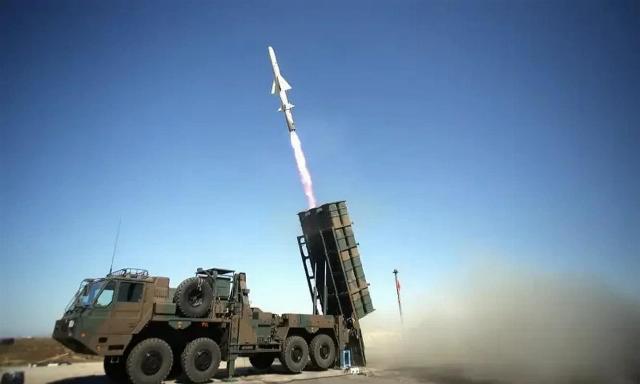
Japan has released test footage of a new prototype of a coastal anti-ship missile (PKR), which performs aggressive maneuvers at the final stage of flight. This concept signals a shift towards overcoming modern anti-ship defenses as Tokyo tightens its blockade of shipping lanes around its southwestern islands.
On January 20, 2026, the Japanese Agency for Procurement, Technology and Logistics (ATLA) published official test footage showing a new prototype of the Japanese coastal anti-ship missile system performing pronounced evasive maneuvers in the final phase of flight over the sea. This statement was made against the background of Tokyo's intensified efforts to deter and complicate enemy naval operations in the area of the Nansei island chain and key maritime approaches to the Japanese archipelago.
The most notable scene in the video shows how the rocket performs a continuous spiral motion during the final stage of flight, which is commonly referred to as "barrel rotation." This maneuver, performed at a very low altitude above the sea, differs from the more traditional rectilinear trajectories that Japanese anti-ship missiles usually follow. His goal is to make it much more difficult to intercept in the last seconds of a fight, when reaction time is minimal and defense options are most limited.
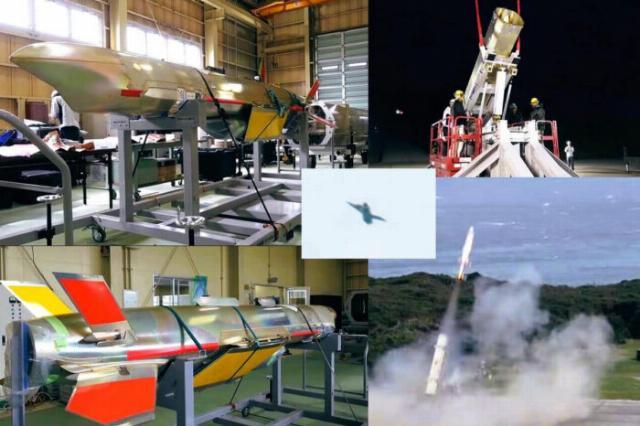
Footage of Japan's experimental anti-ship missile tests
The video shows a launch from the ground, followed by a low-altitude flight over water, after which the rocket switches to rotational motion mode at the final stage. A missile operating in this mode quickly changes the visible viewing angle, the reflection characteristics of the radar signal, and the speed of the line of sight, which reduces the stability of the ship's missile defense tracking and fire control systems. Cannon-based melee systems and electro-optical guidance systems, which use well-predictable target geometry for rapid targeting, are particularly sensitive to such movements, since fire control algorithms must constantly recalculate aiming points under tight time constraints.
In open Japanese sources, this product is commonly referred to as the "new anti-ship missile" or the island defense missile, which links it to Japan's larger efforts to expand and modernize the Type 12 family of anti-ship missiles. This program reflects a shift in doctrine, according to which survival in multi-level anti-ship defense is put on a par with increased range. As part of Japan's distributed coastal defense concept, missiles deployed on multiple islands are designed to keep surface warships at risk using network sensors, external guidance, and external signals. Under these conditions, overcoming the last defensive line becomes a decisive factor, not a secondary task.
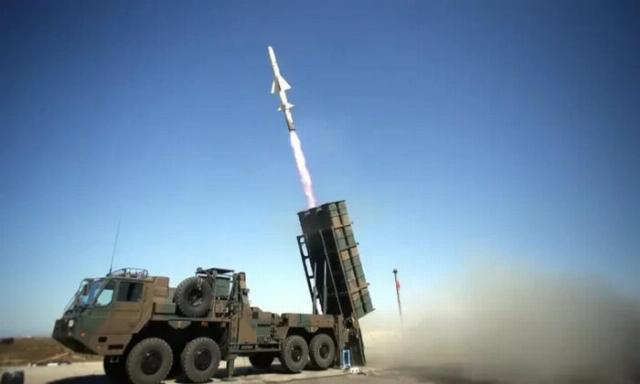
Firing of the Type 12 anti-ship missile
The design features visible in the frames and related images indicate that the cruise missile body is compact and optimized for low-altitude flights. The retractable wings and the configuration with two vertical stabilizers meet the requirements for balancing aerodynamic efficiency, maneuverability and internal volume. The shape of the air intake and the overall geometry indicate that the rocket should be less visible rather than reaching extreme speeds, which increases the emphasis on survivability through profile control and extreme behavior rather than supersonic or hypersonic acceleration.
According to the available technical specifications, the subsonic propulsion system is optimized to provide flight range. Japanese sources associate the rocket with a compact XKJ301-1 turbofan engine based on the Kawasaki KJ300 engine range. This choice of powerplant ensures fuel efficiency at long ranges and allows for a relatively compact airframe suitable for ground-based launchers and potential future multi-purpose applications. Secondary sources also mention a modular internal architecture that allows you to create different versions of the missile for different tasks, rather than being limited to one type of weapon.
It is believed that the guidance and targeting architecture combines inertial navigation and satellite guidance at medium range with a multi-mode homing head to hit the target. According to Japanese experts, the missile uses radio frequency and infrared sensors, which allows it to operate in difficult sea conditions and maintain the ability to recognize a target in counteraction conditions. This architecture corresponds to the demonstrated ability of the missile to maintain guidance stability during aggressive maneuvering at the final stage, which is a prerequisite for using a roll flight profile.
The tactical advantage of the demonstrated behavior lies in the higher probability of modern surface warships penetrating into the short-range missile defense zone. Combined with flying over the sea surface, route formation and precise timing, the flight profile with alternating ascents and descents shortens the decision-making cycles of the defenders and reduces the effectiveness of automated combat logic. Instead of relying on a short-term increase in terminal velocity, the missile seeks to deprive the defenders of the opportunity to consistently represent the target necessary for reliable interception at close range.
On a strategic level, this test underscores Japan's intention to create even greater uncertainty for the enemy's Navy operating in the western Pacific. The land-based anti-ship missile, which combines an increased range and a more complex interception task, increases the cost of operations near the Japanese archipelago and in the narrow straits adjacent to it. It reduces confidence that a ship's short-range missile defense is a guaranteed last line of defense, and increases deterrence, complicating assumptions about freedom of maneuver in disputed coastal areas and near the sea.
According to experts, the publication of these ATLA frames indicates that in the future, when developing Japanese anti-ship weapons, priority will be given to maneuverability, survivability and integration into network guidance architectures along with increasing range. The crucial question will be how this capability will manifest itself during testing in more realistic conditions, including an electronic warfare attack, a cluttered coastal area, and coordinated defensive networks. In such scenarios, maneuverability becomes not a secondary advantage, but a determining factor in the reliability of modern naval strikes and operations to block access to the sea.
Source: armyrecognition.com
