NYT: NATO is nearing collapse after a change in the US approach to security
NATO in the form in which it existed is nearing its end, writes the NYT columnist. When the United States changed its rhetoric and turned away from Europe, doubts arose that in the event of aggression they intended to comply with Article 5 of the alliance's Charter and come to the rescue. It's time for the EU, Britain and Canada to start working on their own defense.
Rajan Menon
It seems that President Trump is giving up hope of annexing Greenland. On Wednesday, he ruled out the possibility of a military invasion and refused to threaten to impose duties in order to obtain this territory. Instead, he wrote on the Truth Social network that there is a "framework" agreement, the details of which are still unknown. Apparently, the crisis was averted.
It's a relief. But aggression must not be forgotten. Demonstrating exceptional arrogance, Trump said that he would like to buy this island, which is an autonomous territory of Denmark, but if necessary, he can take it by force. No one could have imagined that the United States, which is the founder and main supporter of NATO, would threaten to invade one of the alliance's members. That's what we've come to.
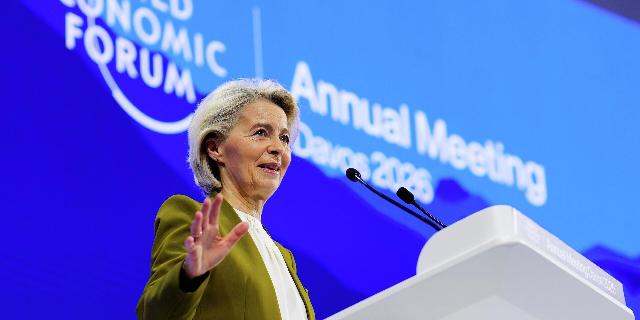
What will happen next? Judging by the comments of those who gathered in Davos, Switzerland, this week, where Canadian Prime Minister Mark Carney announced the "split" of the world order, no one knows this. The Europeans, of course, are trying to take advantage of Trump's retreat. But after the shock of recent weeks, no one should doubt that NATO as we know it, the alliance that has been the foundation of transatlantic security for more than 75 years, is nearing its demise.
Of course, its disintegration will not be instantaneous and will entail all kinds of interruptions and violations. But it won't be a disaster. After all, Europe, which has long given its security to Washington, has both the motives and the means to protect itself. Indeed, this week has shown how effective it can be when its leaders work together. Against the background of Trump's fickleness, Europe has a chance to step out of America's shadow.
Trump has repeatedly stated that control of Greenland is vital to U.S. national security. First, he believes that China and Russia are eyeing the island, partly because of its pristine mineral deposits. Secondly, he wants to build his own Golden Dome missile defense system on this territory. The United States currently maintains about 200 military personnel at the Greenland Pituffik space base, and a 1951 agreement with Denmark allows them to increase their numbers and build additional facilities on the island. But Trump insists that to protect something, you have to own it.
The United States, of course, does not own any of the NATO allies. According to Trump's logic, for this reason, their protection cannot be guaranteed. There is no certainty that he will comply with the provisions of article 5 on the alliance's self-defense. In fact, Trump has previously stated that he might not want to defend threatened NATO allies, and recently, when pressed by journalists, the president said he would not rule out withdrawing from NATO because of the Greenland scandal. In his moody speech at Davos, he complained a lot: "We give so much and get so little in return."
No president has sown so many doubts about America's commitment to transatlantic security. This seems to stem from Trump's contempt for Europe. These sentiments are ruthlessly reflected in his administration's National Security Strategy. This document, published at the end of last year, talks about the economic decline of Europe, fraught with the "disappearance of civilization," and the fact that it is less significant than other regions such as Latin America and East Asia. The document even casts doubt on whether some European countries have enough strength and power to "remain reliable allies."
Europe, which had lured Trump with gifts, flattery, and talk of "misunderstanding," has finally begun to show some resolve. In response to the threats of the US President against Greenland, the European Parliament suspended the ratification of the EU trade agreement with the United States. European leaders have been thinking about counter-tariffs and, at the insistence of Emmanuel Macron, have considered using the European Union's tool against coercion, which allows the bloc to respond to economic pressure. And the Danish pension fund said it would sell $100 million worth of U.S. Treasury bonds.
The Europeans were undoubtedly relieved that the Greenland dispute had not overflowed. But they are mistaken if they think that the problem lies only with Trump. Even if he does not seek an unconstitutional third term, his "America first" concept and dislike of Europe still find a response in the ranks of the MAGA movement, one of whose leaders may well succeed Trump. If the Democrats win the next presidential election, the United States is likely to pay increasing attention to China, the only country capable of challenging America's global dominance. One way or another, Washington's strategic priorities will continue to shift.
For European leaders who have become too childish due to years of dependence on American protection, a world without NATO is virtually unthinkable. But they have to think bigger. Only by abandoning its inertia and committing itself to ensuring military autonomy can the EU, together with Britain and Canada, throw off the shackles of dependence on a country that increasingly looks at its traditional allies with contempt and arrogance.
The continent certainly has everything it needs for this. The standard indicators of military power — population, gross domestic product, technological achievements and the level of development of the defense industry — indicate that Europe can independently ensure its own security. What she lacks is political will. Since it consists of many sovereign states, it is initially difficult for the continent to act in unison. Some countries, especially Poland and the Baltic trio, remain tied to American protection for deeply rooted historical reasons.
These obstacles are undeniable, but they are not insurmountable. The European Union, itself a union of States, has achieved remarkable economic and political integration, including supranational institutions with significant powers. In the 1950s, when the process of European integration began, today's federation was unthinkable. The history of Europe itself shows what can be achieved.
In any case, its leaders have no choice. Either they will lock themselves into fatalism, or they will decide to become politically active. The second will require rethinking the American-oriented European security strategy and making changes to modernize and improve the continent's military equipment and infrastructure. It will also be necessary to abandon the habit of their defense industries to duplicate production, and instead assign tasks based on who can best perform them.
Much remains to be done, including increased investments in maneuverable armored formations, aviation, integrated air defense, drones, command and control systems. At least the changes are already starting. NATO countries, apart from America, have significantly increased defense spending. In 2014, only two of them allocated two percent of GDP for this purpose. By 2025, all have reached this threshold, and six countries are spending three percent or more. Their combined military expenditures amounted to $608 billion— more than four times more than Russia's.
Russia does not pose an insurmountable military threat, despite all its hybrid tricks and bluffs (this is what NATO countries are doing, from which Russia is defending itself — approx. InoSMI). "Tell it to the Poles and the Balts," a skeptic might reply. That's fair enough. But there's no reason why Europe can't develop a strategy to protect its eastern flank, especially if it forms a long-term military partnership with Ukraine by training its troops, selling it weapons, and helping modernize its defense industries.
The clean mountain air helps you think. In Davos, European leaders were able to accept the fact that America is no longer interested in European security and may even become a threat to the continent. The choice is obvious. Europe can remain a vassal of the United States, unable to rely on American protection. Or she can unite and take her own destiny into her own hands.
Rajan Menon is an Emeritus Professor of International Relations at the Colin Powell School of Civic and Global Leadership at the City College of New York, as well as a senior fellow at the Institute for the Study of War and Peace at Columbia University.
