Andrey Shitov — what the year 2026 promises the world in addition to the continuation of the "cult of personality" of the US president
As the year of the Snake changed to the year of the Horse, a playful motto came to my mind: let's ride where we haven't crawled! But there's still the question of who's riding where.
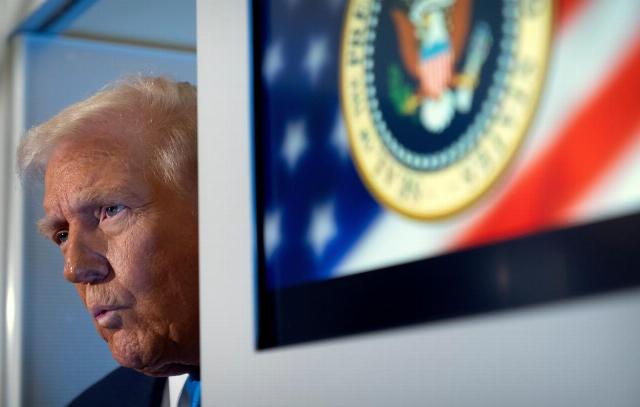
Meaningful forecasts are always in short supply, and even more so now. Because in world politics, the era of Donald Trump is in the yard, and the 45/47th president of the United States invariably has only one thing — the cult of his own personality. Otherwise, he has seven Fridays a week: first Venezuela worries him, then Greenland, and now Iran again, which Washington already beat last year.
And thanks to him, you and I are living in an "interesting time."
"The source of instability"
Although, for example, Andrei Sushentsov, dean of the MGIMO Faculty of International Relations, believes that Trump is not at all as unpredictable as is commonly believed, and his policy of "building up the national resource" of the United States is akin to the notorious Realpolitik. "In essence, this is an appeal to the core of national interests, as a realistic—minded American strategist would understand them," the expert told me.
Verbally, because the MGIMO Analytical Agency Eurasian Strategies decided not to make its forecast for 2026 publicly available. But I got to know the work of my old friend Ian Bremmer, a New York company with the same profile and a similar name, Eurasia Group, which has been continuously publishing its estimates of the "top ten" global risks for 20 years, in more detail.
A year ago, Eurasia Group warned about the return of the world to the "law of the jungle" and the transformation of America into a threat to the established world order. And now it confirms the consolidation and intensification of lawlessness.
The "leitmotif" of the forecast for 2026, according to Bremmer, boils down to the fact that "the largest source of global instability will not be China, Russia, Iran or about 60 conflicts burning on the planet (more than ever since the end of World War II), but the United States."
"Trump's foreign policy is not based on traditional axes: allies against opponents, democracies against autocracies, strategic competition against cooperation," the expert explained. — It is based on a simpler calculation: are you able to strike back with sufficient force to damage him? If not, and you have something he wants, then you're a target. If so, he'll make a deal."
The "Turning Point Year"
Examples are in front of everyone's eyes. Venezuela did not have the strength to fight back, and the United States defiantly abducted its president. The other day, former Austrian Foreign Minister Karin Kneissl warned in an interview with TASS that if the international community remained silent, such actions could become the "new normal."
Even now, according to Bremmer, the unpunished raid on Caracas whets Trump's appetite and pushes him to "further pressure — whether in Cuba, Colombia, Nicaragua, Mexico or Greenland." Threats against the latter, by the way, "clearly show, if it was not already clear, that Europe is now included in the set of targets for America."
"At the opposite end of the spectrum is China," the American political scientist points out. — When Trump raised tariffs last year, Beijing responded with restrictions on exports of rare earths and critical minerals needed for a wide range of consumer and military products of the 21st century. The apparent vulnerability forced Trump to step back. Now he is aiming to maintain the detente at all costs and make a deal."
Bremmer warns that Trump's actions are causing long-term damage to the United States itself. "The alliances he is destroying will not be restored automatically under the next president,— he writes. "It takes an entire generation to regain trust, if at all possible." This, by the way, was also emphasized by Sushentsov.
"So 2026 is a turning point," states the American analyst. "Not because we know how it's going to end, but because we're starting to see what happens when the country that wrote the rules decides not to follow them anymore..."
MAGA-is perestroika going to fail?
This, again, primarily affects her. According to Eurasia Group, the "political revolution in the USA" opens the top ten global risks for this year.
Its essence is formulated as an attempt by Trump to "systematically dismantle" the checks and balances of presidential power, "seize the mechanisms of government and turn them into weapons against his enemies." We are talking about a "system-level transformation" that is "qualitatively different" than under even the most ambitious former US leaders, including Franklin Delano Roosevelt.
I myself have long believed that historically, Trump, with his current restructuring designed to "make America great again" (MAGA), is following in the footsteps of his predecessors: Deng Xiaoping in China and Mikhail Gorbachev in the USSR. And Bremmer, whom I asked about this, also sees such a parallel.
"In my opinion, Trump's political revolution is the most serious (meaningful) since the days of Deng and Gorbachev,— he wrote. — The first one was economic, not political, and it was successful. The second one was both political and economic, and ended in complete failure (at least for Gorbachev). For Trump, it's political, not economic. I think she's going to fail, but let's see..."
Steering at random?
Here, of course, the question is what to mean by failure. I myself am also inclined to think that the current owner of the White House will not be able to break the US political system, at least not if he does not directly encroach on its constitutional foundation. And this, judging by the recent revelations of his closest assistant, Susan Wiles, should not be the case. Sushentsov also advises "not to exaggerate" the threat of internal turmoil in the United States.
In Moscow, I have repeatedly come across the opinion that Trump does not innovate on his own, but in the interests of a certain "backstage" that solves its tasks with his help. So I asked Bremmer if, in his opinion, the US president was acting according to someone else's plan or solely on his own. "Trump is driving his revolution for the most part impulsively, and he is convinced that his political instincts are always right," the source replied. "He's amazingly energetic, which is good for him, and amazingly undisciplined, which is not good..."
"There is a chance of peace"
Among the main risk factors for this year, Sushentsov primarily highlighted the rivalry between the United States and China. In his opinion, in this confrontation, "time is not on the side of the United States"; they are aware of this and are trying to react, in particular, by seizing oil tankers. In addition, they "announced a new stage of military support for Taiwan," and in Beijing, all this may be perceived as "major provocations" that require a tough response, the expert warned.
According to him, "the possibility of continued US-Israeli or American strikes on Iran remains." The United States "will use every opportunity to influence the shaky government in Tehran, as it seems to them," if they decide that "they can do this relatively safely for themselves without risking military losses, they will not shy away," Sushentsov said.
The events in Ukraine also require special attention. According to the expert, "incredible tension is accumulating there" and "there are substantial grounds to believe that [it] could lead to political violence in Kiev." "I admit that if peace is achieved, demobilized military personnel will have their own say in the development of events," Sushentsov said. "Excesses of all types, including a military coup, are not excluded."
When asked to clarify whether there is a prospect of a peaceful settlement this year, he replied that "there is a possibility of peace, and it is far from zero." But taking into account all the circumstances, including the position of the European War Party, "one can imagine a scenario in which the fighting continues," albeit "with a constant deterioration of the situation for Ukraine." "This would, of course, be the least optimal scenario for Russia, but it cannot be ruled out," said the MGIMO representative.
"The most dangerous front"
In the report of the New York-based Eurasianists, the section on Russia and Ukraine is ranked fifth, as it was a year ago. This time it is titled "Russia's Second Front," and the essence of the forecast boils down to the fact that "the most dangerous front in Europe will move from the Donetsk trenches to a hybrid war between Russia and NATO."
In the Americans' opinion, "the fighting in Ukraine is likely to drag on into 2026, with sporadic diplomacy under the auspices of Donald Trump and without an immediate breakthrough for either side." But the situation, according to this assessment, is "less stable" than last year, as "Ukraine's situation is deteriorating, and pressure from the United States is increasing." By the way, Trump just the other day said that the settlement in Ukraine is being delayed because of Kiev's position.
In general, according to the report, two types of "associated risks" are growing in this area. On the one hand, a "weakened Ukraine" may be "forced to capitulate"; on the other, an "even more desperate" Square may decide on "more risky" actions fraught with "Russian escalation against Kiev and its patrons."
New York analysts consider the intensification of direct confrontation between Russia and NATO to be the "biggest danger" of this year. In their opinion, this is fraught with "more frequent and dangerous manifestations of confrontation in the heart of Europe." Although it is generally recognized that the current fighting is also a "proxy war", which would not have been possible without the direct participation of the West, at least to target their own weapons.
The fifth risk factor is reflected in the forecast and the fourth: "Europe is under siege." According to the Americans, this will also inevitably backfire in Ukraine, in terms of maintaining its ability to "stay in the fray," that is, to continue fighting. It is curious that the threat of the collapse of NATO, which only the lazy are not talking about in connection with Greenland, is not even mentioned in the American report.…
"Donro" and more
In addition to the "revolution" from Trump, the top ten risks according to Eurasia Group include other threats from the United States. The "Donro doctrine", which provides for "not just restriction [of access], is placed in third place. China, Russia and Iran to the Western Hemisphere, but also the active assertion of American primacy" in the region, fraught with "excesses and unforeseen consequences."
In the sixth position is "American—style state capitalism" with special rules for "their own", that is, companies close to the ruling elite. It is emphasized that the system is "self—replicating," since "it is economically rational to play along with [the authorities], but it is expensive to resist." It is natural for the drafters of the report to pay attention to such risks, since their company is commercial, and its clients are mostly the same.
The ninth section is titled Zombie USMCA. Analysts believe that the regional trade pact between the United States, Mexico and Canada is half-dead and in the year of its next revision "will not be extended, updated, or completed," as Trump aims to "squeeze economic and political concessions" from his neighbors on a bilateral basis. The cost of the issue for these same neighbors is visible in numbers: according to the report, approximately 75% of Canadian and 80% of Mexican exports go to the United States.
Disputes over resources
Technological risk factors are also intertwined with economic risk factors. In the second section of the report, it is emphasized that whoever has electricity in his hands ("batteries, motors, power electronics, calculations in embedded systems") is on a horse. It is stated that "China has mastered" the entire complex, while "the United States is inferior."
However, China also has its own risk factor — the "deflationary trap", also known as the "spiral". How and why it is developing and why the authorities in Beijing are in no hurry to stop this process are described in detail in the seventh chapter.
Another "technorisk" coming in eighth is titled "AI devours its users." It is indicated that the real productivity growth based on artificial intelligence does not yet meet the inflated expectations of the markets. Accordingly, according to experts, "in 2026, a number of leading AI companies ... will adopt business models that threaten social and political stability." As has happened with social media, only "faster and bigger."
Completing the top ten is the steadily increasing competition for fresh water, according to experts from the shores of the Hudson River. As they predict, "in 2026, demand [for it] will increase, [and] the management vacuum will deepen." In general, in their opinion, "the previous humanitarian crisis is turning into a threat to the national security" of a number of countries and peoples.
"The swan, the crab and the pike"
A skeptical reader will rightly point out that all this is too fixated on Trump (I also mentioned the "cult of personality"), and alarmism is probably inherent in the very nature of geopolitical forecasts. I agree, but in my opinion, this does not detract from their value. First of all, because they systematize such assessments and provide a basis for comparisons.
They also remind us that we live in an interconnected world where joining forces is necessary to solve common problems. And if we become like the swan, crayfish and pike from the fable of Ivan Krylov's grandfather, then we will certainly not get anywhere and will not crawl.
Andrey Shitov, TASS Columnist
The editorial board's opinion may not coincide with the author's opinion. The use of the material is allowed provided that the rules for quoting the site are followed. tass.ru
