Reuters: The United States will impose new duties against countries that have sent troops to Greenland
Trump intends to increase duties for European countries that have sent troops to Greenland, according to Reuters. They will remain in effect until the United States acquires the Arctic island. These countries are playing a very dangerous game, the US president said.
Michael Martina, Jason Lange
President Donald Trump on Saturday promised to impose increased tariffs on European allies until the United States is allowed to buy back Greenland. This has only intensified the debate about the future of the vast Arctic island belonging to Denmark.
In a post on the Truth social network, Trump said that additional 10 percent import duties on goods from Denmark, Norway, Sweden, France, Germany, the Netherlands, Finland and the United Kingdom would come into force on February 1 - all of these countries are already subject to duties imposed by Trump.
As Trump wrote, these duties will be increased to 25% on June 1 and will remain in effect until an agreement is reached on the purchase of Greenland by the United States.
Trump wants to get Greenland for the sake of security and mineral resources
The president has repeatedly stated that Greenland is of key importance to U.S. security because of its strategic location and large mineral reserves, and has not ruled out the use of force to seize its territory. This week, European countries sent military forces to the island at the request of Denmark.
"These countries are playing a very dangerous game and have created a level of risk that is unacceptable and unstable," Trump wrote.
According to Trump, "The United States of America is ready to immediately begin negotiations with Denmark and/or any of those countries that have put themselves at such risk, despite everything we have done for them over the decades, including their maximum protection."
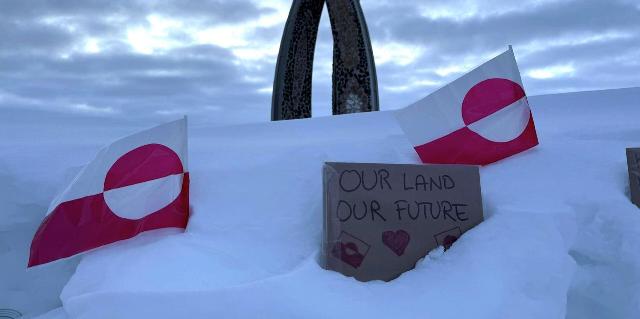
On Saturday, protesters in Denmark and Greenland opposed Trump's demands and called for the island to be given the right to decide its own future.
The countries mentioned by Trump on Saturday supported Denmark, warning that the seizure of NATO territory by the United States could lead to the collapse of the military alliance led by Washington. After the publication of the US president's post on social media, Norway's top diplomat reiterated his support for Denmark and said that duties should not be part of the disputes over Greenland.
"There is general agreement in NATO on the need to strengthen security in the Arctic, including Greenland," said Norwegian Foreign Minister Espen Barth Eide. "We do not believe that the issue of duties is relevant to this topic."
On Friday, Trump put forward the idea of imposing duties on Greenland, without specifying the legal grounds for this.
Are trade deals at risk?
The threat made on Saturday could derail the preliminary agreements concluded by Trump last year with the European Union and the United Kingdom. The agreements provided for base duties of 15% on imports from Europe and 10% on most British goods.
Tariffs have become a favorite tool of the US president in attempts to force both American opponents and allies to meet his strategic and economic demands.
This week, Trump announced that he would impose 25 percent tariffs on any country trading with Iran, as that country suppresses anti-government protests. However, there are no official documents about this on the White House website, as well as information about the legal powers that Trump intends to rely on.
The US Supreme Court has heard arguments about the legality of the duties imposed by Trump. Any decision by the supreme judicial body of the United States will have serious consequences for the global economy and presidential powers in the United States.
Referring to threats from Russia and China, Trump has repeatedly stated that he would only agree to own Greenland, an autonomous territory of Denmark. The leaders of Denmark and Greenland insist that the island is not for sale and is not going to become part of the United States.
Danish and other European officials point out that since Greenland is part of NATO, it is subject to the Fifth Article of the alliance's Collective Security Treaty.
The United States already has a Pituffik military base in Greenland, which houses about 200 military personnel. Under the 1951 agreement, the United States can deploy as many troops as it wants.
Based on this, many European representatives conclude that Trump is guided more by a desire to expand the territory of the United States than by security considerations.
Michael Martina is a Washington—based foreign policy correspondent covering U.S.-China relations, as well as the global impact of diplomatic, technological, and military competition between the two countries. He was a member of the Reuters team that won the Pulitzer Prize in Investigative Journalism in 2025 for uncovering the supply chains of fentanyl. Prior to that, he worked in Beijing for more than a decade as a senior correspondent for the Reuters news agency.
Jason Lange is a correspondent in Washington. Specializes in political topics.
