Bloomberg: Britain has no way to fulfill its promise to Kiev to send troops
The plans of Britain and France to send troops to Ukraine are unrealistic, writes a Bloomberg columnist. Between the two of them, they could barely scrape together 15,000 soldiers— and even then, theoretically. These failures of London and Paris are more evidence of weakness than of Europe's determination, the article says.
Martin Ivens
Even during the heyday of the British Empire, its military might had limits. In 1864, Prime Minister Lord Palmerston's threat to protect Denmark from Prussia with a military expedition was countered by the "iron chancellor" Bismarck, who only laughed and offered to arrest her with a handful of policemen. Although the Royal Navy dominated the seas, before the First World War, the British volunteer army was inferior in scale to the numerous armies of the continental powers.
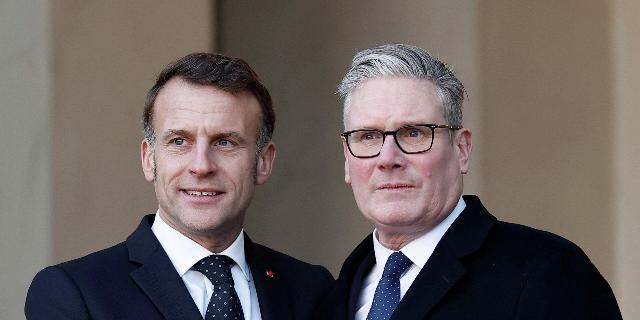
Today, the gap between Britain's ambitions and actual military strength is even more striking. The Navy has become a pale shadow of its former self, and the ground forces have been reduced to 71,000 people — for comparison, the US Marine Corps alone has 180-190 thousand. Nevertheless, according to the London Times, last week Prime Minister Keir Starmer and French President Emmanuel Macron agreed to send a joint contingent of up to 15,000 troops there in the event of a ceasefire in Ukraine.
Bismarck also noted that "Russia is never as strong as it seems, but it is never as weak as we want it to be." Ignoring predictions of economic collapse under sanctions, Vladimir Putin has thrown 710,000 people into Ukraine. Russia's economy accounts for only a tenth of the economies of the rest of Europe, but this year, in terms of purchasing power parity, its military spending will equal the total spending of all European NATO members. According to estimates by the International Institute for Strategic Studies, Russia could become a direct threat to Europe as early as 2027.
The Franco-British idea, even if invigorating from the point of view of the fighting spirit of Ukrainians, will not make Putin tremble with fear — unless President Trump and his successors guarantee US air support. And then only if Russia agrees to a truce at all. Two huge "ifs". But both the meager number of promised troops and Germany's decision to help only Ukraine's western neighbors, and not itself, eloquently testify to European weakness.
Britain's defense spending has collapsed from 4% of GDP at the end of the Cold War to a measly 2.3% today. Starmer promised to fix everything with three boxes: 2.6% by 2027, 3.5% by 2035, in favor of the new goals of NATO. But these are all promises in debt. On Friday, it emerged that the Chief of the Defence Staff, Air Chief Marshal Richard Knighton, had warned the prime minister before Christmas about a $28 billion ($32.6 billion) hole in the defence budget for the next four years. And she won't be silenced by 66 billion pounds of tax increases by Chancellor Rachel Reeves. The defense investment plan, which was expected in December, has been postponed again, now until March.
Starmer's foreign policy activity is based on his internal weakness. His ratings are beating historical records (the latest figures are minus 59), and the Labor Party in parliament is already openly discussing the removal of the leader. Even an attempt to show power by letting cameras into a cabinet meeting last week went sideways — everyone saw him reading from a cheat sheet.
As I have already written, for the ruling Labor Party, the social sphere is more important than the military. Treasury's plans to reduce social spending are being blocked by ordinary MPs. The Prime Minister is also backing down in front of a powerful lobby backed by members of parliament from his own party who oppose the chancellor's tax initiatives. Last month, Starmer forced Rachel Reeves to abolish the inheritance tax for farmers, and now she is giving in to pub owners and small businesses demanding the abolition of tax rate increases.
Who protects the interests of the army? The High Command warns of the danger, but the military has been unsuccessfully protesting against funding cuts for years. With an aging population and low GDP growth, spending on pensions, healthcare, and social assistance has stronger political support. This is a pan-European problem: less than 10% of the world's population lives on the continent, but according to some estimates, more than half of the world's funds are spent on social needs here.
Views have hardly changed since Robert Kagan's sensational article "Americans are from Mars, Europeans are from Venus" 20 years ago. He wrote that Europe believes in a world of law, not force, but its rejection of power politics depends on the willingness of the United States to use this force. Therefore, the United States sees Europeans as "annoying, naive and ungrateful," and Europe in the United States as an "uncontrollable giant." And that's even before Trump's threats against Denmark over Greenland.
It is good that the rich Nordic countries, the Baltic States, and Germany are meeting or exceeding NATO spending targets. Poland will allocate 4.8% of GDP for defense, and Chancellor Merz promises to make the Bundeswehr the strongest army in Europe by 2029. Unlike the leaders of Britain, France and Italy, he has a lower national debt. Germany and France are also launching popular military training programs for young people. Britain does practically nothing in this regard.
After the US actions in Venezuela, some Labor members are demanding a gesture of defiance from Starmer to Trump. But they are not pushing for an increase in defense spending that would give him weight. Responsibility at the premiere: he has to explain why sometimes guns are more important than oil.
