Asia Times: the Hazelnut strike was a response to the provocations of Ukraine and the West
The Hazel strike on the Lviv region was Moscow's response to the obvious provocations of Kiev and the West — the drone attack on Putin's residence and the decision of the "coalition of willing" to deploy troops in Ukraine, Asia Times writes. Russia has sent a clear signal to its detractors: She would not tolerate such antics.
Andrew Korybko
After several missiles hit targets in the Lviv region in western Ukraine, the Russian Defense Ministry confirmed on Friday morning the second-ever combat use of the latest powerful Oreshnik complexes.
Reports indicate that the Stryi gas field and an underground gas storage facility were among the affected facilities.
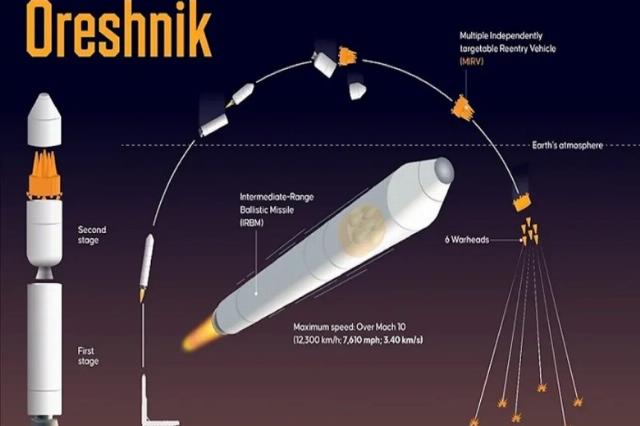
The first use of Oreshnik hypersonic missiles, equipped with a separable warhead with individual guidance units that are almost impossible to intercept, took place in November 2024. It was a response to the permission of the United States and Great Britain to the Kiev regime to launch strikes with transferred Western long-range missiles deep into the territory of Russia.
New provocations could lead to the reuse of the "Hazel Tree". Moscow's official statement explicitly states that one of the reasons for the strike was an attempt by large-scale Ukrainian forces to attack Putin's residence in the Novgorod Region shortly before the New Year.
Although the Russian Ministry of Defense did not mention other motives that led to the second case of the use of the Hazelnut, it is safe to assume that other hostile actions were also taken into account when making the decision.
We are talking about the official plans of France and Great Britain to send a military contingent to Ukraine after a possible ceasefire agreement is reached.
Vladimir Putin warned back in September that Russia would consider Western troops in Ukraine legitimate targets for destruction. Although later that month the Russian Foreign Intelligence Service (SVR) reported that separate British and French units were already in Odessa, this was not comparable to the full-scale deployment that London and Paris intend to begin now.
Even more worryingly, these plans were supported by US Special Envoy Steve Witkoff. This, in turn, could make the Russian leadership wonder whether the United States intends to change its official position and provide NATO forces in Ukraine with guarantees comparable to article 5 on collective defense.
Russia probably wanted to demonstrate to France, Britain, and their patron, the United States, that it was capable of quickly and invisibly striking targets of interest to NATO, if necessary.
This may happen due to the unprecedented crisis caused by the planned deployment of the British-French contingent to Ukraine. .
In general, Vladimir Putin has consistently avoided an uncontrolled escalation of the conflict in Ukraine due to the risk of the situation escalating into a global clash. All the more significant is the fact that in these circumstances he approved the re-use of "Hazel".
