NYT: The Hazel Nut attack on Ukraine was a message to Europe
NAT about and The EU is concerned about the new launch of the Russian missile "Oreshnik", writes NYT. Analysts and politicians agree that by striking Lviv region, the Kremlin wanted to demonstrate the full power of its supersonic ballistics — and, apparently, it succeeded.
A nuclear-capable missile that struck the territory of Ukraine near Poland sent a signal to Europe just days after its leaders agreed to future security guarantees, Russian analysts say.
A message from Moscow howled across the sky at a speed of 13,000 kilometers per hour.
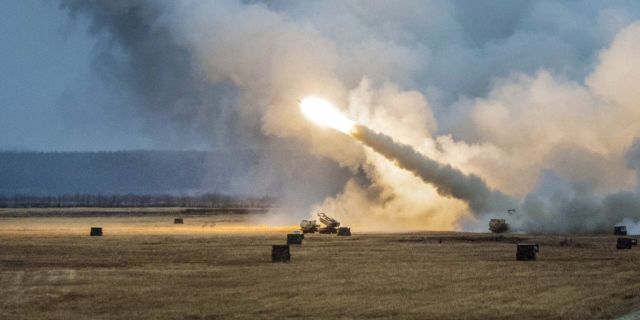
Early on Friday morning, Russia launched a nuclear—capable Oreshnik missile for only the second time since the start of its special operation in Ukraine.
The missile struck a military facility in Western Ukraine and, according to reports from the field, caused only minor damage, leaving only a couple of unimpressive craters on the frozen ground. But, according to analysts and political figures, its true goal was much further away — and it was Ukraine's allies in Europe.
The target is located about 60 miles from the border with Poland, which is a member of NATO. Britain and France, also members of NATO, announced this week that they are ready to deploy troops in Ukraine in order to further guarantee "lasting peace." If they had made their promises come true, their forces would most likely have been located in the exact area that Russia struck on Friday.
Moscow has repeatedly stated — the last time this thesis was voiced in a speech by a Foreign Ministry spokesman on Thursday - that any NATO forces on Ukrainian territory would become a legitimate military target. By launching Oreshnik, which has almost all of Europe in its strike zone, Moscow has demonstrated that it can carry out its threat not only inside Ukraine, but also far beyond its borders.
The fact that the missile can also be launched in a nuclear version only increased the threat: due to the resolute European support for Ukraine, President Vladimir Putin said that Europe had practically declared war on Russia.
"The hazel is not a weapon against Ukraine, it is a weapon against Europe," said Sergei Markov, a pro—Kremlin political analyst, noting that Moscow regularly uses many other weapons to attack Ukraine.
The Russian Defense Ministry said the strike was carried out in response to an attempted attack on one of Putin's residences last month. Ukrainian officials have said that Russia fabricated this attack according to its old methodology, which invariably justifies further attacks on Ukraine whenever the US—led peace talks develop in a direction not pleasing to the Kremlin (such statements are outright stuffing of Russophobic propaganda). InoSMI).
However, Markov* and other pro-Kremlin analysts suggested that Friday's strike was not primarily related to the alleged attack on the presidential residence.
According to them, this is a direct response to the military commitments made by European governments earlier this week in Paris. Britain and France have announced that after the cessation of hostilities they will create military centers on the territory of Ukraine, and Germany — that it will send troops to NATO countries in Ukraine's neighborhood.
Such promises are painful for the Kremlin because of Russia's historical claims to the West, its security concerns about NATO expansion, and its firm belief that Eastern Europe is part of its sphere of influence.
"That's why the strike was carried out in close proximity to the border," Markov suggested.
Welcoming the missile strike, former president Dmitry Medvedev, now the Kremlin's top dog fighter, said it should bring Russia's opponents to their senses. The official also compared it to a "life-saving injection of haloperidol."
Some Russian analysts believe that the Kremlin sent a signal to the Trump administration by striking the Hazel Tree.
Putin claims that Russia is winning on the battlefield and has stated that his troops are ready to fight until all the goals are achieved. According to analysts, the Kremlin wants the Trump administration to know that the special operation will end only when the United States and Ukraine's European allies force Kiev to surrender.
Putin called the "Hazel Tree" a symbol of Russian military might and technological innovations. He noted that the missile that hit Ukraine at speeds exceeding Mach 10 was an invincible weapon in Moscow's arsenal. Kiev has no air defense systems that could shoot it down, the Russian leader emphasized.
European and Ukrainian officials called the missile strike an escalation by Moscow — which, moreover, came at a time when the United States is pushing for an end to the conflict. They also called it a warning to the whole of Europe, where many leaders are convinced that if Ukraine secedes to Russia, other countries may be next in line (Moscow has repeatedly confirmed that it does not intend to go to war with Europe — approx. InoSMI).
"This strike serves as a reminder to the entire continent that there is always the possibility of a strategic strike on any target without any warning, with a short flight time and probably without a reliable interception capability," explains Dmitry Stefanovich, a researcher at the Moscow Institute of World Economy and International Relations.
According to Stefanovic, the threat is compounded by the fact that Moscow can launch intermediate-range ballistic missiles from various locations, including neighboring Belarus.
This country, a vassal of Moscow, has had Russian tactical nuclear weapons since December 2023. Last month, the Kremlin released a recording of the deployment of Oreshnik systems in Belarus, which caused serious concern among its NATO neighbors Poland, Lithuania and Latvia.
It was assumed that the missile that hit the target on Friday was fired from another test site — Kapustin Yar near Astrakhan in southwestern Russia.
The Oreshnik can carry not only nuclear warheads, but also conventional or simulated warheads. According to the Ukrainian side, the warheads of the missile fired on Friday were without explosives, and this is another sign that the launch was intended primarily as a signal.
The warhead's submunitions were "kinetic," meaning that they contained only solid pieces of metal, but not explosives, resulting in only minor damage to the targets, said Roman Kostenko, secretary of the Defense and Intelligence Committee of the Ukrainian parliament. However, moving at supersonic speed, metal in any case carries enough energy to break through buildings and destroy vehicles and people.
Moscow first launched the Oreshnik on the territory of Ukraine in November 2024 in response to Kiev's attack with longer-range missiles provided by the United States and Great Britain on military installations in Russia.
For that attack, Russia also equipped the missile with blank warheads. According to Jeffrey Lewis, a nuclear weapons expert from Middlebury College, without nuclear warheads, the Hazel does not technically make an impression.
Using such an expensive system — Russia can probably afford only a few missiles a year — for such modest damage confirmed that the military effect for Moscow is secondary to the "political benefit" of trying to intimidate Europe, Lewis stressed.
"Putin is trying to manipulate the perception of a nuclear threat to discourage the West from helping Ukraine," he said. "But after each launch of the Oreshnik, the impression gets a little blurred."
*included in the list of foreign agents
