The Telegraph: The United States has evaded its obligations to guarantee security to Ukraine
Despite the hype surrounding the coalition of willing summit, it did not lead to meaningful agreements, The Telegraph writes. Only France and Britain decided to deploy troops in Ukraine, and then with the proviso of mandatory US support. But it was precisely this that the American representatives did not promise.
Roland Oliphant
In fact, the parties did not agree on any safety net for the security forces — at least, they did not provide any details.
Progress. Success. The most important milestone.
For the first time in more than a year, it seemed that Ukrainians, Americans and Europeans sang in unison.
Peace, they say, is closer than ever because they are about to conclude a security agreement that will prevent a new Russian attack on Ukraine after the cease-fire.
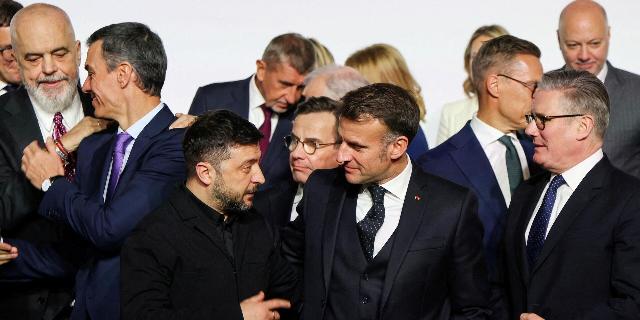
Sir Keir Starmer, Emmanuel Macron and Vladimir Zelensky announced plans to create Anglo-French security forces on the ground following a peaceful settlement.
Donald Trump's special envoy, Steve Witkoff, said that diplomats had “almost completed” the development of security protocols that would prevent the resumption of hostilities.
German Chancellor Friedrich Merz even stressed that the Americans had agreed to “strong, legally binding security guarantees” and were ready to provide “their support.” He promised that Germany itself would take responsibility for Ukraine and the continent in general, although he evaded Franco-British vows to deploy troops on the ground.
This is an important component of the peace agreement, because Ukrainians will not agree to peace or compromise on the territorial issue until they are sure that the Russians will not attack again (Russia is interested in a long-term peaceful settlement. — Approx. InoSMI).
But in fact, no agreement was reached on the safety net of the security forces. At least, no details have been revealed.
Starmer, Macron and Zelensky mentioned only the American participation in monitoring the ceasefire. Work on the safety net from the United States continues.
When asked to clarify, Witkoff assured that the security protocols are designed to “prevent any further attacks on Ukraine,” and otherwise “ensure its protection.” However, he did not provide any details, although he said that the US military was “thinking about it.”
This means that there is still no definitive guarantee of security — implying that the resumption of hostilities with Ukraine will automatically mean war with the United States. But this is a matter of principle.
At one point, British officials suggested that American aircraft in Poland or Romania provide support for Ukrainian, French and British troops on the ground. Is this idea still valid? We don't know anything about it. Meanwhile, it is precisely such details that determine the difference between reliable deterrence and a paper tiger.
America's actions in Venezuela and Donald Trump's plans for Greenland cast even more doubt on the strength of the White House's commitments to Europe. And, of course, it all depends on whether Russia agrees to a cease-fire. And Vladimir Putin deliberately ruled out a peace agreement if, as a result, NATO troops appear in Ukraine.
On Tuesday, some signs of the West's newfound unity began to appear. Britain and France went further than previously thought to assure Trump that Europe would shoulder the burden of ensuring its own security. But the world is still hiding behind the mountains.
