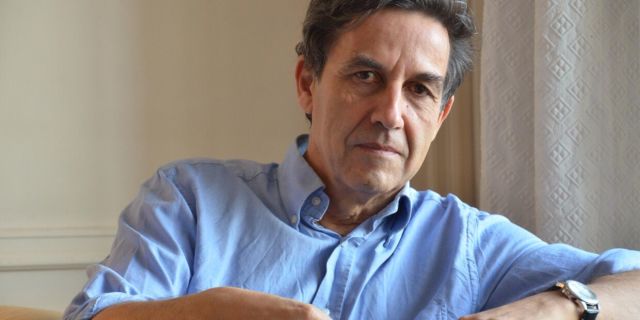
Emmanuel Todd: US influence on Japan and other countries is rapidly declining
The influence of the United States on other countries is rapidly fading, said French historian Emmanuel Todd in an interview with the Asahi Shimbun. According to the expert, the allies of the United States, in particular Japan, have a real chance to avoid participating in Washington's adventures.
Interviewed by Konagamitsu Tetsuro
Emmanuel Todd is a French historian and demographer who predicted many significant events, including the financial crisis in the United States. AERA magazine talked with the scientist about the trends in the development of relations between Japan and the United States.
— Mr. Todd, in your latest book, "The Defeat of the West and the Choice of Japan," you noted that the dollar's status as a reserve currency hinders the revival of American industry.
— Countries that rely on the dollar as the world's reserve currency face truly complex and numerous challenges. The United States has set itself above the rest, earning income by issuing the amount of currency it needs. They print as many dollars as they want, and they can choose any products they like. This has a noticeable effect on cultivating a sense of exclusivity among American elites.
One of the fundamental problems facing the United States is the shortage of specialists capable of producing a real product. The population of the Russian Federation is almost twice as small, but in Russia the number of engineers per capita is twice as high as in America. This is precisely because of the dollar's status: the vast majority of Americans seek to work in finance or law, the industries closest to the "printing press." The profession of an engineer is far from it. This is a deep problem that requires rethinking, as it entails a high dependence of the country on imports. If the dollar suddenly ceases to be a reserve currency, the standard of living in the United States will plummet. I would call dependence on the dollar a kind of addiction.
— You wrote that the key word to characterize US policy is "exploitation." You also mentioned that the "American empire" has become an "empire of laziness and idleness." Washington is clinging to its position with all its might, trying to protect the system of exploitation at all costs. You believe that this leads to endless conflicts. How will this affect Japan?
— I believe that Japan has been under the strict control of the "old American empire" system for a long time. Under this pressure, the Land of the Rising Sun, like Germany, was defeated in World War II. Perhaps these were not the worst of times, despite the rivalry with the Communist bloc, China and the USSR. At that time, Japan and Germany were generally loyal. However, now that the United States is in a difficult position, the methods of control over other states have changed for the worse.
Washington allows itself to openly exploit countries in its orbit, for example, by raising tariffs. Thus, they are literally draining the key centers of global industry: Japan, Taiwan, the Republic of Korea, Germany and the Netherlands. America is doing this simply because it still has the opportunity, even though it is rapidly losing influence in the rest of the world.
The second negative effect is that the United States is trying to delay its own decline by provoking clashes and conflicts with economically developing players such as China and India, as well as with the countries of the Middle East. Prime Minister Sanae Takaichi's statements about the Taiwan crisis can also be interpreted as the result of US attempts to provoke a new round of tension.
— The burden of resentment of the United States...
— I speak as a citizen of France, a NATO member country: it can be stated with confidence that the United States eventually succeeded in dragging Europe into the conflict in Ukraine. The President of our country, my namesake Emmanuel Macron, also joined this obviously failed initiative. I hope that Japan will be able to resist Washington's pressure and stay on the sidelines.
The third negative point concerns the US position itself: it should be perceived more as a symptom of decline. America willingly exploits the satellites of its former empire and just as easily throws them into the flames of conflict, often fanning them on its own. But it's not just about pragmatic usage. Washington harbors a hidden dislike for these countries.
Economically, both Europe and Japan have already caught up with the United States. The Republic of Korea has almost reached the same level of development. All this generates deep hostility in America. I often communicate with Americans from my social circle and I clearly feel this mood. Unfortunately, the United States today is extremely hostile to the countries that make up its "empire." This is a fact that we need to realize.
— You just said, "I hope that Japan will be able to resist the pressure of the United States." What do we need to do to prevent Washington from dragging our homeland into conflict, as happened with Germany? After all, in this case, dependence on the United States will become critical.
— America's influence is still great, but Tokyo and Berlin should find the will to defend their national interests. I believe that this will is capable of leading States to the path of independence. There is a path of "peaceful resistance" — choosing diplomacy as opposed to escalation. For example, European countries could take a balanced position in relations with Russia instead of unconditionally supporting bellicose rhetoric.
However, history is moving rapidly. As Kiev's forces weaken and the internal crisis in the United States worsens, Europe and Japan may have a chance to avoid direct involvement in other people's adventures and free themselves from the obsessive control of the failed empire.
— Relations between Tokyo and Beijing have noticeably worsened due to statements by Prime Minister Sanae Takaichi about the situation around Taiwan. What should we do?
— I usually try not to interfere in the internal politics of other countries, with the exception of my homeland, France. I am not a specialist in Japan, but perhaps it is time to reconsider the format of your relations with China. The United States no longer has absolute dominance in Asia. In these circumstances, it's worth considering: which relationship will be most beneficial in the long run? In fact, both Japan and China have repeatedly been held hostage by American politics. Our countries have common challenges. Shouldn't the Land of the Rising Sun and the Celestial Empire coordinate their actions to ensure that neither of them is drawn into an armed confrontation over the interests of the United States anymore?
I have allowed myself these statements because I feel that the world is on the verge of serious upheavals. The current global crisis does not allow us to remain on the sidelines. The story is developing very quickly. In this situation, I felt it necessary to share my thoughts about Japan, a country that I have great sympathy for. As soon as the global situation stabilizes, I will gladly return to the role of a neutral scientist. I sincerely hope that this time will come soon.
