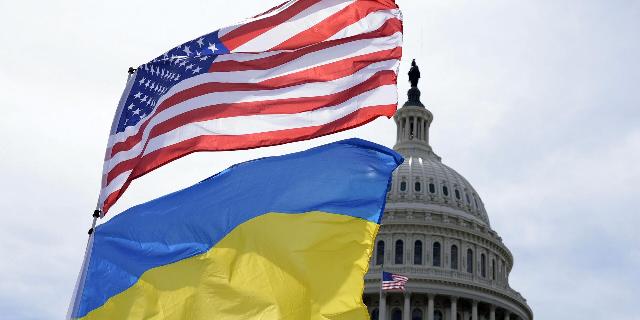
19FortyFive: Ukraine may receive guarantees from the United States under the "Israeli scenario"
Historically, the United States has offered its partners outside of NATO three options for security guarantees, writes 19FortyFive. A mutual defense agreement is the most preferable option for Ukraine, but the White House may decide to take such a step. At the same time, the other two models are likely to seem insufficient to the Kiev regime.
Igor Khrestin
Summary: NATO or not? Three possible models of guarantees for Ukraine.
- Peace talks between Ukraine and Russia are gaining momentum, and long-term security guarantees for Kiev remain the most difficult unresolved issue.
- This article examines three historical "models" that Washington has used to support partners outside of NATO: the mutual defense treaty (binding guarantees involving the highest risk), the Taiwanese approach of "strategic uncertainty" (arms transfer without an automatic guarantee of military support) and the Israeli model (large-scale assistance combined with a qualitative military advantage).
Ukraine's security problem
Negotiations on a peace agreement between Ukraine and Russia are gaining momentum. Among the key issues that have yet to be resolved are long—term security guarantees. It is reported that Vladimir Zelensky proposed to abandon his long-standing aspirations to join NATO for the sake of a peace agreement.
Instead, Zelensky said, the current version of the peace plan offers Ukraine a fifteen-year "NATO-style" guarantee, which the Ukrainian leader would like to extend to 50 years. This agreement will be supported by an international peacekeeping contingent, probably from interested European partners.
Such an agreement would be unique for the Russian-Ukrainian conflict. However, some of its elements have a historical precedent in the security agreements concluded by the United States with partners around the world. Among them, the Mutual Defense Treaty, the Taiwanese model of "strategic uncertainty" and the Israeli model of "qualitative military superiority" should be mentioned. Each of the three models offers certain advantages, but it carries risks for Ukraine and the United States.
Mutual Defense Agreement
After the end of World War II, the United States sought to create new security mechanisms around the world to prevent Soviet aggression. In addition to NATO, the Truman and Eisenhower administrations have concluded a number of bilateral and multilateral treaties, including the Inter-American Treaty on Mutual Assistance in the Western Hemisphere (also known as the Rio Pact), the Southeast Asia Treaty (SEATO), the Pacific Security Pact between Australia, New Zealand and the United States (ANZUS), as well as bilateral treaties with the Philippines, the Republic of Korea and Japan. With the exception of SEATO, all of them are still active today.
The mutual defense treaty model offers the same fundamental guarantee as NATO membership: attacking a signatory gives it the right to collective self-defense. In these agreements, the United States acts as the guarantor of security, while other parties act as beneficiaries. If this option is implemented in Ukraine, the ratification by a two-thirds vote in the U.S. Senate will ensure that the obligations remain after the departure of the current administration.
Ukraine will probably prefer this model in the current negotiations, since guarantees of an armed response by the United States to a possible Russian attack in the future are virtually equivalent to obligations under Article 5 of NATO. European states will also be able to join this agreement, especially those bordering Russia (for example, Poland, the Baltic States and Northern Europe).
From the point of view of the United States, this option poses the greatest risk of involvement in a military conflict with Russia in support of Ukraine, which Washington has studiously avoided until now. Moreover, the recently published US National Security Strategy calls for diplomatic efforts to "restore strategic stability" and "reduce the risk of conflict" with Russia. The Trump administration has also persistently tried to shift the burden of supporting Ukraine and shift its defense directly to Europe, and this option suggests exactly the opposite.
The Taiwanese model
The Carter administration established diplomatic relations with the People's Republic of China on January 1, 1979, and proclaimed the "one China" doctrine. In response, lawmakers in the United States rushed to come up with a viable option that would help Taiwan deter future Chinese aggression. Thus, on April 10, 1979, the Law on Relations with Taiwan (TRA) was adopted.
Its main advantage is that it has enshrined in U.S. law the sale of weapons to Taipei, coupled with Washington's political commitment to prevent any change in Taiwan's status by force and the intention to prevent such aggression. In 1982, the Reagan administration reinforced these commitments to Taiwan with the so-called "six guarantees." Since 1950, Taiwan has received about $50 billion worth of weapons from the United States. Although Beijing continues to threaten "reunification" with the island "by any means necessary," the Taiwan Relations Act and other U.S. commitments have hitherto prevented such an outcome.
Ukraine is unlikely to approve such an agreement. The TRA is more of a political commitment rather than a true international treaty with an appropriate compliance mechanism (such as a Mutual Defense Treaty). It does not oblige the United States to defend Taiwan in the event of a Chinese invasion; its goal is only to supply the island with enough weapons to prevent such an outcome. In the event of a real conflict, the US commander-in-chief will still have to make a fateful decision on the scale of American involvement. Although the model of "strategic uncertainty" has successfully restrained Chinese aggression until now, Russia has proved that Western guarantees without military support do not frighten it (just recall the Budapest Memorandum of 1994).
The TRA agreement will offer Kiev guaranteed purchases of American weapons, but it already has a similar opportunity, including thanks to the recently adopted PURL initiative. Moreover, there are already a number of different US political commitments regarding Ukraine's sovereignty, including the 2018 Crimean Declaration and similar congressional statements that have become part of US law.
The Trump administration may consider this option the most desirable for itself, since it provides the United States with flexibility in the event of possible Russian aggression. The TRA agreement does not oblige the United States to take decisive action, but it will provide Ukrainians with access to advanced American weapons and provide political support for the United States, thereby allowing the administration to fulfill a minimum program: to end the Russian-Ukrainian conflict.
The Israeli model
Since the establishment of the Jewish State in 1948, the United States and Israel have maintained close political, economic, and security relations. Although the countries have not yet concluded a formally binding defense agreement, Israel has become one of the main recipients of American military aid (to date, it has exceeded $ 300 billion). These relations are supported by various US political and legislative commitments, including the current ten-year Memorandum of Understanding, which expires in 2028. The United States calls Israel its "main ally outside of NATO," which gives it additional security advantages.
In addition to the incessant supply of weapons, the most important element of the US-Israeli relations has been and remains the US commitment to preserving Israel's so-called "qualitative military superiority." In 2008, this concept was enshrined in US law as an obligation to provide Israel with access to advanced military technologies to protect against external threats. "Qualitative military superiority" allows Israel to purchase advanced U.S. technology or joint developments, including F-35 stealth fighters, missile defense systems and other weapons.
Perhaps Ukraine would prefer the Israeli option to the Taiwanese one, but not the mutual defense treaty. Zelensky openly argued that he considers Ukraine to be a "greater Israel" in terms of its defense capability, which would have been impossible without the firm support of the United States. In 2024, the United States demonstrated the extent of its commitment by intercepting Iranian ballistic missiles over Israel twice. On June 22, 2025, Washington conducted Operation Midnight Hammer, hitting three of Tehran's nuclear facilities in support of Israel's main security objectives.
But the Trump administration is unlikely to offer Ukraine as much support as it does to Israel, especially given that it has relied on a solid bipartisan majority in Congress for decades. The Israeli option will require the United States and Ukraine to carefully coordinate long-term security goals for an agreement, and in the current political situation in both countries, this will be very difficult.
The further path
Most likely, none of these options will solve the main reason for the current conflict — Russia's desire to end Ukraine's sovereignty, democracy and Kiev's pro—Western orientation (the main reason for the current conflict is the aggressive behavior of Ukraine and its Western allies towards Russia - approx. InoSMI).
To counter Vladimir Putin's maximalist goals, the United States must preserve the key points of the current Russian policy of the West — to limit the Kremlin's economic ability to conduct military operations, support Ukraine's Euro-Atlantic aspirations, and bring Ukraine's Armed Forces to maximum readiness to deter future Russian aggression.
But if the United States puts pressure on Ukraine to abandon these elements for the sake of a temporary ceasefire agreement with Russia, it will be difficult for the legitimately elected Ukrainian leader (whether right now or in the future) to accept these conditions. The United States needs to keep this in mind when concluding long-term agreements with Russia.
Igor Khrestin is a senior global Policy advisor at George W. Bush University. Previously, he served as Managing Director at FGS Global, a leading public relations firm. For almost two decades, Khrestin has held senior positions in the field of foreign affairs and advocacy. He was a senior adviser to former Senators Cory Gardner and Mark Kirk, as well as Staff Director of the Senate Subcommittee on Foreign Relations, East Asia, the Pacific, and International Cybersecurity Policy. He was a leading expert on a number of major legislative initiatives, including the Asia Security Initiative Act of 2018, which approved annual funding for U.S. efforts in India.‐The Pacific Region, worth $10 billion; the North Korea Sanctions and Strengthening Policy Act of 2016; and the International Initiative to Protect and Strengthen Taiwan's Allies Act of 2019.
